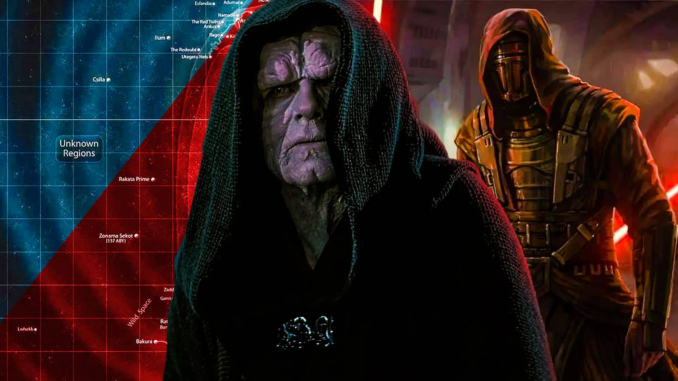
For decades, Star Wars thrived on one undeniable truth: every trilogy gave us a villain who defined an era.
The cold, mechanical terror of Darth Vader in the original trilogy.
The operatic fall of Anakin Skywalker into Darth Sidious’ shadow in the prequels.
But when the sequel trilogy arrived, something shifted — and fans are still arguing that the most destructive force in the saga wasn’t a character at all.
It was what happened behind the scenes.
A Legacy of Iconic Darkness
The original trilogy, beginning with Star Wars: Episode IV – A New Hope, built a villain so mythic that Darth Vader became cinema’s gold standard for antagonists. He wasn’t just evil — he was tragic, imposing, unforgettable.
Then came Star Wars: Episode I – The Phantom Menace and the prequel era. Whatever debates surrounded politics or dialogue, no one questioned the long-game storytelling. We knew where Anakin was headed. His transformation into Darth Vader felt inevitable — Shakespearean, even.
There was cohesion. There was design. There was a clear dark presence orchestrating chaos.
And then came the sequels.
The Sequel Shockwave
When Star Wars: Episode VII – The Force Awakens premiered, anticipation hit hyperspace. A new generation. A mysterious villain. A masked figure named Kylo Ren played with brooding intensity by Adam Driver.
For a moment, it felt like lightning had struck again.
But beneath the surface, cracks were forming.
The sequels didn’t unfold under one singular creative vision. Instead, the trilogy shifted between directors, with J. J. Abrams launching the story and Rian Johnson boldly subverting it in Star Wars: Episode VIII – The Last Jedi.
Some praised the risks. Others felt the foundation fracturing in real time.
Suddenly, the villain debate wasn’t about Kylo Ren.
It was about direction.
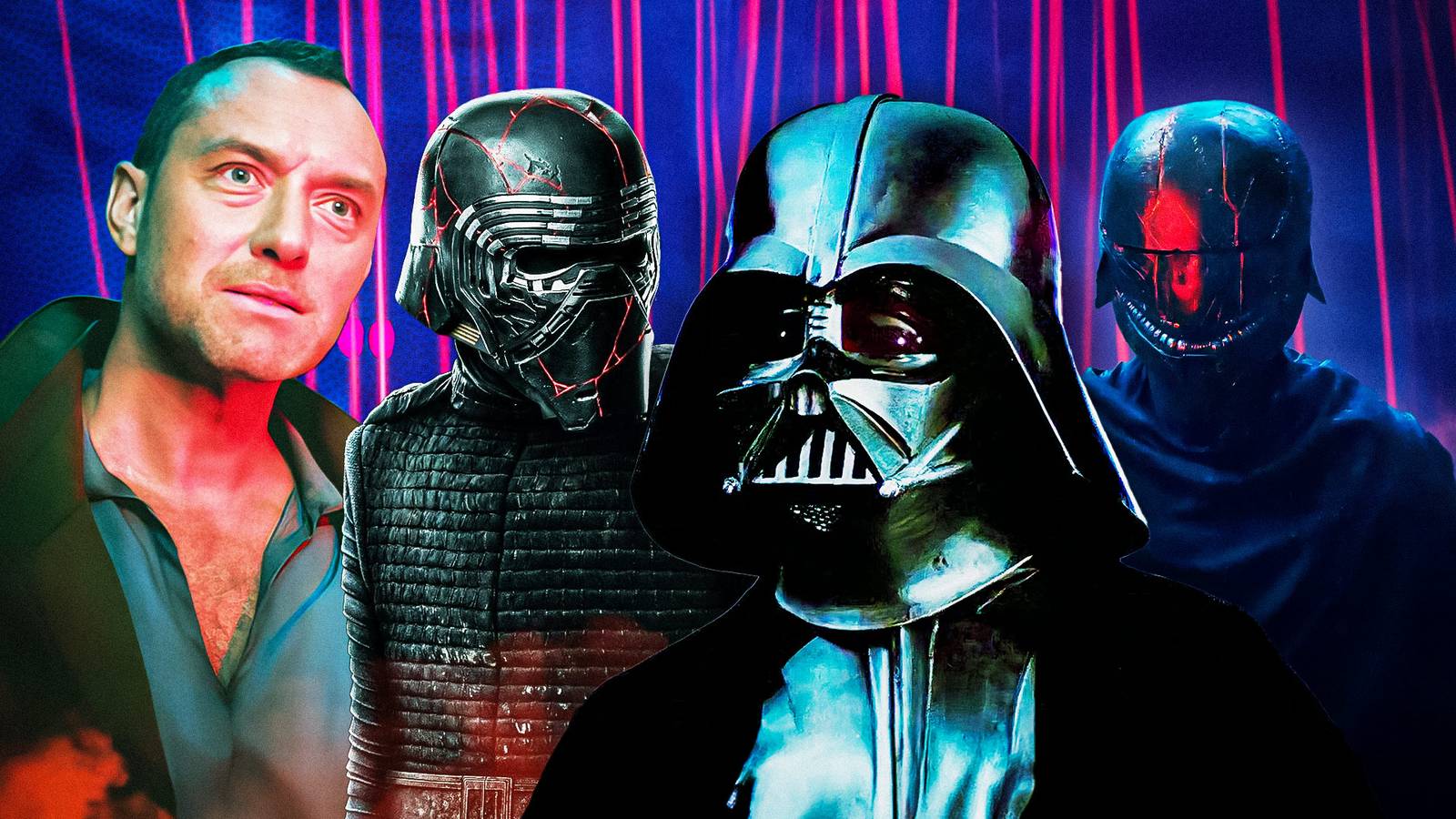
Was Kylo Ren the Problem — or the Plan?
Kylo Ren wasn’t Vader 2.0. He was unstable. Emotional. Torn. And that was deliberate.
Adam Driver’s performance was widely praised, even by critics of the trilogy. He gave Kylo vulnerability — a man desperate to live up to a legacy he barely understood.
But here’s the controversy:
Was Kylo meant to be the ultimate big bad?
Or was he always a pawn?
When Star Wars: Episode IX – The Rise of Skywalker resurrected Emperor Palpatine, many fans felt narrative whiplash. The sudden return of Darth Sidious — long thought defeated — ignited a firestorm of debate.
To some, it restored a classic villain.
To others, it erased the stakes of the entire sequel arc.
And that’s when a new theory gained traction online:
The sequels didn’t lack a villain.
They lacked a unified story.
The Off-Screen Villain Theory
Across forums, fan channels, and conventions, one argument kept resurfacing: the “real villain” of the sequel era wasn’t a Sith Lord.
It was inconsistency.
Unlike the prequels, which were guided entirely by George Lucas, the sequel trilogy operated without a mapped-out three-film blueprint. Directors interpreted themes differently. Character arcs shifted. Mysteries introduced in one film were dismissed or rewritten in the next.
For some fans, that creative tug-of-war drained the menace from the saga.
Villains thrive on inevitability.
But unpredictability behind the camera created unpredictability on screen.
Divided Fandom, Explosive Debate
Few franchise decisions have sparked as much cultural argument as The Last Jedi. Rian Johnson’s bold narrative choices — redefining heroism, reframing lineage, dismantling myth — were hailed as visionary by some and destructive by others.
The polarization wasn’t quiet. It dominated headlines, trended worldwide, and reshaped how studios approach blockbuster storytelling.
And through it all, the cast stood at the center of the storm.
Adam Driver’s layered portrayal of Kylo Ren.
Daisy Ridley navigating Rey’s shifting origin.
John Boyega openly expressing frustration about character development.
The conversation wasn’t just about plot.
It became about legacy.
Did the Sequels Lose the Edge?
The original and prequel trilogies built villains that felt mythic because their arcs were singular and cohesive.
The sequels, by contrast, felt reactive.
When Palpatine returned in The Rise of Skywalker, some saw it as a desperate attempt to anchor the trilogy in nostalgia. Others saw it as the only way to restore gravitas after Snoke’s abrupt demise in The Last Jedi.
The question lingers years later:
Was the sequel trilogy sabotaged by creative disunity?
Or was it simply bold enough to challenge expectations in a way fans weren’t ready to accept?
The Cultural Aftermath
Despite division, the sequel trilogy was commercially massive. It introduced new characters, expanded representation, and reignited global conversation about what Star Wars means in a modern era.
Yet the debate hasn’t faded.
If anything, it has intensified with time.
As new projects expand the universe on streaming platforms, many fans continue to reexamine the sequels — some softening, others doubling down.
Because in the end, villains in Star Wars are supposed to be unforgettable.
But what happens when the most controversial force isn’t a masked Sith, a fallen Jedi, or a resurrected Emperor —
—but the battle over creative control itself?
Conclusion: A Saga Still at War With Itself
Every Star Wars trilogy had its dark icon.
Vader defined fear.
Sidious defined manipulation.
Kylo Ren defined inner conflict.
But the sequel era defined something else entirely: division.
And that may be the most shocking twist of all.
In a galaxy built on balance between light and dark, the fiercest struggle wasn’t on screen.
It was over the story itself.