For fourteen seasons, Sunday nights belonged to one family.
Not just any family — the Reagans.
For over a decade, Blue Bloods has delivered something rare in modern television: tradition, loyalty, and moral conflict wrapped inside the pulse of New York City law enforcement. It wasn’t flashy. It wasn’t trendy. It was steady. Dependable. Unshakable.
Until it wasn’t.
When confirmation arrived that Season 14 would mark the end of the series, shock didn’t just ripple through the fandom — it detonated. And what followed has become one of the most heated television debates of the year.
Is this truly the end of Blue Bloods — or the beginning of a battle fans refuse to lose?
The Cancellation That Sparked Outrage
When CBS confirmed that Blue Bloods would conclude after its fourteenth season, the reaction was immediate and explosive.
This wasn’t a struggling show limping toward cancellation. It remained one of the network’s most reliable performers, consistently drawing millions of viewers in live ratings — a rarity in the streaming era.
So why end it now?
Network executives cited “financial realities” and shifting priorities. But for many fans, that explanation felt incomplete. The show wasn’t fading creatively. It wasn’t hemorrhaging audience. If anything, it was still standing tall in a television landscape where few dramas survive beyond ten seasons.
The disconnect ignited suspicion.
Tom Selleck Speaks — And the Debate Intensifies
At the center of the storm stands Tom Selleck, the steady patriarch who brought Police Commissioner Frank Reagan to life.
Selleck has not hidden his disappointment. In multiple interviews, he expressed genuine surprise at the cancellation and openly questioned whether the series still had stories left to tell.
He wasn’t alone.
Cast members hinted that they were willing — even eager — to continue. The tone wasn’t one of closure. It was unfinished business.
And when a leading star appears ready to stay, fans start asking difficult questions.
A Finale — Or a Forced Farewell?
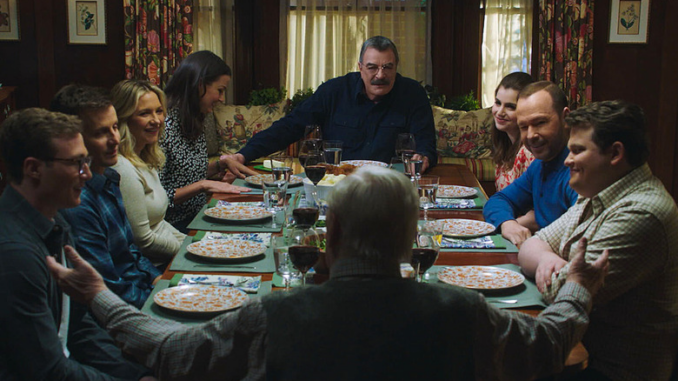
Season 14 didn’t feel like a slow goodbye at first. Instead, it felt like business as usual: moral dilemmas at the NYPD, tension between duty and family, and those iconic Reagan dinner table debates that became the show’s emotional backbone.
But as the episodes unfolded, subtle shifts began to surface.
Frank reflecting more often on legacy.
Danny confronting personal crossroads.
Erin facing professional turning points.
Jamie stepping further into leadership.
It wasn’t loud. It wasn’t dramatic. But it carried weight — the kind of narrative gravity that signals final chapters.
Were the writers preparing a graceful ending? Or scrambling to reshape long-term plans into a compressed conclusion?
The Reagan Legacy That Built an Empire
You can’t discuss the cultural footprint of the show without acknowledging its ensemble:
-
Donnie Wahlberg as Danny Reagan — relentless, flawed, fiercely loyal.
-
Bridget Moynahan as Erin Reagan — principled, sharp, politically torn.
-
Will Estes as Jamie Reagan — the evolving moral compass of a new generation.
-
Len Cariou as Henry Reagan — the living bridge between past and present.
And anchoring it all: Selleck’s Frank — stoic yet vulnerable, a leader balancing public scrutiny and private responsibility.
Unlike high-concept procedurals driven by spectacle, this series thrived on restraint. Conversations mattered. Silence mattered. Tradition mattered.
That formula created loyalty — not just viewership.
Ratings vs. Reality: The Business Behind the Curtain
Industry insiders point to rising production costs as a key factor. Long-running series become expensive. Veteran casts negotiate higher salaries. Budgets tighten. Networks recalibrate.
But here’s what complicates the narrative: stability has value.
In an era dominated by short streaming runs and constant cancellations, Blue Bloods represented consistency. It attracted an older but fiercely loyal demographic — a group often overlooked in headline-driven media analysis but extremely valuable in linear television economics.
Ending a show with dependable ratings feels less like a creative decision and more like corporate arithmetic.
And fans can sense the difference.
Social Media Ignites a Movement
What began as disappointment quickly transformed into mobilization.
Petitions surfaced. Campaign hashtags trended. Viewers called for renewals, spin-offs, streaming pickups — anything to prevent what they viewed as a premature farewell.
The argument is simple:
If audiences are still watching, why shut the door?
In today’s television landscape, cancelled doesn’t always mean gone forever. Revival culture is real. Fan pressure has resurrected shows before.
The question is whether this momentum can shift corporate strategy.
Could a Spin-Off Be the Real Endgame?
There’s growing speculation that the franchise might not vanish entirely.
The Reagan universe is rich. The NYPD setting is expansive. A next-generation focus — perhaps centered on Jamie or a fresh precinct — could extend the brand without the full financial weight of the original cast.
Television history is filled with evolution disguised as endings.
Is this truly a farewell? Or is it a strategic reset?
The Emotional Weight of a Sunday Tradition
For many viewers, this series wasn’t just another police procedural.
It was ritual.
The Reagan dinner table became symbolic — a space where politics, ethics, faith, and family collided. Few dramas consistently wove ideological debate into prime-time storytelling without collapsing into caricature.
That balance is rare.
Ending such a long-running narrative isn’t just removing a show from the schedule. It’s dismantling a weekly gathering millions grew accustomed to.
And that loss feels personal.
The Bigger Picture: What This Means for Broadcast Television
The conclusion of Blue Bloods marks more than the end of one series.
It signals a shift in network priorities.
Broadcast television once thrived on longevity. Fifteen-season dramas were proof of cultural impact. Now, cost efficiency and rapid content turnover dominate decision-making.
If a reliable ratings anchor can be cut loose, no show feels untouchable.
So… Is This the Final Salute?
Officially, yes. Season 14 closes the book.
Unofficially? The conversation is far from over.
The cast’s willingness to continue, the audience’s refusal to let go, and the evolving economics of streaming create a landscape where nothing is ever truly final.
Television history has taught us one thing: endings can be rewritten.
Conclusion: An Era Ends — But the Echo Remains
Fourteen seasons. Hundreds of episodes. Countless moral debates across one iconic dinner table.
Whether this is a definitive goodbye or the calm before a reinvention, one truth stands firm:
The Reagan legacy reshaped modern procedural drama by proving that quiet intensity can be just as powerful as explosive spectacle.
And if this truly is the last Sunday dinner?
It wasn’t cancelled quietly.
It went out with a national conversation — and a fanbase still demanding answers.