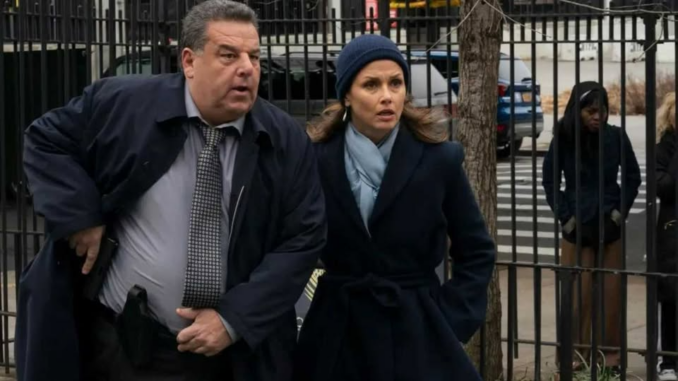
After fourteen seasons of loyalty, legacy, and law, something shifted inside the Reagan family home—and viewers felt it instantly.
When Donnie Wahlberg and Bridget Moynahan appeared on The Drew Barrymore Show, what was meant to be a celebratory reflection quickly turned into a raw, unfiltered goodbye. There were smiles, yes. But there were also trembling voices, misty eyes, and the kind of silence that only comes when something truly meaningful is ending.
And suddenly, the question fans have been avoiding became unavoidable:
Is this really the last time we’ll gather for Sunday dinner?
The Dinner Scene That Felt Like a Real Goodbye
For years, the Sunday dinner scenes on Blue Bloods weren’t just a storytelling device. They were ritual. They were tradition. They were the emotional spine of the show.
During the talk show appearance, a clip from the final season played—one of those familiar dinner-table moments filled with overlapping dialogue and subtle glances. But this time, it hit differently. The laughter felt heavier. The pauses lingered longer.
Host Drew Barrymore commented on the authenticity of the family dynamic. It wasn’t acting anymore. It was farewell energy.
Wahlberg’s half-joking admission that he felt “more upset and sad” than anything else wasn’t just banter. It was confession.
Fourteen Seasons of Brotherhood and Battles
Danny Reagan wasn’t just another TV detective. He was intensity wrapped in loyalty. Watching Wahlberg step away from that role feels like watching a chapter of network television history close in real time.
Meanwhile, Erin Reagan’s journey—from Assistant District Attorney to a woman constantly navigating power, politics, and family—gave the series one of its most compelling internal conflicts. Moynahan didn’t just play Erin. She evolved her.
And this season, she did something more.
She stepped behind the camera.
Bridget Moynahan’s Quiet Power Move
In what many fans see as a symbolic full-circle moment, Moynahan directed her third episode this season. And according to Wahlberg, he never doubted her for a second.
That detail matters.
Because when a longtime cast member begins directing, it often signals something deeper—ownership, transition, legacy-building.
Wahlberg admitted he may have once questioned whether she’d take on directing. Now? He openly celebrates her command behind the lens.
Their bond isn’t just co-star chemistry. It’s mutual respect forged over more than a decade of early call times, emotionally charged scripts, and shared responsibility for carrying a flagship drama.

Why This Farewell Feels Different
Long-running procedurals come and go. But Blue Bloods carved out something rare: a show that balanced crime with conscience.
At its heart stood Tom Selleck as Frank Reagan—the steady moral compass. Around him, the Reagan clan represented conflicting perspectives on justice, authority, and family loyalty.
But this final season has carried an undercurrent of reflection.
Storylines feel more intimate.
Conversations feel more deliberate.
Moments feel like they’re being savored.
When actors begin speaking in past tense about their characters—even subtly—it changes the atmosphere.
The Crowd Reaction That Said It All
As Wahlberg and Moynahan shared memories on stage, the audience responded not with polite applause—but with emotional cheers. The kind reserved for beloved figures taking a final bow.
There’s something powerful about watching actors process their own goodbye in real time. It blurs the line between fiction and reality.
Danny and Erin may be fictional.
But what they built together is not.
Is This Truly the End of the Reagan Era?
Here’s where speculation ignites.
Fourteen seasons is an extraordinary run for a primetime drama. Contracts end. Creative arcs reach resolution. Networks evolve.
But fan devotion remains fierce.
Social media has already lit up with calls for continuation—whether through spin-offs, limited series events, or unexpected revivals. The franchise’s foundation is strong. The characters are iconic.
And in today’s television landscape, endings are rarely simple.
The Legacy of ‘Blue Bloods’
What made the show endure wasn’t just crime-solving.
It was generational conflict.
It was ideological debate.
It was the tension between badge and bloodline.
Few procedural dramas maintained such a consistent moral dialogue while still delivering weekly suspense.
For fourteen seasons, viewers didn’t just tune in for cases—they showed up for conversation.
The Emotional Weight of Letting Go
There’s a particular ache that comes with saying goodbye to a series that has anchored your week for over a decade.
You grow alongside these characters.
You measure time through their arcs.
You associate life chapters with their storylines.
When Wahlberg and Moynahan admitted how difficult it was to close this chapter, they validated what fans are feeling.
Gratitude.
Pride.
And a quiet sadness.
End of the Road—or Strategic Pause?
Television history has proven one thing: never say never.
Revivals happen.
Franchises expand.
Legacy characters return when least expected.
Is this truly the final Sunday dinner?
Or simply the last one—for now?
No official future plans have shifted the reality yet. But the emotional tone of this farewell suggests something definitive has occurred.
And if this is goodbye, it’s one delivered with dignity.
Final Thoughts: A Farewell Worth Remembering
What unfolded during that talk show appearance wasn’t promotional fluff. It was closure.
Donnie Wahlberg and Bridget Moynahan didn’t just reminisce. They honored fourteen years of shared storytelling. They celebrated growth. They acknowledged change.
And in doing so, they gave fans permission to feel everything.
If the Reagan family table is finally empty, it leaves behind a legacy of conviction, loyalty, and heart.
And sometimes, the most powerful ending isn’t explosive.
It’s quiet.
It’s grateful.
And it knows exactly when to stand up from the table.