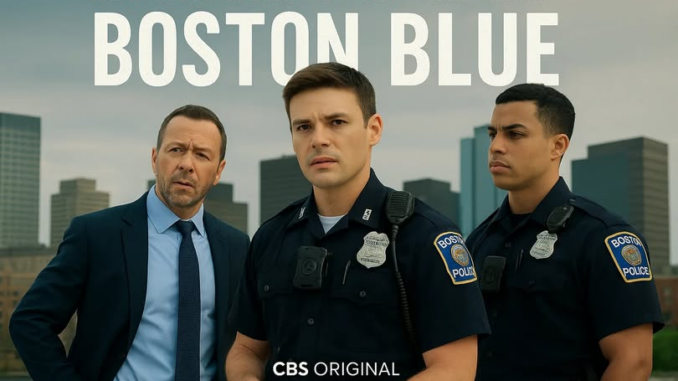
For ten relentless weeks, Boston Blue kept fans pacing their living rooms, dissecting every shadow, every sideways glance, every suspicious alibi. Who really killed Judge Silver? And was Jonah Silver a grieving son—or a calculating murderer hiding in plain sight?
Now, the answer has detonated across the fandom. And nothing about it was simple.
The Murder That Wasn’t What It Seemed
From the moment Judge Silver was found dead, suspicion wrapped tightly around Jonah Silver. The motive seemed airtight. The tension between father and son was well-documented. And the evidence? Damning enough to make even seasoned detectives hesitate.
But just when the walls were closing in, a masked gunman eliminated the very man Jonah was accused of killing.
It wasn’t justice. It was orchestration.
The investigation pivoted fast, leading straight to a cold-blooded hired shooter: Doyle O’Keefe. A ghost in the city’s underbelly. A professional who doesn’t make mistakes.
Except this time, he did.
Sean Reagan’s Alleyway Gamble
In what is already being hailed as the most pulse-pounding moment of the season, Sean Reagan cornered O’Keefe in a rain-slicked alley. One wrong move, and Jonah would’ve been collateral damage in a carefully staged cleanup.
Sean didn’t hesitate.
One shot. Calculated. Non-lethal. Surgical.
It was the kind of split-second decision that defines a career—and solidifies a character. Fans are calling it the scene that elevated Sean from capable officer to full-fledged Reagan legend.
The alleyway standoff didn’t just save Jonah. It cracked the conspiracy wide open.
The Puppet Master No One Saw Coming
While the city fixated on family drama and courtroom headlines, the real architect of chaos was operating in tailored suits and boardroom silence.
David Laughlin.
A powerful property developer with everything to gain from Judge Silver’s death—and enough resources to bury the truth permanently. The assassination wasn’t personal. It was strategic. A ruthless move in a high-stakes real estate war that stretched far beyond one courtroom ruling.
When detectives connected the financial threads, the narrative shifted from family tragedy to corporate corruption.
Laughlin’s arrest landed like a thunderclap. The man who thought he could manipulate the justice system became its most high-profile captive.
Danny Reagan’s Defining Decision
And then came the mic-drop moment no one was prepared for.
Danny Reagan made it official.
His transfer to the Boston Police Department is no longer temporary. It’s permanent. Badge. Oath. Future.
For longtime fans of the Reagan name, it’s seismic. A shift not just in geography, but in legacy. Danny choosing Boston signals a new chapter—one that reshapes the family’s law enforcement dynasty and redefines his own path.
Is this reinvention? A quiet farewell to the past? Or the beginning of a deeper evolution for the Reagan bloodline?
The debate is raging.

Why This Reveal Hits Harder Than Expected
What makes this storyline different isn’t just the layered mystery. It’s the emotional calculus.
Jonah wasn’t just a suspect. He was a son navigating grief under public suspicion. Sean wasn’t just a cop; he was balancing duty with compassion. And Danny’s final decision didn’t feel like a plot twist—it felt like a life choice.
That emotional authenticity is what has propelled Boston Blue from standard procedural to cultural conversation piece.
This wasn’t a tidy whodunit. It was a chess match played across courtrooms, alleyways, and corporate boardrooms.
Social Media Is in Overdrive
Within minutes of the episode airing, timelines exploded. Viewers dissected Laughlin’s subtle tells from earlier episodes. Others are rewatching the alley confrontation frame by frame. Some are convinced this arc is laying groundwork for an even bigger political scandal next season.
And the biggest question of all:
What does Danny’s permanent move mean for the future of the franchise?
A City Rewritten in Blue
Boston has always been a character in its own right—historic, complicated, fiercely loyal. Now, with Danny fully embedded in its police force, the city’s identity feels intertwined with the Reagan narrative in a way that suggests long-term stakes.
The Judge Silver case may be closed. Doyle O’Keefe is behind bars. David Laughlin’s empire is crumbling.
But the ripple effects are just beginning.
The Aftershock
Boston Blue didn’t just solve a murder. It recalibrated its entire foundation.
A son was cleared.
A sniper was stopped.
A mogul was exposed.
And a Reagan chose his future.
If this was the show’s way of raising the bar, fans should brace themselves. Because when a series proves it can juggle emotional depth, political intrigue, and heart-stopping action in a single hour, it’s no longer just telling stories.
It’s building a legacy.