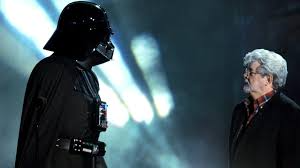
For decades, Star Wars has survived generational shifts, corporate takeovers, sequel trilogies, streaming expansions, and fandom civil wars. But now, the conversation feels different. Heavier. Almost nostalgic.
Because once again, the galaxy far, far away seems to be standing at a crossroads.
And in nearly every debate, one name keeps resurfacing:
George Lucas.
Not because he has announced a triumphant return. Not because there’s a confirmed secret project. But because a growing wave of fans believe the saga is missing something only its creator ever truly understood.
So what’s happening—and why does this moment feel bigger than the usual online noise?
A Franchise in Transition
With theatrical films delayed, restructured, or quietly reshuffled, and streaming series carrying much of the narrative weight, Star Wars is navigating one of its most uncertain creative phases.
Projects have been announced and re-announced. Directors have come and gone. Release dates have shifted. Meanwhile, the fanbase remains deeply divided over the sequel trilogy’s legacy, the direction of new characters, and the tone of recent storytelling.
It’s not a collapse.
But it is a moment of recalibration.
And that’s where the Lucas conversation begins.
The George Lucas Factor—Myth, Memory, and Creative DNA
When fans invoke George Lucas today, they’re not just asking for a director’s chair comeback. They’re referencing a philosophy.
Lucas’ original trilogy wasn’t just space opera spectacle. It blended mythological structure, political subtext, spiritual undertones, and archetypal storytelling. Even the controversial prequels—once widely criticized—have experienced a renaissance among younger audiences who now see their operatic ambition and world-building depth as bold rather than flawed.
In a media landscape driven by franchise expansion, many fans argue that Star Wars risks feeling reactive instead of visionary.
And Lucas, for all his divisiveness, was always visionary.
He built worlds before asking whether they would sell.
The Actors at the Center of the Debate
Recent interviews from sequel trilogy actors have only fueled the fire.
Some have expressed openness to returning under the “right creative circumstances.” Others have been candid about the pressures, backlash, and expectations that surrounded their roles.
The question quietly forming beneath these conversations is this:
If the next cinematic chapter brings back legacy characters—or re-centers the Skywalker lineage—who ensures it feels mythic rather than mechanical?
That’s when fans circle back to Lucas again.
Not as a savior.
But as a compass.
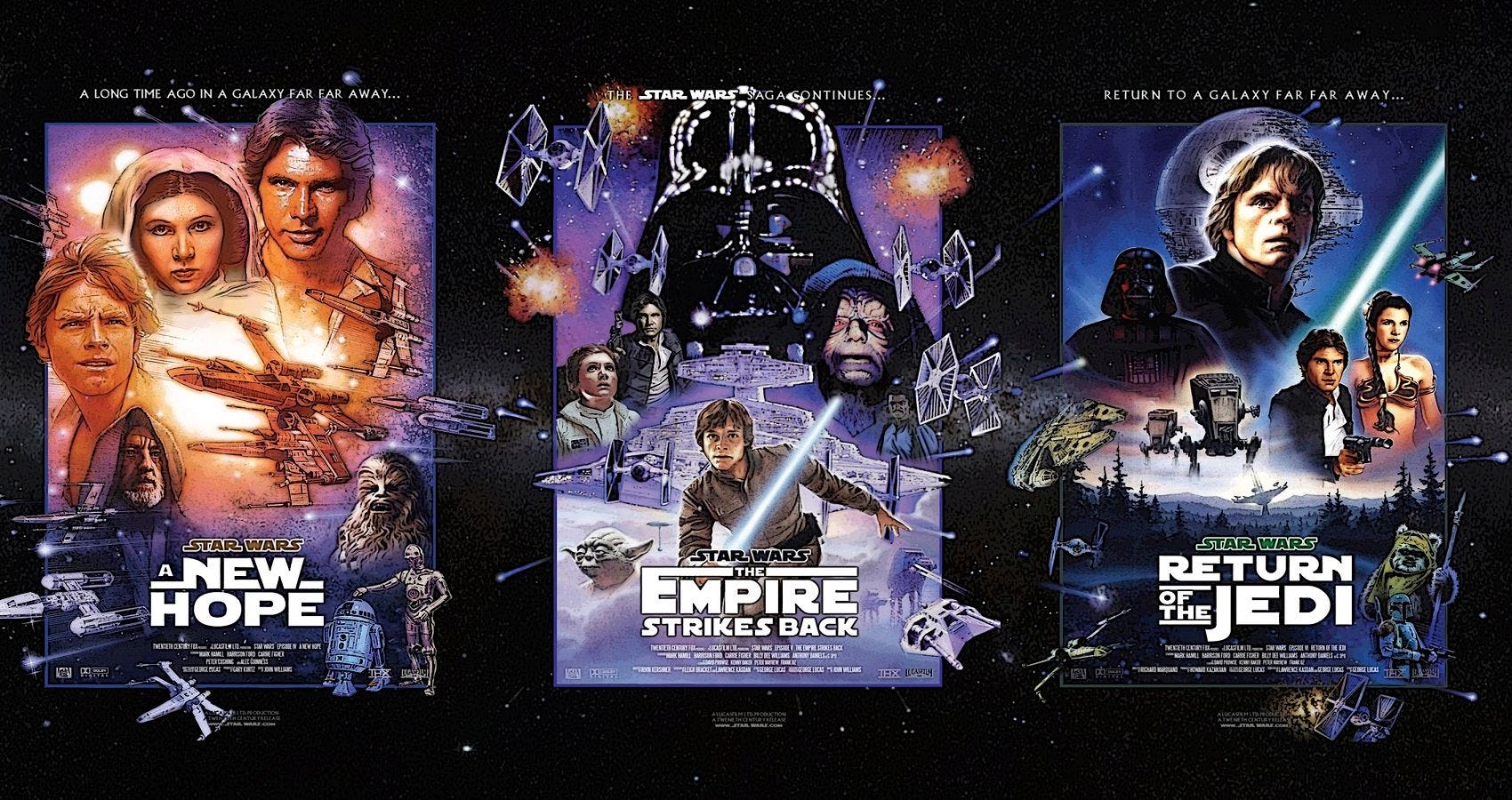
Streaming Success vs. Cinematic Identity
Series like The Mandalorian proved that Star Wars could thrive on the small screen. Andor elevated the franchise with grounded political storytelling. Animated entries have deepened canon in meaningful ways.
Yet the big-screen identity of Star Wars remains in flux.
Announcements of new films focusing on different eras—Jedi origins, post-sequel rebuilding, ancient mythology—suggest ambition. But ambition alone isn’t cohesion.
Many longtime followers feel the saga needs a unifying thematic anchor. A singular mythic thread that reconnects the past, present, and future.
That desire is less about one man’s control and more about narrative clarity.
Still, the symbolism of Lucas looms large.
The Generational Divide
Interestingly, much of the renewed appreciation for Lucas comes from younger fans who grew up with the prequels.
What was once mocked for political exposition and digital excess is now praised for intricate lore and emotional sincerity. Memes evolved into genuine affection. Criticism turned into reevaluation.
This generational shift has reframed Lucas not as a flawed auteur, but as a bold world-builder ahead of his time.
And as new projects attempt to redefine the saga’s next era, that boldness feels increasingly missed.
Is the Creator’s Absence Being Felt More Now?
Every long-running franchise eventually faces a creative identity test.
Marvel is navigating one. DC is reinventing itself. Iconic television universes are rebooting or expanding in search of longevity.
For Star Wars, the tension is uniquely philosophical.
Is it a mythological epic?
A political allegory?
A character-driven family saga?
A sandbox for endless genre experimentation?
George Lucas once answered those questions instinctively.
Now, the franchise is answering them collaboratively—and sometimes inconsistently.
That’s not necessarily failure. But it does create friction.
The Business Reality
Of course, Star Wars is not just art. It’s one of the most valuable intellectual properties in entertainment history.
Creative decisions intersect with corporate strategy, global markets, and streaming competition. Risk is calculated. Nostalgia is monetized. Timelines are optimized.
In that environment, the idea of a singular visionary guiding the ship feels almost romantic.
Maybe even impossible.
Yet the longing persists.
Reading Between the Lines
When industry insiders hint at “course correction” or “a return to core themes,” speculation ignites.
When legacy actors express interest in revisiting their roles, debate explodes.
When new film announcements emphasize “the future of the Jedi” or “the rebuilding of the Order,” fans listen carefully.
Because beneath all of it lies a single question:
What is Star Wars supposed to feel like now?
And who defines that feeling?
A Crossroads Moment
The galaxy has survived worse. The prequel backlash didn’t end it. The sequel controversies didn’t destroy it. Streaming evolution didn’t dilute it.
But culturally, this moment feels like an inflection point.
Not an ending.
Not a crisis.
But a decision point.
Does Star Wars double down on experimentation?
Does it consolidate around legacy myth?
Does it blend both under a clearer creative vision?
The answers will shape the next decade.
The Emotional Core Fans Are Protecting
At its heart, this debate isn’t really about contracts or directors.
It’s about magic.
The feeling of binary suns setting over Tatooine.
The hum of a lightsaber igniting for the first time.
The belief that even in the darkest empire, hope survives.
Fans aren’t demanding perfection.
They’re demanding resonance.
And many believe that resonance originated from one singular creative voice who understood myth not as nostalgia—but as living narrative.
So… Does the Galaxy Need George Lucas Again?
Realistically, a full creative return may never happen.
But symbolically? The conversation matters.
Because invoking George Lucas isn’t about undoing what’s been done. It’s about asking whether the saga remembers why it began.
Every franchise eventually reaches a moment where it must decide what it stands for.
Star Wars is there now.
And as new films prepare to chart the next era of Jedi, Sith, and everything in between, the creator’s shadow stretches long across the stars.
Not as a demand.
But as a reminder.
The Force was never just spectacle.
It was story.
It was myth.
It was meaning.
And at this crossroads, that meaning is what fans are fighting to protect.