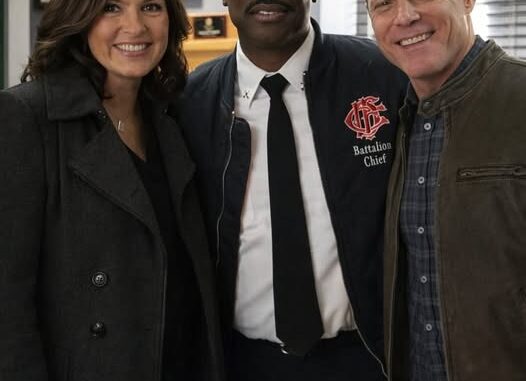
For years, fans believed there were certain shows that simply couldn’t be touched. Franchises that were too big to fail. Ratings powerhouses that could survive anything the ever-changing television landscape threw at them. But as NBC quietly reshapes its primetime strategy heading into the 2026–2027 season, one uncomfortable truth is becoming harder to ignore: no show is completely immune — not even the network’s most dominant empires like Chicago Fire, Chicago P.D., Chicago Med, Law & Order, or Law & Order: Special Victims Unit.
After a brutal wave of cancellations that wiped multiple scripted projects off the slate in 2025, NBC appears to be doubling down on what it knows works — but with a catch. Reports suggest the network is expected to renew all five of its flagship Dick Wolf dramas for another season. On paper, that sounds like a victory lap for the franchises that have carried NBC’s weekly lineup for more than a decade. In reality, however, these renewals may come with behind-the-scenes compromises that could dramatically reshape what audiences see on screen moving forward.
The One Chicago block remains one of NBC’s most reliable ratings machines, continuing to dominate Wednesday nights with consistent live viewership and strong streaming numbers on Peacock. Meanwhile, the Law & Order universe still commands Thursdays with an authority few franchises in television history have managed to sustain across multiple decades.
But staying alive in today’s television economy often means changing the rules of survival.
As production costs continue to climb across the industry, NBC and its studio partners have reportedly leaned into aggressive cost-control strategies — including reducing guaranteed episode appearances for longtime cast members. In other words, even if your favorite show returns next season, your favorite character might not appear as often as before… or at all.
This shift is already becoming standard practice for long-running broadcast hits. Veteran actors are seeing contracts adjusted, episode counts trimmed, and ensemble casts quietly reshuffled in an effort to keep these legacy franchises financially sustainable. The message from the network seems clear: renewal no longer guarantees stability.
Ironically, this comes at a time when shows like Law & Order: SVU remain historic television institutions. Having premiered back in 1999, the series has grown into one of the longest-running live-action primetime dramas ever produced — surpassing 500 episodes and continuing uninterrupted for decades.
And yet, even titans like SVU are now operating in a new era where longevity alone may not be enough.
NBC is reportedly aiming to lock in its fall 2026 lineup by mid-April, signaling a return to a more predictable scheduling cycle after years of pandemic disruptions and shifting viewing habits. Still, insiders suggest that other dramas currently “on the bubble” could face cancellation if budgets tighten further or new pilot projects outperform expectations.
So while the Wolf pack may once again prowl NBC’s primetime schedule next season, the version that returns could look noticeably leaner — with fewer familiar faces and more strategic storytelling choices designed to maximize efficiency over nostalgia.
Because in 2026, survival on network television isn’t about legacy.
It’s about affordability.
And right now, no show — no matter how iconic — is truly untouchable.