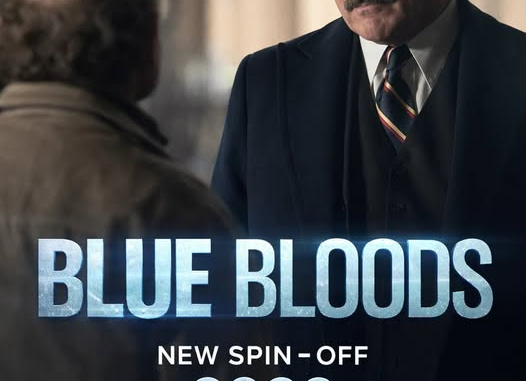
For more than a decade, Blue Bloods wasn’t just another crime drama. It was ritual. Sunday dinner at the Reagan table. Moral debates that cut deeper than any interrogation room. A steady heartbeat in an unpredictable TV landscape.
And then came the announcement that changed everything.
After 14 seasons, CBS confirmed that Blue Bloods would conclude with its final episodes. For many fans, it felt less like a series finale and more like a family farewell. But what happened next? That’s where the real drama began.
Because instead of fading quietly into television history, Blue Bloods exploded into one of the most debated endings in recent network memory.
The Cancellation That Didn’t Feel Final
When CBS revealed that Season 14 would be the last, reactions were immediate and emotional. Ratings were still solid. The fan base was loyal. And unlike many long-running dramas, the show hadn’t suffered a catastrophic creative collapse.
So why end it now?
Behind the scenes, conversations reportedly centered on rising production costs and contract renewals. Veteran-led ensemble casts don’t come cheap, and after 14 years, negotiations inevitably grow complex.
But to viewers, it felt abrupt.
And that’s when the whispers started:
Is this really the end — or just a strategic reset?
The Actor at the Center of the Storm: Tom Selleck
You cannot talk about Blue Bloods without talking about Tom Selleck.
As Commissioner Frank Reagan, Selleck became the moral compass of the series. Calm. Resolute. Old-school in a rapidly modernizing world. His presence anchored every storyline.
When the cancellation news broke, Selleck didn’t stay silent. In interviews, he expressed disappointment over the decision, making it clear he believed there was more story left to tell.
That single note of resistance ignited a firestorm.
Was the show ending because the network wanted it to?
Or because the cast was ready to walk away?
Fans rallied around Selleck’s comments, interpreting them as a sign that the door might not be fully closed.
Donnie Wahlberg and the Emotional Fallout
If Selleck represented the show’s authority, Donnie Wahlberg embodied its heart.
As Danny Reagan, Wahlberg carried some of the series’ darkest emotional arcs — from personal loss to professional conflict. When he posted reflective messages about gratitude and legacy, fans dissected every word.
Was he saying goodbye?
Or preparing for something new?
His tone felt like closure — but not necessarily an ending.
That ambiguity only fueled speculation.
A Franchise in the Making?
Here’s where the conversation takes a dramatic turn.
Within industry circles, talk began circulating about potential spin-offs or expansions. CBS has a proven track record of building universes from successful procedurals. Just look at what they’ve done with other franchises.
And Blue Bloods has the perfect DNA for expansion:
-
A police procedural backbone
-
A deeply rooted family structure
-
Generational storytelling
-
Built-in audience loyalty
What if the original series ends — but a new chapter begins elsewhere? Another city. Another branch of the Reagan legacy. Or even a focused character-driven spin-off.
The possibility alone was enough to reignite hope.

Why Season 14 Feels Like a Farewell Letter
Watch closely, and you’ll notice something different about the final season.
There’s reflection in Frank’s leadership.
There’s vulnerability in Danny’s decisions.
There’s evolution in Jamie and Eddie’s partnership.
Storylines feel deliberate. Conversations linger longer. Themes of legacy, service, and generational change sit at the forefront.
It doesn’t feel rushed.
It feels intentional.
Almost as if the writers knew this chapter needed emotional resolution — whether or not the larger universe continues.
The Reagan Dinner Table: A Cultural Symbol
One of the most iconic elements of Blue Bloods has always been its Sunday dinner scenes. They weren’t filler. They were philosophy sessions disguised as family meals.
In a television era dominated by spectacle, the show dared to slow down.
It talked about ethics in law enforcement.
It debated justice versus procedure.
It portrayed disagreement without destroying family bonds.
That formula built trust with viewers — and that trust is why the ending hurts.
The Network Equation
From a business standpoint, long-running dramas eventually reach a financial tipping point. Cast salaries increase. Production budgets grow. Syndication deals solidify.
Sometimes networks choose to conclude a series while it’s still strong rather than risk decline.
But what complicates this decision is that Blue Bloods never felt creatively exhausted. If anything, it remained steady in tone and audience engagement.
Which brings us back to the central tension:
Was this a graceful exit — or a corporate calculation?
Social Media Erupts
Within hours of the final-season confirmation, fan campaigns began trending. Petitions circulated. Viewers urged reconsideration.
Some fans demanded a renewal.
Others asked for a limited continuation.
Many simply wanted clarity.
In an age where fan voices have revived canceled shows before, nothing feels entirely impossible.
Television history has proven that endings can be rewritten.
A Defining Television Moment
Very few broadcast dramas make it to 14 seasons. Even fewer maintain cultural relevance across that span.
Blue Bloods survived industry shifts, streaming revolutions, and changing audience habits. It carved out a space defined not by flashy twists, but by consistency.
That consistency became its strength.
And now, its conclusion feels like the closing of a specific era of network television — one built on weekly appointment viewing rather than binge culture.
Is This Truly the End?
Here’s the truth: officially, yes. The series is ending.
But spiritually? Strategically? Franchisewise?
That’s less certain.
With passionate cast members, a devoted fan base, and a network experienced in expanding intellectual properties, the Reagan story may not be finished. It may simply be evolving.
And if there’s one lesson Blue Bloods has taught us, it’s this:
Legacy isn’t about how long something lasts.
It’s about the values it leaves behind.
Conclusion: Goodbye, or Just the Calm Before Reinvention?
After 14 seasons of loyalty, law, and layered family drama, Blue Bloods stands at a crossroads that feels both final and strangely unfinished.
The cancellation shocked viewers.
The cast reactions intensified the debate.
The franchise rumors reopened the conversation.
Is this the last time we gather at the Reagan dinner table?
Or is this simply the end of one chapter — before another badge is pinned on?
For now, fans wait. And in that waiting, the legacy of Blue Bloods has never felt more alive.