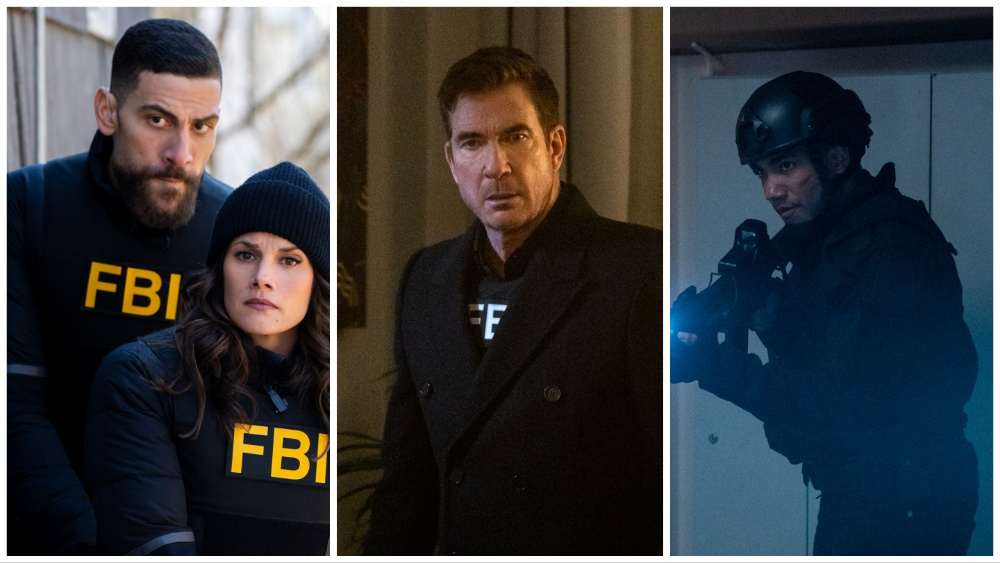
Since its debut in 2018, the FBI franchise has often been categorized alongside its legendary siblings, Law & Order and One Chicago. As a product of the Dick Wolf universe, it certainly carries the DNA of its creator: the “ripped-from-the-headlines” plots, the propulsive pacing, and the comfort of a procedural structure where justice, more often than not, prevails. However, as the series moves through its eighth season in 2026, it has become increasingly clear that FBI is doing something far more sophisticated than simply following a blueprint. By leaning into the immense scale of federal jurisdiction, the psychological complexity of its leads, and a unique visual language, FBI has successfully broken the mold of a typical Dick Wolf series, evolving into a modern character-driven thriller that challenges the very tropes it was built upon.
The Scale of the JOC and Global Stakes
One of the most immediate ways FBI distinguishes itself is through the sheer scale of its operations. While Law & Order thrives in the gritty interrogation rooms and wood-paneled courtrooms of Manhattan, FBI operates within the high-tech cathedral of the Joint Operations Center (JOC). This setting fundamentally changes the “formula.” In a typical Wolf procedural, the investigation is often localized and linear. In FBI, the JOC allows for a multi-dimensional narrative where analysts, technical experts, and field agents work in a symphonic—and often chaotic—harmony.
In the 2025–2026 season, this scale has been pushed to the limit. The show has moved away from simple “catch the killer” arcs to tackle global cyber-terrorism, international espionage, and systemic domestic threats that require the Bureau to interface with foreign agencies. This “Global vs. Local” tension provides a layer of stakes that isn’t present in the more insular worlds of the Chicago firehouses or police precincts. When Isobel Castille (Alana De La Garza) makes a decision, it isn’t just about a single arrest; it’s often about national security, making the show feel like a hybrid between a procedural and a high-stakes political thriller like Homeland.
Psychological Depth Over Procedural Perfection
Perhaps the most significant “mold-breaking” element is the show’s willingness to let its characters be profoundly impacted by their work. In earlier Dick Wolf series, characters were often “static heroes”—their personal lives were flavor text for the case of the week. FBI has inverted this. The 2026 arc of Jubal Valentine (Jeremy Sisto) and his battle with the “ghosts of addiction” is not a subplot; it is a central pillar of the narrative. The show explores the “cumulative trauma” of federal service, showing how the weight of the badge erodes the personal stability of its leads.
The partnership between Maggie Bell (Missy Peregrym) and OA Zidan (Zeeko Zaki) has also evolved beyond the standard “buddy-cop” dynamic. Their relationship is built on a complex foundation of shared trauma, cultural differences, and mutual protection. Unlike the romantic entanglements that often drive the One Chicago shows, the bond between Maggie and OA is depicted with a platonic intensity that is rare on network television. The show isn’t afraid to let them disagree on fundamental moral grounds, particularly regarding the ethics of federal surveillance or the use of questionable informants. This moral ambiguity breaks the “black and white” justice formula, reflecting a more nuanced view of modern law enforcement.
A Visual and Narrative Evolution
Visually, FBI has discarded the flat, observational style of traditional procedurals in favor of a more cinematic, immersive experience. The use of drone shots to capture the sprawling landscape of New York City and the handheld, kinetic camerawork during tactical raids gives the show a “heart-rate-monitor” energy. In the 2026 season, the production has leaned into a “real-time” feel for its climax sequences, creating a visceral sense of urgency that makes the audience feel like they are inside the JOC, watching the clock tick down alongside Jubal.
Furthermore, the show’s “Special Event” episodes—such as the 2026 multi-hour crossover events—have become more than just marketing gimmicks. They are used to explore the “interconnectedness” of the federal system, showing how a single white-collar crime in FBI: International can trigger a terror alert in the New York office. This “macro-storytelling” is a departure from the “closed-loop” episodes of the original Law & Order, proving that FBI is designed for the binge-watching era while maintaining its broadcast roots.
The Future of the Bureau
As we look toward the 2026–2027 cycle, FBI stands as the most modern iteration of the Dick Wolf legacy. It has taken the reliability of the procedural and injected it with the psychological depth of a prestige drama. By focusing on the “human in the machine” and the global complexity of the 21st century, the show has ensured that it is no longer just another series in a franchise—it is the standard-bearer for what a modern crime drama can be.
The formula hasn’t just been followed; it has been rewritten. FBI is no longer just about the law and the order; it’s about the cost of keeping them. In the high-pressure world of the JOC, the most compelling evidence isn’t found in a lab, but in the resilient, fractured spirits of the agents themselves.