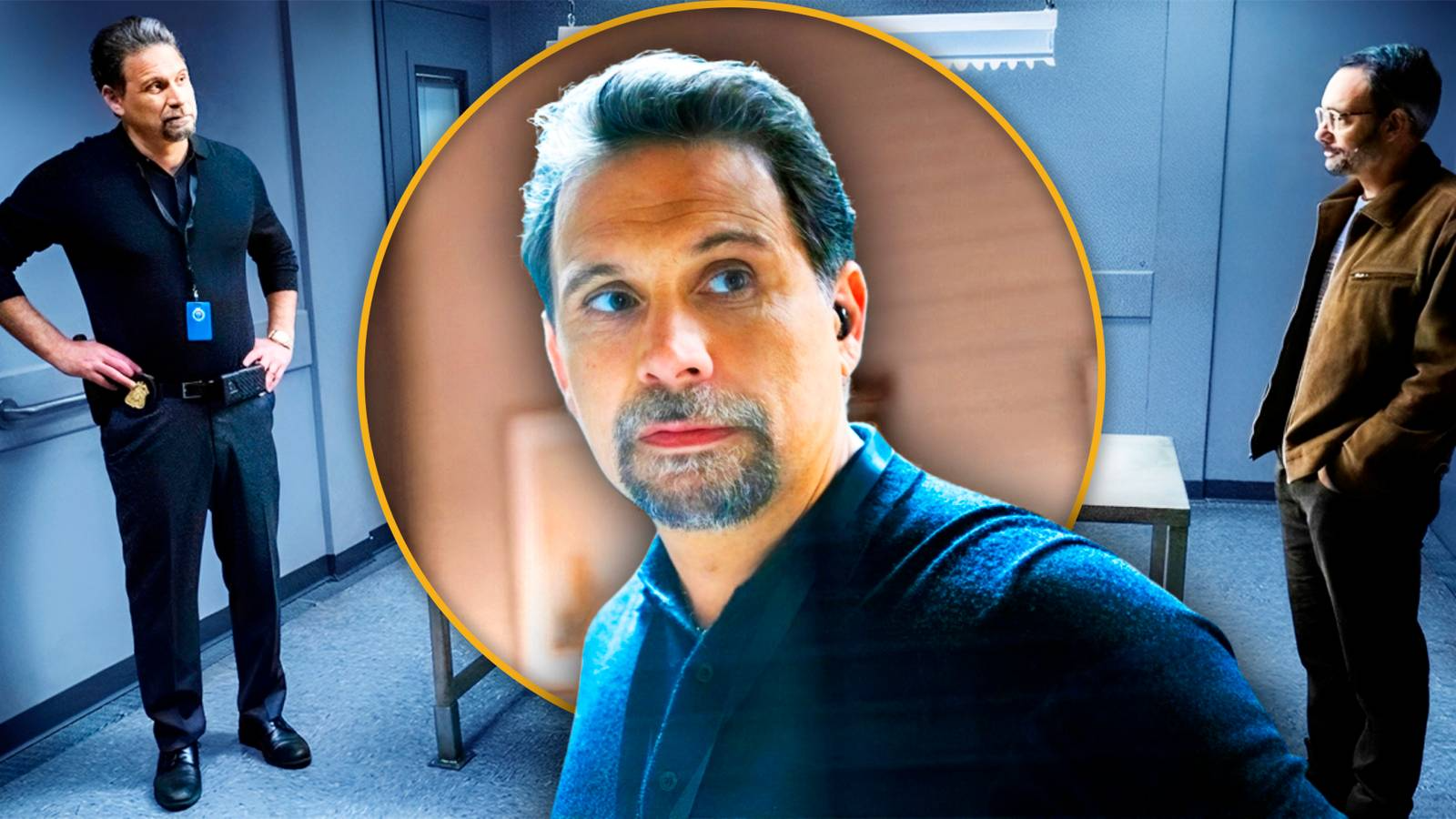
The high-pressure nerve center of the FBI’s New York Field Office, the Joint Operations Center (JOC), is a place where Assistant Special Agent in Charge Jubal Valentine (Jeremy Sisto) usually reigns supreme. With his rapid-fire delivery, tactical brilliance, and the ability to juggle a dozen digital feeds while commanding a room of elite analysts, Jubal has long been the steady hand in the storm. However, as FBI moves deep into its 2025–2026 television season, the storm has finally moved inside his own mind. Season 8 has taken a sharp, introspective turn, forcing Jubal to confront the one enemy he thought he had finally defeated: the ghost of his own addiction. In a narrative arc that has been described as the show’s most emotionally raw to date, Jubal is finding that recovery is not a destination he reached years ago, but a precarious bridge he must cross every single day.
The Trigger: A Ghost from the Past
The primary catalyst for this reopening of old wounds occurred during a mid-season case involving a sophisticated drug-running syndicate that utilized the same “dead drop” methods Jubal investigated during his darkest years in the Bureau. For most agents, this would be a routine tactical overlap; for Jubal, it was a sensory trigger. The return of a high-stakes environment associated with his period of active alcoholism has stripped away the protective layers he built over a decade of sobriety. Jeremy Sisto has portrayed this descent with a harrowing subtlety, showing a Jubal who is increasingly “white-knuckling” his way through the morning briefings.
The 2026 episodes have highlighted the “cumulative weight” of the job. Jubal’s struggle isn’t just about a craving for a drink; it is about the exhaustion of being the person everyone else relies on. When a long-term informant from his past resurfaced—only to be killed because of a tactical delay Jubal ordered—the guilt acted as a corrosive element. This professional failure reopened the “old wound” of his self-worth, leading to a series of scenes where we see Jubal staring at a glass of whiskey in a local bar, the camera lingering on the tension in his hands as he battles the impulse to throw away years of progress for a moment of numbness.
The Fatherhood Fracture and the Hospital Halls
Compounding the professional stress is the deteriorating health of his son, Tyler. The 2026 storyline has revisited Tyler’s medical battles, placing Jubal in the agonizing position of having to lead a federal manhunt while waiting for life-altering news from a pediatrician. This duality—the “General” of the JOC versus the “Helpless Father” in the hallway—is where the old wounds bleed the most. Jubal’s history of addiction was often fueled by a desire to escape the things he couldn’t control. Now, faced with a situation where his badge and his authority mean nothing in the face of his son’s illness, the old coping mechanisms are screaming for attention.
The brilliance of Season 8 lies in how it handles these “cracks in the armor.” Instead of a sudden, dramatic relapse, the show is depicting the “slow erosion” of a man’s resolve. We see Jubal skipping AA meetings to stay late at the office, a classic sign of replacing one addiction with another. His colleagues, particularly Isobel Castille (Alana De La Garza), have begun to notice the shift. The once-fluid communication in the JOC has become jagged, with Jubal snapping at analysts and retreating into his office for long periods of silence. The “struggle he thought he’d beaten” is now the primary antagonist of the season, proving that for someone like Jubal, the most dangerous suspect isn’t the one on the Most Wanted list, but the one in the mirror.
The Breaking Point: A Tactical Error
In a pivotal 2026 episode, Jubal’s internal turmoil finally spilled over into his tactical judgment. During a high-speed pursuit of a domestic terrorist, Jubal’s distraction led to a miscommunication with Scola and Tiffany, nearly resulting in a blue-on-blue incident. This was the wake-up call that the “old wounds” were no longer just a personal burden; they were a professional liability. The fallout from this mistake forced a confrontation with Isobel that served as the emotional peak of the season. For the first time, Jubal had to admit out loud that he was “not okay,” a moment of vulnerability that Jeremy Sisto delivered with a heartbreaking sense of defeat.
This admission has set the stage for a redemption arc that is far more complex than a standard procedural “save.” Jubal isn’t just trying to catch a killer; he is trying to catch himself before he falls. The 2026 spring arc focuses on Jubal’s return to basics—re-engaging with his sponsor and being honest with his team about his mental state. It is a powerful message to the audience: that asking for help is not a sign of weakness, even for the man in charge of the most elite unit in the country.
A Bureau Built on Resilience
As FBI hurtles toward its Season 8 finale, the “Jubal Valentine” story has become the show’s heartbeat. By reopening these old wounds, the writers have humanized the Bureau in a way that feels authentic to the 2026 cultural climate. We are seeing a leader who is resilient not because he is perfect, but because he is willing to fight his demons in the light of day.
The struggle Jubal thought he’d beaten has become his greatest teacher. Whether he emerges from this season with his sobriety intact or faces a long road to recovery, the “Weight of the Badge” has never felt more real. As the sirens wail and the JOC monitors flicker with new threats, Jubal Valentine remains at the helm—scarred, struggling, but still standing.