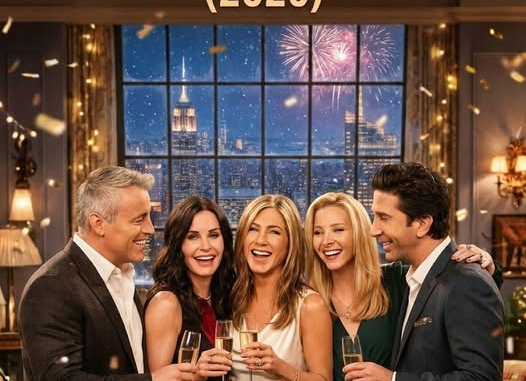
For years, Friends has been the ultimate comfort show. A background companion. A late-night therapy session. A cultural time capsule.
But in 2026, the conversation around the sitcom isn’t just nostalgic — it’s intense, emotional, and unexpectedly new.
Between tribute moments, cast revelations, and renewed debate over its legacy, Friends is once again at the center of pop culture discourse. And this time, it feels different.
Let’s break down why the series — decades after its finale — is dominating headlines and social feeds all over again.
The Matthew Perry Effect: A Legacy Still Unfolding
The passing of Matthew Perry in 2023 permanently altered how fans experience Friends. But the conversation hasn’t faded — it has evolved.
As previously unreleased interviews and behind-the-scenes stories continue to resurface, audiences are reexamining Chandler Bing through a new emotional lens. Perry’s memoir, Friends, Lovers, and the Big Terrible Thing, revealed the depth of his private battles during the height of the show’s success, reframing what many once viewed as effortless comedic timing.
Now, fans are revisiting episodes not just for laughs, but with a bittersweet awareness of what was happening off camera.
Scenes that once felt purely comedic now carry emotional weight. And that shift has reignited discussion about mental health in Hollywood — and the cost of being the funny one.
Jennifer Aniston Breaks Her Silence on “Reunion 2.0” Rumors
Speculation about a follow-up to The One Where They Get Back Together never truly dies. But recent interviews with Jennifer Aniston have reignited the fire.
When asked whether the cast would ever reunite in a scripted capacity following the success of the Friends: The Reunion, Aniston gave an answer that fans immediately dissected:
“Never say never. But it would have to mean something.”
That single sentence sparked a wave of debate.
Is the door slightly open? Or is it a graceful way of closing it?
Insiders suggest the cast remains deeply protective of the show’s legacy. The emotional weight of Perry’s absence adds another layer of complexity. Any revival would have to address it — not ignore it.
And that may be the biggest obstacle of all.
The Cultural Reappraisal: Is ‘Friends’ Aging Gracefully?
Beyond cast news, the series itself is under renewed critical examination.
On platforms like TikTok and YouTube, Gen Z viewers are discovering — and questioning — the show in real time. Storylines involving workplace dynamics, relationship politics, and certain punchlines are being reevaluated through a 2026 lens.
Yet paradoxically, streaming numbers remain consistently strong on Max.
So what’s happening?
Friends exists in two realities at once:
• A beloved ‘90s masterpiece
• A cultural artifact being critically reassessed
This tension is fueling conversation rather than diminishing interest. Debate, after all, keeps stories alive.
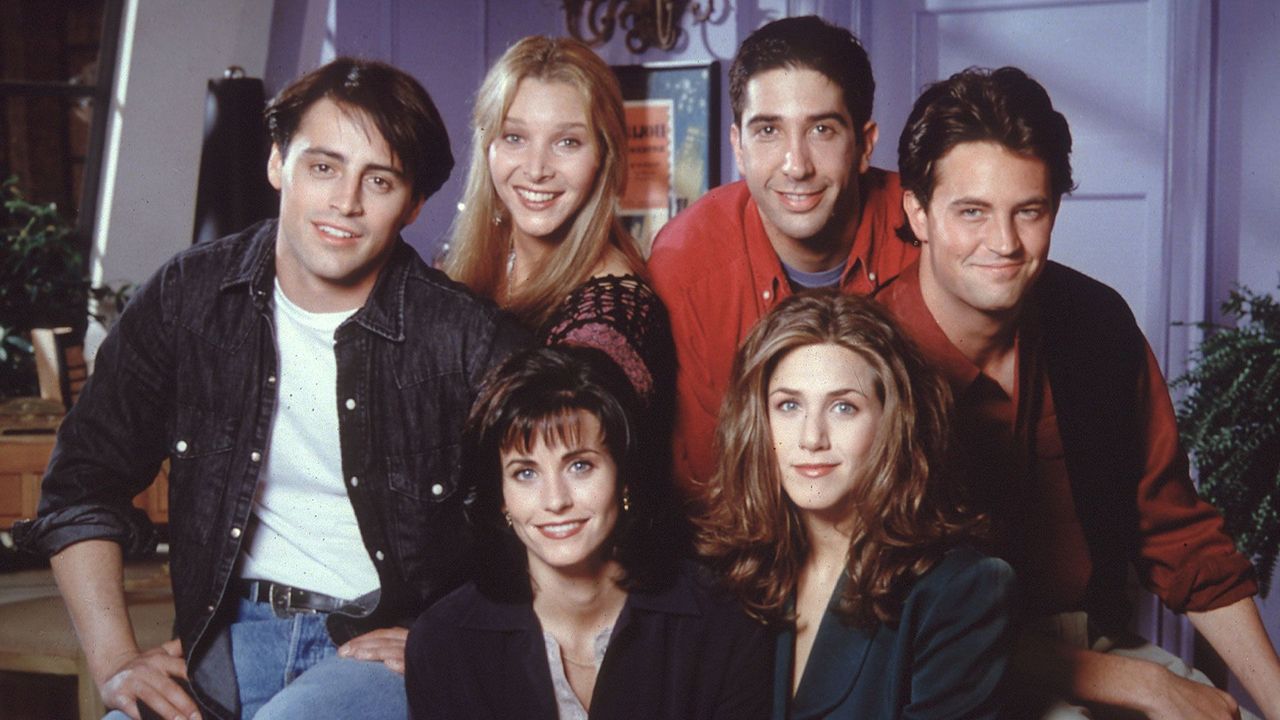
The Cast Then and Now: Where They Stand
Each member of the ensemble has followed a distinct path since the show ended in 2004.
Courteney Cox continues balancing horror franchise returns and television projects.
Lisa Kudrow remains a critically respected presence in comedy and indie film.
Matt LeBlanc has largely stepped back from high-profile television, embracing privacy.
David Schwimmer has focused on stage work and advocacy.
And Aniston remains a powerhouse in prestige streaming dramas.
But what’s drawing attention now isn’t career updates — it’s their enduring bond. Recent public appearances show a closeness that feels untouched by time. In an industry known for fractured ensembles, theirs remains intact.
That unity is rare. And fans notice.
The Streaming Generation Keeps It Alive
When Friends originally aired on NBC from 1994 to 2004, it defined appointment television.
Now, in the age of binge culture, it has found a second life.
Algorithms continuously recommend it. Clips circulate daily. Memes recycle punchlines into modern contexts.
Ironically, younger audiences who weren’t born when the finale aired are among its most vocal fans.
That intergenerational appeal may be the show’s most remarkable achievement.
The Reunion That Hit Harder Than Expected
When the cast reunited in 2021 for the unscripted special, many expected light nostalgia.
Instead, viewers got tears.
Raw reflections. Unfiltered admissions. Genuine affection.
The special wasn’t just a marketing event — it was closure. Or at least, it felt that way.
In hindsight, knowing what would follow in Perry’s life makes that reunion even more poignant. It now plays like a time capsule of a moment just before everything changed.
Is a Scripted Revival Even Possible?
Let’s be honest.
Without Chandler, could Friends truly exist in the same way?
Writers would face a monumental challenge: honoring Perry’s legacy while crafting a story that feels authentic rather than exploitative.
Some fans argue the story ended perfectly in 2004. Rachel got off the plane. Monica and Chandler moved forward. The apartment door frame became iconic precisely because it closed.
Others believe life doesn’t end at 30-something. Divorce, career pivots, parenting chaos — there’s more story to tell.
But would it still feel like Friends?
That’s the question no executive can easily answer.
Why the Conversation Feels Bigger Now
The renewed interest isn’t just about nostalgia.
It’s about legacy.
It’s about how we reinterpret art when time passes.
It’s about what happens when a sitcom becomes part of cultural DNA.
Few shows manage that transformation. Fewer still sustain it for over three decades.
Friends is no longer just a television series. It’s a shared language. A generational bridge. A case study in how entertainment evolves alongside its audience.
So… What Happens Next?
There is no official reboot announcement.
No confirmed scripted reunion.
No franchise expansion in development.
And yet, the buzz persists.
Because sometimes, relevance doesn’t require new episodes. Sometimes it thrives on memory, reinterpretation, and the quiet power of six actors who once sat on an orange couch and accidentally built one of the most enduring phenomena in television history.
The real bombshell isn’t a surprise season.
It’s the realization that Friends never really left.
And in 2026, it matters all over again.