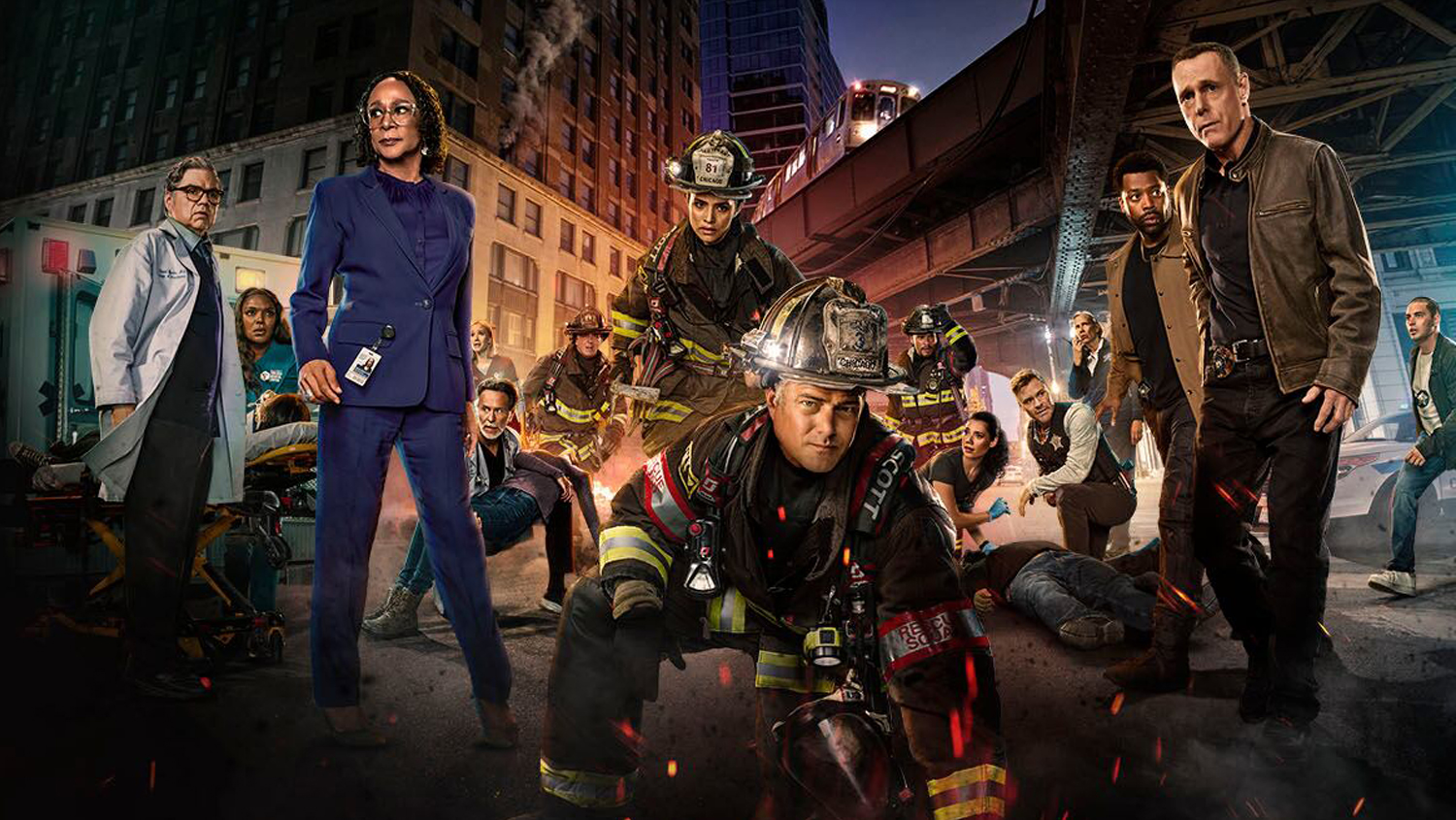
For over a decade, Wednesday nights on NBC have been synonymous with the sirens of the Windy City. The “One Chicago” triumvirate—Chicago Fire, Chicago P.D., and Chicago Med—has stood as an immovable fortress in the television landscape, dominated by the legendary Dick Wolf’s signature blend of high-stakes heroism and interconnected drama. However, as we move through the first quarter of 2026, a series of “bombshell” announcements from network executives has sent shockwaves through the fandom, leading many to ask a question that once seemed unthinkable: Is this the beginning of the end for the Chicago franchise? The atmospheric pressure within Firehouse 51 has shifted from the heat of the flames to the cold reality of shifting media tides, leaving the “Chi-Hards” reeling from news that suggests the 2026–2027 season might be the final ride for some of our favorite heroes.
The Budgetary Axe and the “Rotational” Model
The primary catalyst for this collective anxiety stems from NBC’s recent decision to implement drastic cost-cutting measures across its high-budget procedurals. In a 2026 media landscape increasingly dominated by streaming-first mentalities, the overhead of maintaining three massive ensemble casts in a city as expensive as Chicago has become a point of contention. The “bombshell” revealed earlier this February is the network’s move toward a “limited series” feel for its veteran shows. While Chicago Fire remains the flagship, the network has hinted that the upcoming fourteenth season may feature significantly fewer episodes for its most expensive stars.
This means that iconic figures like Taylor Kinney (Kelly Severide) and Miranda Rae Mayo (Stella Kidd) might appear in only a fraction of the season’s episodes to balance the books. For fans, this “rotational” model feels like a slow-motion goodbye. If the heart of Firehouse 51—the veterans who have carried the show since 2012—are only part-time residents, the very soul of the series is at risk. This administrative pivot has led to speculation that NBC is preparing to “sunset” the franchise, potentially consolidating the three shows into a single “Chicago United” brand to save on production costs.
The Loss of the “Crossover” Magic
Adding to the sense of an impending finale is the logistical difficulty of the once-celebrated crossovers. In the early years, the seamless transition from the firehouse to the precinct to the hospital was the franchise’s greatest strength. However, the 2026 production updates suggest that these large-scale events are being phased out due to “complex scheduling and budgetary constraints.” Without the connective tissue that makes the “One Chicago” universe feel like a living, breathing city, the shows are beginning to feel like isolated islands.
The recent departure of several key creative voices behind the scenes has only added fuel to the fire. When long-term showrunners and writers begin to exit, it often signals a “cleaning of the house” before a series finale. While Chicago Fire still pulls in impressive ratings, the 2026 bombshell revealed that the network is looking for “fresh, lower-cost IP” to fill the Wednesday night slots. The fear is that NBC is no longer looking to sustain a legacy, but rather to find an exit strategy that honors the fans without the soaring price tag of a fourteen-season veteran.
A Firehouse Under Siege
Within the narrative of Chicago Fire itself, the writers seem to be leaning into this “End of an Era” theme. The current storylines in Season 14 are heavy with themes of legacy, retirement, and the “changing of the guard.” As characters like Christopher Herrmann (David Eigenberg) and Mouch (Christian Stolte) face the physical realities of aging out of the department, the show feels more like a long goodbye than a new beginning. The recent return of Eamonn Walker as Wallace Boden was celebrated, but many insiders suggest his return was specifically designed to help “close the book” on the legendary firehouse rather than start a new chapter.
This sense of finality is reinforced by the “Steamy One Chicago Connection” rumors that suggest major character deaths or departures are on the horizon for the 2026 finale. If the show is planning a massive “reset,” it may involve a catastrophic event that leaves only a few survivors to carry on in a vastly different format. The bombshell isn’t just that the shows might end, but that they might become unrecognizable in their attempt to survive.
The Resilience of the Fandom
Despite the reeling fans and the grim headlines, there is still a glimmer of hope. The “One Chicago” community is one of the most dedicated in television history. Their outcry following the 2026 announcements has already forced NBC to issue a “clarification” stating that while the shows are evolving, they are “not currently scheduled for cancellation.” However, in the world of network television, “not currently” is often a polite way of saying “watch this space.”
As we look toward the 2026 spring finale, the future of Firehouse 51 hangs in the balance. Whether this is truly the end or simply a painful rebirth, the legacy of Chicago Fire is secure. It has taught us about brotherhood, sacrifice, and the courage to face the heat. If the sirens are to fall silent, they will do so after having left an indelible mark on the hearts of millions. But for now, the engines are still running, and the fans are holding their breath, waiting to see if their heroes can survive one last, impossible call.