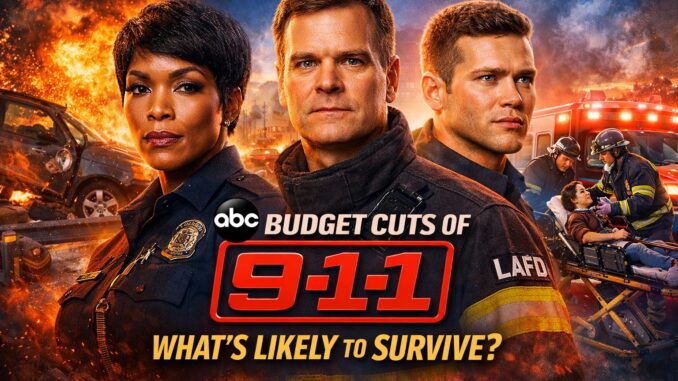
When 9-1-1 moved to ABC, fans breathed a sigh of relief. The high-octane drama had found a new home. But now? The conversation has shifted from celebration to calculation.
Budget cuts.
The phrase alone sends shivers down the spine of any devoted viewer. Explosions, multi-car pileups, tsunamis, collapsing buildings—this show isn’t cheap to make. So what happens when the accountants step in and start tightening the screws?
Let’s break it down. No panic. Just facts, strategy, and a little educated speculation.
Why Is ABC Cutting Costs Now?
Television isn’t what it used to be. Streaming platforms, shrinking ad revenue, and shifting viewer habits have changed the game. Even successful shows aren’t immune to financial recalibration.
Networks today aren’t asking, “Is this show popular?”
They’re asking, “Is this show profitable?”
And that’s a very different question.
How Expensive Is 9-1-1, Really?
Let’s be honest—9-1-1 doesn’t do small.
Blockbuster-Style Disasters
From freeway collapses to cruise ship catastrophes, the show often feels like a weekly action movie. Those sequences require:
-
Massive stunt coordination
-
CGI enhancements
-
On-location filming
-
Specialized equipment
-
Extended production schedules
That price tag climbs fast.
Ensemble Cast Salaries
The series boasts a veteran cast led by powerhouse performers like Angela Bassett and Peter Krause. Long-running shows mean contract renegotiations—and yes, rising salaries.
Success has a cost.
What’s Most Likely to Survive the Budget Cuts?
Here’s the good news: networks don’t slash blindly. They trim strategically.
1. Core Characters (They’re Safe)
You don’t mess with the heart of the show. Characters like Athena Grant and Bobby Nash aren’t just cast members—they’re the emotional backbone.
Removing central figures would alienate fans and destabilize the narrative. That’s a risk ABC won’t take lightly.
2. Emotional Storytelling Over Spectacle
If you’ve noticed, some of the most powerful episodes aren’t about explosions—they’re about relationships.
-
Marriage struggles
-
PTSD recovery arcs
-
Parenthood challenges
-
Grief and healing
Character-driven episodes cost less than large-scale disaster spectacles. Expect more emotional depth and fewer million-dollar fireballs.
What Could Be Reduced or Reworked?
Now let’s talk about the vulnerable areas.
1. Fewer Mega-Disasters Per Season
Will we still get jaw-dropping emergencies? Absolutely.
But instead of multiple cinematic-level disasters, we may see one or two “event” episodes, with smaller-scale rescues filling the rest of the season.
Think quality over quantity.
2. Limited Guest Stars
High-profile guest appearances can be pricey. Future seasons may lean more heavily on the main cast and recurring characters rather than big-name cameos.
3. Tighter Episode Orders
Instead of 18–22 episodes, seasons may shrink slightly. Shorter seasons often mean:
-
Lower overall production costs
-
More focused storytelling
-
Faster pacing
Not necessarily a bad thing.

Will Cast Salaries Be Renegotiated?
In long-running network dramas, salary discussions are inevitable. Actors’ contracts often evolve with a show’s success.
However, renegotiation doesn’t automatically mean departures. It could mean creative solutions:
-
Adjusted filming schedules
-
Producer credits instead of salary hikes
-
Backend profit participation
Hollywood has many financial levers.
Could Filming Locations Change?
Location shoots are expensive. Studio-based filming is cheaper.
More Controlled Environments
We may see:
-
More station-house scenes
-
More hospital interiors
-
More dialogue-heavy sequences
Less freeway destruction. More emotional confrontation.
Is that so bad?
How Does This Compare to Other Network Dramas?
Cost control isn’t unique to this show. Across broadcast television, networks are recalibrating.
Shows that survive typically:
-
Retain strong ratings
-
Maintain loyal fanbases
-
Adapt creatively
9-1-1 checks those boxes.
What About Spin-Offs?
The franchise has expanded before. However, launching new spin-offs during cost-cutting periods becomes riskier.
Expansion requires upfront investment. And right now, caution rules.
Will Quality Suffer?
Here’s the million-dollar question.
Short answer? Not necessarily.
Sometimes constraints spark creativity.
When writers can’t rely on spectacle, they lean into character. When budgets shrink, scripts sharpen. It’s like cooking without expensive ingredients—you focus on flavor.
And 9-1-1 has flavor.
Why Fans Shouldn’t Panic
Let’s zoom out.
The show survived:
-
A network move
-
Industry strikes
-
Scheduling shifts
It’s resilient. The fanbase is vocal. Ratings remain solid. ABC didn’t acquire it just to quietly dismantle it.
If anything, they want to protect their investment.
What Makes 9-1-1 Too Valuable to Fail?
Brand Recognition
The title alone carries weight. It’s instantly recognizable.
Loyal Audience
Viewers tune in live—something increasingly rare in today’s streaming world.
Social Media Engagement
Every shocking rescue trends online. That kind of organic marketing? Priceless.
The Likely New Formula Moving Forward
So what does the future look like?
Expect:
-
One massive season-opening disaster
-
One mid-season spectacle
-
Character-heavy arcs in between
-
Emotional stakes over physical destruction
-
Streamlined production efficiency
In other words: same heart, smarter execution.
The Bigger Picture — TV Is Evolving
We’re witnessing a shift in network television economics. The golden era of blank-check productions is over.
But evolution doesn’t mean extinction.
If anything, it means adaptation.
And 9-1-1 has always been about adaptation under pressure.
Final Verdict — What’s Safe and What’s Not
Safe:
-
Core cast
-
Emotional arcs
-
Signature emergency rescues
-
High production quality (within reason)
At Risk:
-
Multiple blockbuster-scale disasters
-
Costly guest stars
-
Extended episode counts
The sirens aren’t shutting off. They’re just being recalibrated.
Conclusion: The Show Isn’t Ending — It’s Evolving
Budget cuts sound scary. But here’s the truth: smart shows survive by adjusting, not collapsing.
9-1-1 doesn’t need constant explosions to stay explosive. Its strength lies in the people—the firefighters, paramedics, and cops who face chaos and still go home to complicated lives.
ABC isn’t tearing down the station.
They’re reinforcing it.
And if history tells us anything, this series thrives under pressure.
FAQs
1. Is 9-1-1 being canceled due to budget cuts?
No. There’s no indication of cancellation. Budget adjustments are common in long-running network shows.
2. Will any main cast members leave because of cost reductions?
There’s no confirmed departure tied to budget changes. Core characters are likely to remain central to the series.
3. Will there be fewer big disaster episodes?
Possibly. Expect fewer large-scale spectacles but still at least one or two major events per season.
4. Could the episode count shrink?
Yes, shorter seasons are a common cost-management strategy across network television.
5. Will the storytelling style change?
The show may lean more into character-driven drama, which many fans already consider its strongest element.