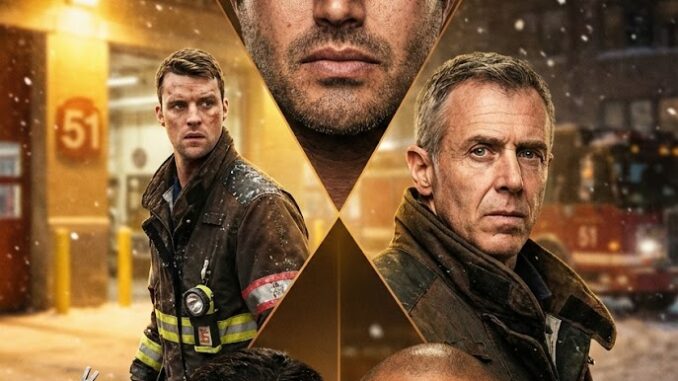
When the 2025 One Chicago mega crossover aired, fans expected fireworks. High stakes rescues. Emotional reunions. Characters from across the franchise colliding in one explosive night of television. Instead, what many viewers noticed first was absence.
Key members of Chicago Fire were barely visible. Some didn’t appear at all. Social media lit up within minutes of the broadcast.
Where were they?
Why were they missing?
Was this creative… or personal?
The speculation escalated quickly. Online threads began suggesting everything from backstage feuds to secret contract disputes. Others theorized that the writers were quietly phasing out certain characters ahead of larger exits.
The truth, as usual in television production, is far less cinematic — but far more complex.
Crossover events are logistical puzzles. Coordinating schedules across multiple series under the One Chicago umbrella requires precision. Cast members are contracted primarily to their individual shows. When crossovers happen, episode counts, filming days, and availability windows must align perfectly.
If even one actor is filming a major arc-heavy episode for their own series during the same production block, their crossover presence may be reduced or eliminated.
That explanation may sound technical, but it is often the primary driver.
Another major factor is budget.
Large-scale crossover episodes are expensive. Multiple casts. Extended stunt sequences. Location shoots. Special effects. When production costs rise, screen time must be strategically allocated. Writers and producers focus on central plotlines that connect the shared emergency.
That sometimes means sidelining beloved regulars.
Fans naturally interpret absence emotionally. If a favorite character is missing from a milestone event, it feels intentional. It feels like a message.
But television storytelling is not always symbolic.
The 2025 crossover storyline reportedly centered heavily on specific emergency response arcs that required certain expertise from within the universe. Not every firefighter from Firehouse 51 would logically be present in every multi-agency crisis scenario. Writers often narrow the field to maintain narrative clarity.
Still, that did not stop rumor cycles from igniting.
Some posts suggested personal tension among cast members. Others hinted that actors were unhappy with reduced roles. There is, however, no verified evidence confirming internal feuds connected to the crossover absences.
In long-running ensemble shows, screen time fluctuates naturally. One episode may spotlight a character intensely. The next may shift focus elsewhere. During crossovers, that fluctuation becomes magnified because expectations are higher.
There is also an overlooked creative angle.
When shows mature, writers experiment with structural resets. Reducing a character’s presence temporarily can be a way to recalibrate arcs, test audience reactions, or build anticipation for future developments. It is not necessarily a sign of elimination.
The phrase “kịch bản giết” has been circulating in fandom spaces, suggesting the crossover was used to quietly retire or weaken certain roles. But as of now, there has been no official confirmation of permanent character removals tied directly to the 2025 event.
Absence does not equal execution.
Another element to consider is actor autonomy. In today’s television landscape, performers often negotiate flexibility into contracts. Personal commitments, side projects, or even short-term scheduling conflicts can impact participation in special events.
That does not indicate animosity. It indicates career management.
What makes this situation particularly combustible is that One Chicago crossovers carry emotional weight. They are marketed as once-in-a-season spectacles. When a fan favorite is missing, it feels like something went wrong behind the curtain.
But production logistics rarely make for viral headlines.
It is far easier to imagine a dramatic feud than to accept a spreadsheet conflict.
In reality, crossover episodes are balancing acts between story, budget, contracts, and timing. Creative teams must decide which characters serve the central emergency most effectively. Sometimes that means hard cuts.
Could there be deeper strategic planning underway within Chicago Fire? Possibly. Long-running shows routinely reassess character trajectories. But no credible reporting has confirmed personal disputes driving the 2025 absences.
The emotional intensity of fan response speaks more to investment than to verified conflict.
When viewers care deeply about a fictional firehouse, every shift feels seismic.
So was it scripted or personal?
Based on available evidence, it leans strongly toward scripted structure and production logistics rather than backstage hostility.
Television is both art and machinery. What appears mysterious on screen often originates from practical decision-making behind it.
The 2025 mega crossover may have surprised fans with who was missing. But surprise does not automatically mean scandal.
Sometimes, it simply means the story demanded a tighter lens — even if that lens left a few familiar faces outside the frame.