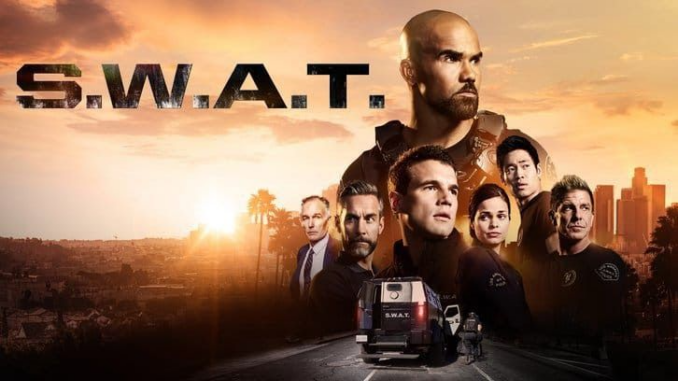
Is S.W.A.T. the Most Watchable Police Series Right Now?
Police dramas are everywhere. Open any streaming platform and you’ll see badges, interrogation rooms, tactical raids, and moral dilemmas lined up like options on a menu. The genre isn’t slowing down. If anything, it’s more competitive than ever.
So here’s the real question: is S.W.A.T. the most watchable police series right now?
Not the most awarded. Not the most controversial. The most watchable. That means rewatch value, binge appeal, emotional accessibility, and consistent engagement.
Let’s break it down.
What Makes a Police Series “Watchable”?
Watchability isn’t about critical praise. It’s about whether you want to press “Next Episode.”
A watchable show has:
-
Clear storytelling
-
Strong pacing
-
Characters you care about
-
Stakes that feel real
-
Enough closure to satisfy you
S.W.A.T. operates within a structured procedural format. Each episode delivers a contained mission, layered with character subplots. You can jump into a random episode and still follow the story. That accessibility lowers the barrier to entry.
In a world of overly complex narratives, simplicity can be a strength.
The Shemar Moore Factor
Let’s address the obvious variable: Shemar Moore.
Moore anchors the show as Hondo, a tactical leader balancing authority with empathy. He brings physical credibility to action scenes and emotional intelligence to leadership conflicts.
You believe him in both spaces.
That duality matters. A police drama collapses without a convincing central figure. Moore provides consistency. His presence stabilizes the series even when episodes vary in intensity.
Star power draws viewers in. Performance keeps them watching.
How It Stacks Up Against the Competition
The genre includes heavyweights like Law & Order: Special Victims Unit, Chicago P.D., and Blue Bloods.
Each has its niche.
Law & Order: SVU leans into courtroom intensity and victim advocacy.
Chicago P.D. emphasizes gritty moral ambiguity.
Blue Bloods centers on family tradition and institutional loyalty.
S.W.A.T. sits somewhere in the middle. It prioritizes tactical operations while weaving in social themes and team camaraderie. It’s less bleak than Chicago P.D., less courtroom-heavy than SVU, and less family-driven than Blue Bloods.
That balance widens its audience appeal.
Action That Feels Cinematic
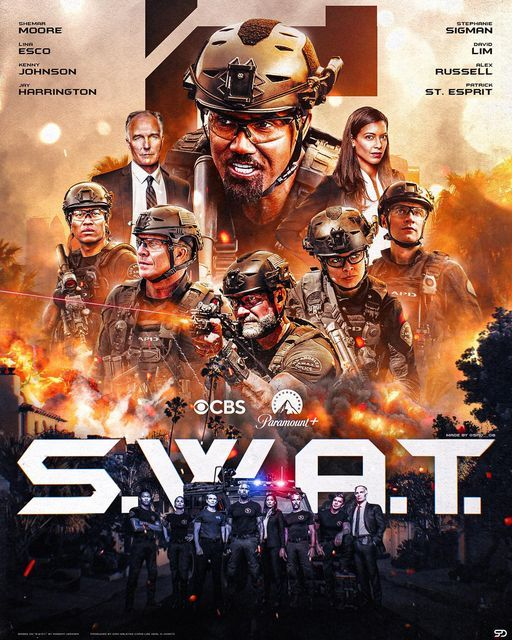
S.W.A.T. distinguishes itself through choreography. The raid sequences, coordinated team movements, and escalating tension feel intentional rather than chaotic.
The action isn’t just noise. It advances plot and reinforces character dynamics. Tactical realism is present—but not overwhelming. You get credibility without drowning in procedural jargon.
That balance increases replay value.
Built for Binge-Watching
Although it originated as a network series, S.W.A.T. thrives in the streaming era.
Episodes flow smoothly. Story arcs stretch across seasons without becoming convoluted. You don’t need a chart to track alliances or timelines.
That clarity supports binge culture. One episode turns into three. Three turn into a season.
Watchability equals momentum.
Emotional Accessibility Matters
Some police dramas lean heavily into darkness. That can be powerful—but exhausting.
S.W.A.T. integrates camaraderie and occasional humor. It allows characters moments of humanity outside crisis mode. That emotional variation prevents fatigue.
You feel tension, but you’re not suffocated by it.
Sustained watchability requires emotional balance.
Relevance in a Changing Landscape
Modern audiences expect police dramas to acknowledge real-world tensions. S.W.A.T. addresses issues of community trust and institutional accountability through Hondo’s leadership role.
It doesn’t ignore complexity. It integrates it without turning every episode into a lecture.
That approach keeps the series contemporary without alienating viewers who primarily want entertainment.
Longevity as Proof of Engagement
The series has navigated renewals, cancellations, and platform transitions. Longevity signals something critical: consistent audience investment.
Shows that aren’t watchable fade quickly. S.W.A.T. hasn’t.
That resilience suggests the formula works.
So, Is It the Most Watchable Right Now?
If your criteria include:
-
Structured storytelling
-
Strong central performance
-
Balanced tone
-
High-energy action
-
Binge-friendly pacing
Then yes, S.W.A.T. is arguably at the top tier of current police dramas.
Is it universally the best? That depends on taste. Viewers who prefer courtroom drama or darker psychological intensity might gravitate elsewhere.
But in terms of accessibility and sustained engagement, S.W.A.T. performs exceptionally well.
Conclusion
In a crowded field of police procedurals, S.W.A.T. stands out not because it reinvents the genre—but because it executes it efficiently.
The writing provides structure.
The action provides adrenaline.
Shemar Moore provides authority and emotional grounding.
That combination creates something powerful: consistency.
And in television, consistency drives watchability.
Is it the most watchable police series right now? For a large segment of viewers, absolutely.
FAQs
1. Who leads the cast of S.W.A.T.?
The series stars Shemar Moore as Hondo.
2. How is S.W.A.T. different from Law & Order: SVU?
Law & Order: Special Victims Unit focuses more on investigations and courtroom proceedings, while S.W.A.T. centers on tactical field operations.
3. Is S.W.A.T. action-heavy?
Yes. It emphasizes coordinated raid sequences and high-stakes operations.
4. Does S.W.A.T. address social issues?
Yes. It integrates themes related to community relations and leadership dynamics.
5. Is S.W.A.T. good for binge-watching?
Yes. Its episodic structure and steady character arcs make it highly binge-friendly.