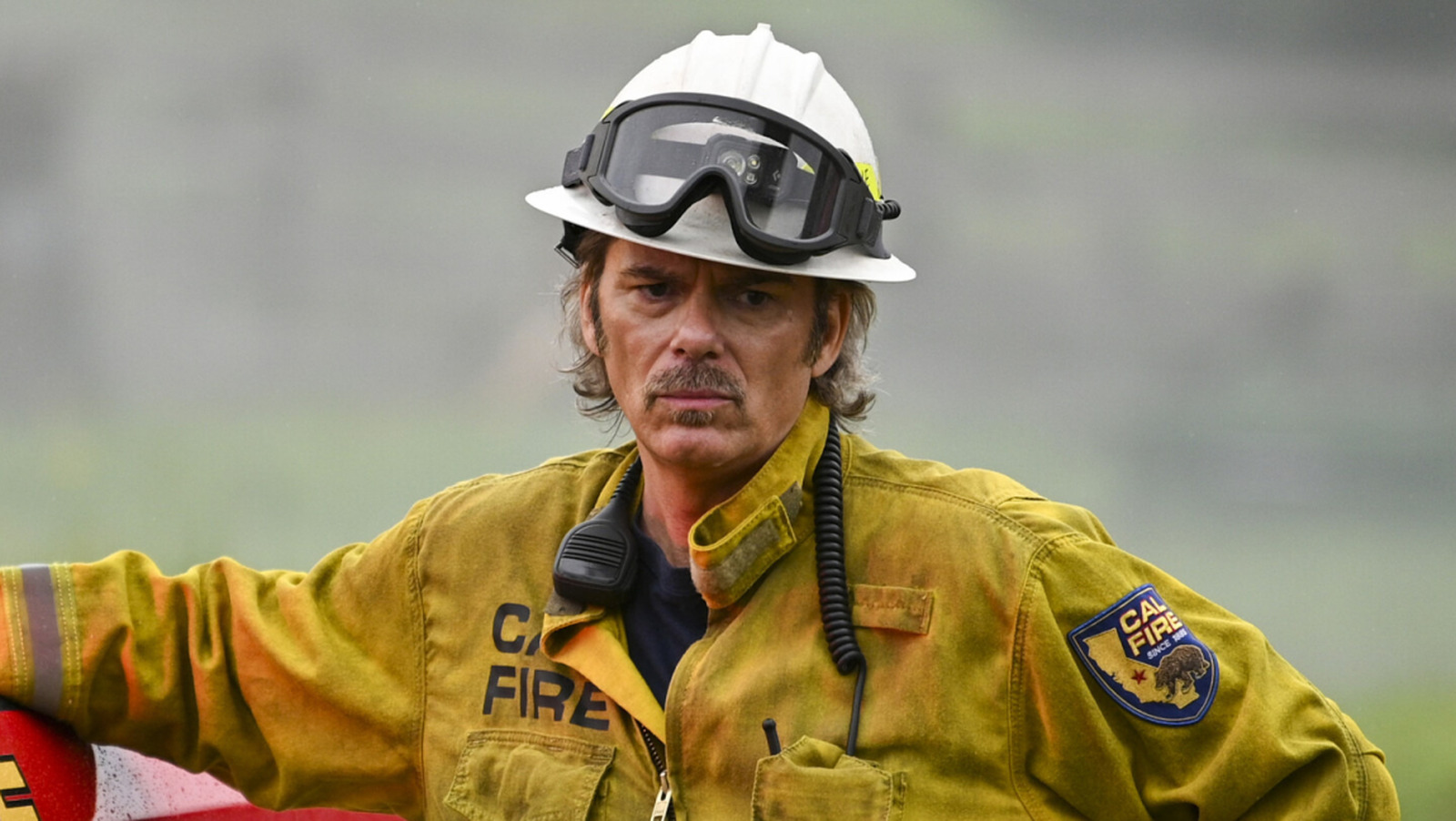
The rugged landscape of Edgewater, California, has always been defined by its volatility, but the most devastating tremor to hit the community didn’t come from a shifting fault line or a runaway wildfire. Instead, it came from the heartbreaking departure of a foundational pillar: Battalion Chief Vince Leone. As “Fire Country” moves through its high-stakes 2026 season, the exit of Billy Burke’s iconic character has left an emotional crater in the series, fundamentally altering the trajectory of the Leone family and the operational heart of Station 42. Vince was more than just a leader; he was the moral compass of a show built on the themes of redemption, and his absence has sent shockwaves through the fan base and the fictional town alike.
The Architect of Redemption
From the pilot episode, Vince Leone was established as the quintessential blue-collar hero—a man of iron will, deep-seated grief, and a complicated brand of love. As the father of Bode Leone, Vince embodied the struggle of a parent trying to reconcile the memory of a lost daughter with the return of a “prodigal son” wearing an inmate’s orange jumpsuit. Billy Burke’s performance was a masterclass in restrained masculinity, portraying a man who could command a fire line with absolute authority while secretly crumbling under the weight of his family’s fractured history.
Vince’s departure represents the end of an era for the redemption arc that fueled the show’s first several seasons. He was the gatekeeper of Bode’s forgiveness; his journey from viewing his son as a liability to seeing him as a fellow firefighter was the emotional spine of the narrative. By removing Vince from the equation, the writers have forced Bode to find his own internal validation, stripped of the father-figure whose approval he so desperately craved. The “Hero Falls” narrative isn’t just about a character leaving a job; it’s about the collapse of the safety net that held Edgewater together.
The Ripple Effect on Station 42
Within the professional world of Firehouse 42, Vince’s exit has created a power vacuum that is currently igniting internal friction. Vince was the bridge between the old-school traditions of Cal Fire and the innovative, often risky demands of modern firefighting. His leadership style—defined by the mantra of “everyone goes home”—provided a sense of security for Eve, Jake, and the rest of the crew.
In the wake of his departure, we are seeing a “Station 42 in crisis.” The 2026 episodes have highlighted the difficulty of replacing a legend. While Sharon Leone has stepped up in her administrative capacity to keep the wheels turning, the loss of her partner—both in life and on the front lines—has added a layer of profound isolation to her character. The “shockwaves” are visible in every briefing and every emergency response; there is a hesitation in the air where there used to be Vince’s decisive commands. The crew isn’t just mourning a boss; they are relearning how to be a team without their captain.
A Family in Mourning
Perhaps the most visceral impact of Vince’s fall is the devastation of the Leone household. The relationship between Vince and Sharon was the “gold standard” of the series—a marriage tested by fire, literal and metaphorical, that always emerged stronger. Seeing Sharon navigate the quiet hallways of their home without Vince’s presence has provided some of the most gut-wrenching moments of the 2026 season. It has forced her to confront her own mortality and her future in a town that feels increasingly haunted by what has been lost.
For Bode, the loss is a double-edged sword. While he is finally a free man and a professional firefighter, he is doing so in the shadow of a giant. Every time he puts on his turnouts, he is reminded of the man who paved the way for him. This “A Hero Falls” storyline is effectively a “coming of age” trial for Bode. He is no longer the inmate seeking his father’s light; he must now become the light for the rest of his family.
The Legacy of Billy Burke
Behind the scenes, the departure of Billy Burke marks a significant creative pivot for the franchise. Burke brought a cinematic gravitas to the small screen, helping “Fire Country” distinguish itself from other procedurals through his grounded, gritty realism. While the show continues to expand with spin-offs like Sheriff Country, the loss of its original patriarch feels like a “changing of the guard.”
As Edgewater moves forward, the memory of Vince Leone remains etched in every charred tree and rebuilt home. The shockwaves of his departure haven’t settled; they have simply transformed into a new kind of energy—one that is driving the remaining characters toward a more independent, albeit more somber, future. Vince Leone may have fallen, but the fire he started in the hearts of his crew and his family will likely burn for the duration of the series.