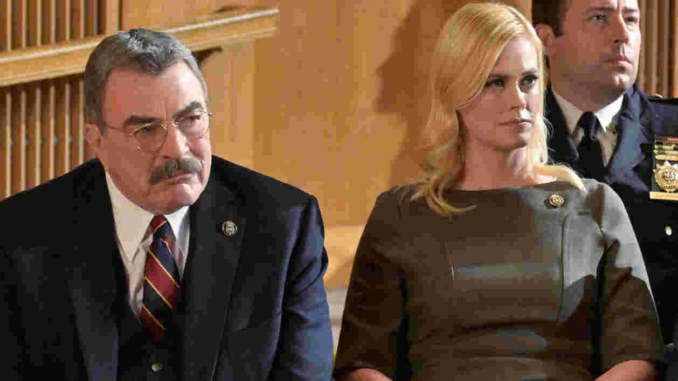
For over a decade, Blue Bloods hasn’t just been another police procedural. It’s been tradition. A ritual. A Sunday night gathering built around justice, loyalty, and the unshakable bond of family.
But now, the long-running drama is facing a storm of speculation that has fans dissecting every interview, every scene, and every silence. With the series officially approaching its conclusion after Season 14, the conversation has shifted from “what’s next?” to “how will it end?” And at the center of that debate stands one man: Tom Selleck.
Is this truly the final chapter for Commissioner Frank Reagan? Or is there a bigger twist behind the curtain?
Let’s break down the moment that has everyone talking.
The Announcement That Sparked a Firestorm
When it was confirmed that Blue Bloods would wrap with its fourteenth season, the reaction was immediate and emotional. Fourteen years on air is a rare feat in modern television, especially for a network procedural.
Cast interviews turned reflective. Social media posts carried the tone of farewell. Words like “gratitude,” “legacy,” and “family” dominated the conversation.
And fans began asking the inevitable question:
Why now?
Tom Selleck Speaks — And Fans Read Between the Lines
For months, speculation swirled about the show’s future. Reports of budget adjustments and shifting priorities fueled rumors that the decision may not have been purely creative.
Tom Selleck, who has embodied Frank Reagan since 2010, publicly expressed disappointment that the series was ending while still delivering solid ratings. His comments weren’t angry — they were passionate. He spoke about the cast and crew as if defending a family business.
That subtle frustration ignited debate online. Was the show ending on its own terms? Or was it caught in larger network strategy shifts?
Either way, the emotional weight of Selleck’s words made one thing clear: this ending matters.
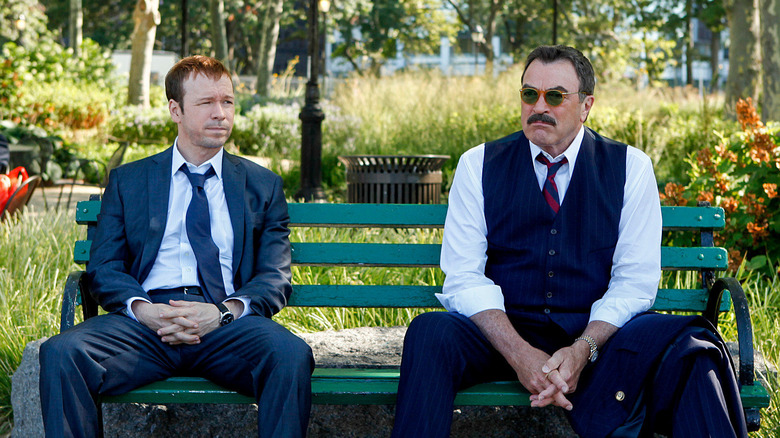
Why Season 14 Feels Like a Farewell Letter
There’s a noticeable tonal shift in the latest episodes.
Frank is reflecting more than commanding.
Danny is confronting his past with a gravity that feels permanent.
Erin’s career crossroads feels less like a subplot and more like a closing arc.
Jamie and Eddie’s partnership carries the stability of something being sealed, not tested.
When long-running shows begin giving characters “full-circle” moments, it’s rarely accidental. Conversations linger longer. Family dinners feel heavier. Dialogue feels almost like goodbye speeches disguised as casual talk.
It doesn’t feel rushed. It feels intentional.
The Reagan Family Dinner — A Cultural Symbol at Stake
Few television rituals are as iconic as the Reagan Sunday dinner. Week after week, audiences have gathered around that table alongside Frank, Danny, Erin, Jamie, and the extended Reagan clan.
It’s more than a narrative device. It’s a symbol of unity in a divided world — law enforcement ethics debated respectfully, generational differences aired openly, faith and duty intertwined.
Ending Blue Bloods means ending that ritual.
And for many viewers, that loss feels personal.
The Network Chessboard
Behind the emotional farewell lies the business reality of television.
After fourteen seasons, production costs rise significantly. Longtime stars command higher salaries. Network programming strategies evolve. Even a dependable show can face financial scrutiny.
In today’s television landscape, streamers and shorter seasons dominate. Long-running broadcast dramas are increasingly rare.
The end of Blue Bloods may reflect a broader industry shift rather than a creative burnout.
But that doesn’t make it sting less.
Could a Spin-Off Be the Real Surprise?
Here’s where speculation gets interesting.
Franchises dominate modern television. And Blue Bloods has built a universe rich enough to expand. A Danny-focused investigative drama? A prequel exploring a young Henry Reagan? A political spin-off centered on Erin’s legal battles?
Nothing official has been announced. But in an era where successful brands rarely disappear completely, the door isn’t locked.
It may simply be closing softly.
The Emotional Impact of Saying Goodbye
Long-running shows become part of routine. They mark time. They anchor weeks. For many viewers, Blue Bloods has been a constant through changing jobs, moves, relationships, and life milestones.
That’s why its ending feels larger than a programming update. It feels like the end of an era.
The cast has grown up on screen. The audience has grown with them.
And now, both are preparing to let go.
What Makes This Ending Different
Some series fade quietly. Others are canceled abruptly.
Blue Bloods is doing neither.
It is closing with awareness. With dignity. With intention.
And that might be why the conversation is so intense. This isn’t a chaotic goodbye. It’s a deliberate one. That makes fans wonder whether there’s still room for negotiation, renewal, or reinvention.
Television history has proven that nothing is impossible.
Is This Truly the Last Salute?
As filming winds down and cast members share behind-the-scenes memories, one truth stands firm: the Reagan legacy is secure.
Whether this finale serves as a permanent farewell or a strategic pause, the cultural footprint of the series is undeniable.
Fourteen seasons.
Hundreds of family dinners.
Countless moral debates.
One unwavering patriarch at the head of the table.
If this is the end, it’s a powerful one.
But until the final scene fades to black, fans will continue asking:
Is this the last Sunday dinner… or just the beginning of a new chapter in the Reagan story?
One thing is certain — when the final toast is made, it won’t just close a show.
It will close a tradition.