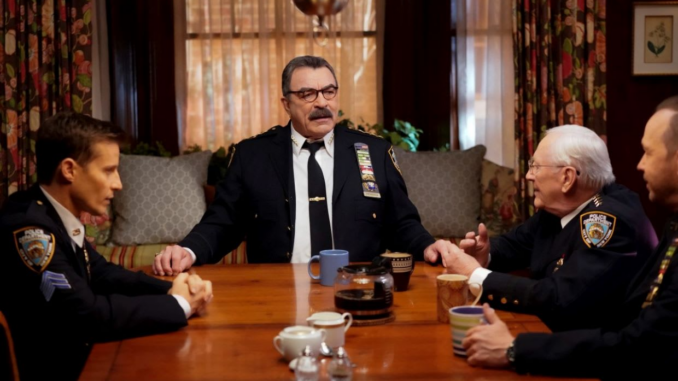
For more than a decade, Blue Bloods hasn’t just been another crime drama. It has been Sunday dinner with the Reagans. A ritual. A moral debate wrapped in handcuffs and family loyalty. And now? The series stands at one of the most controversial turning points in its history.
After 14 seasons of commanding Friday nights, the announcement that Season 14 would mark the end of the show detonated across the fandom. But what truly ignited debate wasn’t just the cancellation—it was the behind-the-scenes tension, cast reactions, and unanswered questions that followed.
Is this really the end of the Reagan legacy? Or is there more unfolding behind closed doors?
Let’s break it down.
The Decision That No One Wanted
When news broke that CBS would conclude Blue Bloods with its fourteenth season, the reaction was immediate and fierce. Ratings had remained steady. The fan base was loyal. The show was still one of the network’s most dependable performers.
So why pull the plug?
Reports pointed to financial restructuring and evolving network strategies. But longtime viewers weren’t satisfied with corporate explanations. The timing felt abrupt. The momentum was still there.
For a show that has anchored CBS’s lineup since 2010, the ending felt less like a graceful farewell and more like a forced goodbye.
:max_bytes(150000):strip_icc():focal(948x616:950x618)/blue-bloods-1-8e9ed402cb8e4c409380cc8ba59a6232.jpg)
The Cast Speaks — Carefully
At the center of the storm stands Tom Selleck, who has embodied Police Commissioner Frank Reagan for 14 years.
In recent interviews, Selleck did not hide his disappointment. He expressed confusion over the cancellation, emphasizing that the series still had stories left to tell. His comments were measured—but unmistakably pointed.
When the patriarch of the Reagan family questions the decision publicly, fans listen.
Other cast members, including Donnie Wahlberg and Bridget Moynahan, echoed gratitude mixed with uncertainty. Social media posts became more reflective. Set photos carried a tone of finality.
The message wasn’t explosive—but it was emotional.
Why Season 14 Feels Like a Closing Chapter
Season 14 doesn’t play like business as usual.
Frank Reagan is confronting legacy questions more directly. Danny Reagan is reflecting on his path within the NYPD. Erin Reagan’s professional crossroads feel heavier than before. Even the iconic dinner table scenes carry a weight that suggests resolution.
There’s a deliberate sense of tying loose ends.
When writers begin steering characters toward “full circle” moments, it’s rarely accidental. Viewers are noticing the tonal shift. The pacing feels more conclusive. The conversations feel like farewells disguised as debates.
The Budget Battle No One Saw Coming
One of the most discussed elements behind the scenes is cost.
Long-running dramas come with rising production expenses. Veteran actors command higher salaries. Location shooting in New York is not cheap. At some point, profitability conversations become unavoidable.
But here’s the twist: reports indicated that cast members were willing to negotiate pay adjustments to keep the show alive. That revelation fueled even more fan frustration.
If the actors were ready to fight for it, why wasn’t the network?
A Loyal Fanbase That Refuses to Let Go
The backlash has been loud.
Petitions circulated. Hashtags trended. Longtime viewers argued that Blue Bloods represents something increasingly rare in modern television: a traditional, character-driven procedural rooted in family, faith, and generational conflict.
For many fans, it’s not just about solving crimes. It’s about stability. In an era of reboots and short-lived streaming hits, the Reagans have been a constant.
Ending that stability feels personal.
Is a Spin-Off in the Cards?
Speculation has shifted toward possibility.
Could a new series centered on Danny? A political drama following Erin? Or perhaps a next-generation Reagan stepping forward?
CBS has a strong history of expanding procedural universes. The success of franchise television makes the idea plausible. Ending the flagship doesn’t always mean shutting the door entirely.
Sometimes it means repositioning.
And that possibility keeps hope alive.
The Legacy of a Modern Classic
Since its debut in 2010, Blue Bloods has quietly built one of television’s most enduring identities.
It tackled police reform conversations without abandoning its core perspective. It explored generational tension inside a law enforcement dynasty. It balanced procedural structure with family drama in a way few shows have sustained for over a decade.
Its cultural footprint may not always trend explosively, but its consistency is precisely what made it powerful.
Fourteen seasons in today’s television climate is no small achievement.
Reading Between the Lines
Is the cancellation final? Officially, yes.
But television history has proven that “final” can be flexible. Network shifts, streaming acquisitions, or strategic revivals have revived series before.
What makes this moment different is the tone. The cast doesn’t sound ready. The audience certainly isn’t. And when both sides resist an ending, that tension creates buzz.
Buzz creates opportunity.
The Emotional Core: Sunday Dinner
If there’s one symbol that defines Blue Bloods, it’s the Reagan dinner table.
Arguments. Laughter. Disagreements. Unity.
That ritual became television’s emotional anchor. And as Season 14 progresses, each dinner scene feels like it could be the last.
That’s what makes this goodbye—if it truly is goodbye—so resonant.
It isn’t just the end of a procedural. It’s the end of a weekly tradition.
So… Is This the Final Chapter?
The official word says yes. Season 14 closes the book.
But the emotional reaction from cast and fans suggests unfinished business.
Whether this is a strategic pause, a definitive farewell, or the prelude to a new Reagan-era evolution, one truth remains undeniable:
Blue Bloods changed the modern procedural landscape by proving that crime drama could be intimate, ideological, and deeply rooted in family.
And if this is the end?
It’s not a quiet fade-out.
It’s a cultural moment still unfolding.