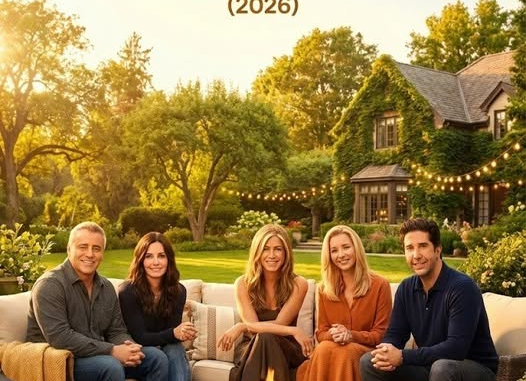
For a show that ended more than two decades ago, Friends refuses to fade quietly into television history. Instead, it’s doing something far more surprising: it’s dominating headlines again.
From renewed debates about its legacy to emotional tributes and cast revelations that have reignited global conversation, the beloved sitcom is once again at the center of pop culture. And this time, the spotlight feels heavier, more reflective—and more complicated—than ever before.
Let’s break down why Friends is suddenly everywhere again.
The Legacy Question No One Can Ignore
When Friends premiered in 1994, it quickly became more than a comedy. It became a generational marker. Hairstyles changed. Catchphrases spread worldwide. Thursday nights became sacred.
But in 2026, the conversation has shifted.
Instead of asking “Which character are you?” fans and critics are now asking: How does the show hold up today?
Streaming has introduced Friends to Gen Z audiences who are dissecting everything—from its humor to its cultural blind spots—with fresh eyes. Scenes once seen as harmless are now debated. Storylines once celebrated are being reevaluated.
Is it timeless comfort? Or a time capsule that reveals how much television has evolved?
The debate is louder than ever.
Jennifer Aniston and the Fame That Never Left
At the center of the renewed fascination is Jennifer Aniston.
Her recent interviews reflecting on the show’s impact—and the pressure of global superstardom at such a young age—have sparked widespread discussion. Aniston has spoken candidly about how Friends shaped her identity, her career choices, and the emotional toll of being forever associated with Rachel Green.
It’s not just nostalgia anymore. It’s reckoning.
Fans are revisiting Rachel’s arc with new depth: Was she truly the romantic heroine of the ’90s, or was she navigating independence in ways that were ahead of her time?
Every reflection from Aniston fuels renewed analysis of the character who defined a decade.
Matthew Perry’s Lasting Shadow Over the Series
Any modern discussion of Friends inevitably carries the weight of Matthew Perry’s legacy.
His portrayal of Chandler Bing remains one of the most beloved comedic performances in television history. But in the years leading up to his passing, Perry openly discussed his struggles with addiction and the hidden battles he fought during the show’s peak.
Now, fans are rewatching episodes with a different lens—spotting moments when Chandler’s humor masked real-life pain. Tributes continue to circulate, and debates have resurfaced about how Hollywood handles mental health behind the scenes.
The show’s laughter feels layered now. Bittersweet. Complex.
The Reunion That Changed Everything
When the cast reunited for Friends: The Reunion, nostalgia reached a fever pitch. But that special didn’t just offer warm memories. It reopened emotional doors.
The candid confessions—especially about on-set romances and behind-the-scenes tensions—gave fans new insight into what really happened during those ten seasons.
The revelation that David Schwimmer and Jennifer Aniston harbored real-life feelings during the early years of filming sent shockwaves across social media.
Suddenly, Ross and Rachel weren’t just fictional “will-they-won’t-they” icons. They were part of a real, unspoken history.
And fans haven’t stopped talking about it since.
Is a New Chapter Even Possible?
Rumors of a reboot surface almost every year. But cast members, including Courteney Cox and Lisa Kudrow, have repeatedly expressed skepticism.
They argue that Friends captured a specific era—twenty-somethings figuring out life before smartphones, before social media, before constant digital surveillance.
Could that magic even exist today?
Or would a revival risk tarnishing what made the original so beloved?
The cast’s consistent reluctance has only intensified speculation. Sometimes the strongest “no” fuels the loudest “what if.”
The Streaming Effect: Why a New Generation Is Obsessed
When Friends found new life on streaming platforms, it didn’t just gain viewers—it gained critics, analysts, and meme creators.
TikTok edits dissect Ross’s “We were on a break” argument frame by frame. Reddit threads analyze Monica’s competitiveness as a feminist talking point. Think pieces question whether Joey was misunderstood or unfairly reduced to comic relief.
The show isn’t just being watched.
It’s being studied.
And that kind of cultural afterlife is rare.
The Cast Bond That Still Feels Unbreakable
Despite time, distance, and personal challenges, one element remains undeniable: the cast’s chemistry.
Matt LeBlanc, Courteney Cox, Lisa Kudrow, David Schwimmer, Jennifer Aniston, and Matthew Perry weren’t just co-stars. They negotiated contracts together. They supported each other through fame. They insisted on equal pay at the height of their success.
That unity has become part of the show’s mythology.
In an industry known for rivalry and ego, their solidarity remains one of television’s most compelling behind-the-scenes stories.
Cultural Impact: Comfort Show or Complicated Classic?
Few sitcoms have achieved what Friends has:
Global syndication dominance
Endless meme culture
Merchandise that still sells
Tourist lines outside recreated sets
Yet cultural dominance invites scrutiny.
Some critics argue the show lacked diversity reflective of New York City. Others defend it as a product of its time that still offered groundbreaking moments—particularly in its portrayal of single motherhood and same-sex parenting storylines.
The truth likely sits somewhere in the middle.
But the fact that people are still debating it in 2026 proves something powerful: Friends still matters.
Why the Conversation Feels Different Now
This isn’t simple nostalgia.
It’s legacy management.
The cast is older. The audience is more socially aware. Television standards have evolved dramatically since the finale aired in 2004.
What once felt effortlessly light now carries emotional context. What once felt permanent now feels fragile.
And that fragility—especially after losing a cast member—has intensified how audiences connect to the show.
The Enduring Question
Is Friends a flawless masterpiece?
No.
Is it a cultural phenomenon that shaped modern sitcom storytelling?
Absolutely.
Few series have balanced ensemble chemistry, romantic tension, and quotable humor so effectively for ten seasons. Fewer still continue to dominate global streaming charts decades later.
So Why Is Everyone Talking About It Again?
Because nostalgia is powerful.
Because loss changes perspective.
Because generational shifts demand reevaluation.
And because some shows don’t just entertain—they imprint.
Friends isn’t trending because it’s new.
It’s trending because it refuses to disappear.
Conclusion: The One That Never Really Ended
More than twenty years after its finale, Friends stands at a fascinating crossroads.
It’s being celebrated. Questioned. Reanalyzed. Defended. Critiqued. Loved.
And perhaps that’s the ultimate sign of cultural immortality.
The door to that purple apartment may have closed in 2004—but the conversation around it is wide open.
And this time, it feels bigger than ever.