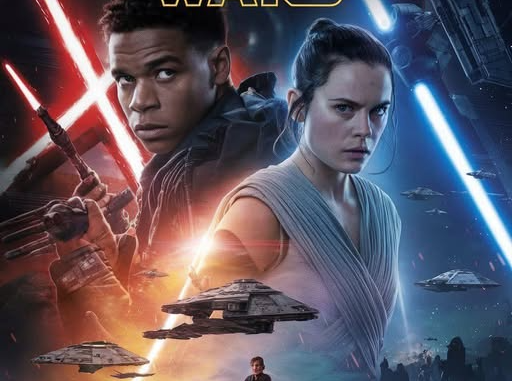
For nearly half a century, Star Wars has been more than a film series. It’s been mythology in motion. A generational bond. A cultural force that refuses to fade into hyperspace.
And now? The galaxy is bracing for another seismic shift.
With the announcement of a new film centered on Rey Skywalker, the franchise finds itself at a dramatic crossroads. Is this the bold new beginning fans have been waiting for—or a high-stakes gamble that could redefine the saga forever?
Let’s break it down.
The Return That Sparked a Fandom Firestorm
When Daisy Ridley officially confirmed her return as Rey, the internet didn’t just react—it detonated.
After the divisive conclusion of Star Wars: The Rise of Skywalker, many believed the sequel trilogy chapter had closed for good. Instead, Lucasfilm revealed a new theatrical project set years after the events of Episode IX, with Rey rebuilding the Jedi Order.
Hope surged. So did skepticism.
Because in today’s Star Wars climate, every creative decision carries enormous weight.
Why This Announcement Feels Different
This isn’t just another spin-off. It’s not a side quest like The Mandalorian. It’s a direct continuation of the Skywalker saga’s aftermath.
And that’s where the tension lies.
Rey remains one of the most debated protagonists in franchise history. To some, she represents resilience and evolution. To others, she symbolizes rushed storytelling and unrealized potential.
Bringing her back means revisiting unfinished emotional territory—and confronting unresolved criticism head-on.
The Creative Architects Behind the Shift
At the center of the new project is Sharmeen Obaid-Chinoy, an Oscar-winning filmmaker stepping into one of Hollywood’s most scrutinized universes.
Her involvement signals something important: tonal evolution.
This could mark the first time the post-Skywalker era fully steps out of nostalgia’s shadow and into something thematically new—less about legacy bloodlines, more about chosen responsibility.
But can Star Wars truly reinvent itself without leaning on its past?
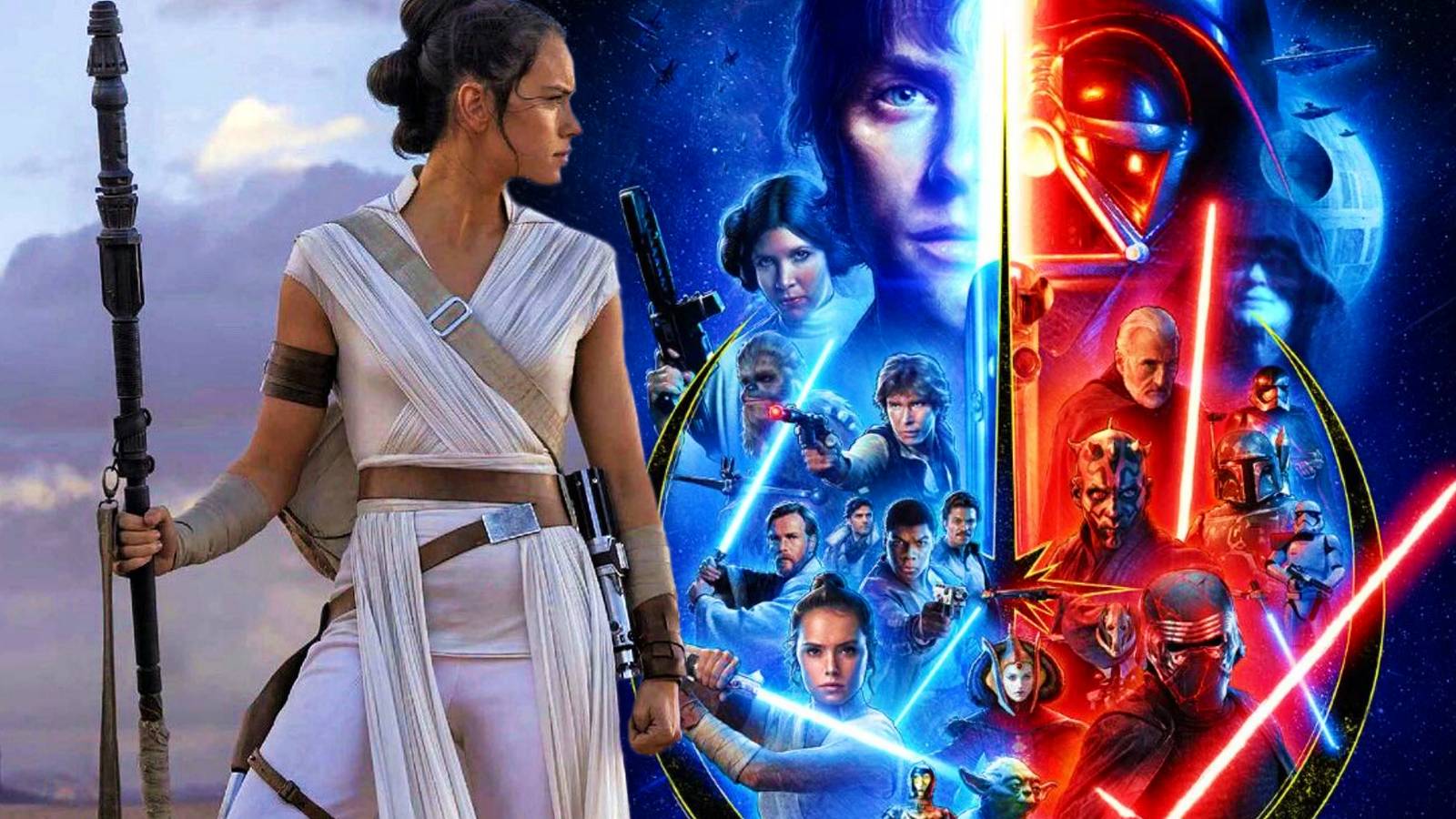
The Larger Lucasfilm Strategy
Under the leadership of Kathleen Kennedy, Lucasfilm has been carefully recalibrating its cinematic direction.
After the mixed reception of the sequel trilogy and shifting theatrical plans, the studio pivoted heavily to streaming success. Series like Andor earned critical acclaim for mature storytelling and political nuance.
So why return to Rey now?
Because theatrical Star Wars needs a flagship identity again. And Rey—like it or not—is the face of the saga’s next chronological chapter.
A Franchise at War With Itself
The conversation isn’t just about one character.
It’s about trust.
The sequel trilogy, launched with Star Wars: The Force Awakens and shaped by filmmakers like J.J. Abrams and Rian Johnson, fractured the fandom in unprecedented ways.
Creative shifts between films led to tonal inconsistencies. Character arcs pivoted abruptly. Online discourse turned combative.
Now, the Rey-centered film carries the burden of reconciliation.
Can it unite a divided galaxy?
The Emotional Stakes for Daisy Ridley
For Daisy Ridley, this return isn’t just another role—it’s reclamation.
In past interviews, she’s spoken candidly about the intense scrutiny she faced during the sequel era. Online backlash. Narrative criticism. Personal attacks.
Coming back means stepping once more into the spotlight of one of pop culture’s loudest debates.
But it also offers something powerful: narrative closure.
If the new film deepens Rey’s journey—exploring the weight of rebuilding the Jedi in a fractured galaxy—it could transform her legacy from controversial to defining.
The Jedi Question: What Does “Rebuilding” Really Mean?
The idea of Rey constructing a new Jedi Order sounds hopeful.
But hope in Star Wars has always come with tragedy.
Will this new generation repeat the failures of the old? Will the Jedi philosophy evolve beyond dogma? Or will history echo once more?
If the film leans into moral ambiguity—similar to the layered storytelling seen in Andor—it could mark a thematic turning point for the franchise.
The Business Reality Behind the Lightsabers
Let’s not ignore the practical dimension.
Star Wars films are billion-dollar enterprises. The theatrical brand needs revitalization after years of shifting release calendars and creative resets.
Reintroducing a familiar character provides built-in audience recognition. It’s a calculated risk—safer than launching entirely new leads, yet bold enough to signal forward movement.
But box office success won’t just depend on nostalgia.
It will depend on trust rebuilt.
Social Media: Divided, Passionate, Unrelenting
Within minutes of the announcement, timelines flooded with reactions.
Some fans declared redemption arc potential. Others questioned why unexplored eras—like the Old Republic—remain sidelined.
Speculation threads exploded:
Is Finn returning?
Will legacy characters appear as Force ghosts?
Is this the true Episode X in disguise?
Ambiguity fuels anticipation. And anticipation fuels debate.
A Defining Moment for Modern Star Wars
This film represents more than a sequel.
It’s a statement.
It asks whether Star Wars can mature alongside its audience. Whether it can balance mythic simplicity with emotional complexity. Whether it can embrace new voices without abandoning its core.
If successful, it could usher in a cohesive new era—one defined not by Skywalker lineage, but by ideological rebirth.
If it falters, it risks deepening franchise fatigue.
The Bigger Picture: Reinvention or Repetition?
Every long-running saga faces a pivotal choice.
Preserve the past.
Or risk evolution.
Rey’s return suggests Lucasfilm is attempting both—anchoring the future in familiar soil while planting something new.
That balance is delicate.
And the galaxy is watching closely.
So… Is This the Dawn of a New Jedi Era?
Right now, one truth stands above speculation:
Star Wars is entering one of its most consequential creative phases in decades.
With Daisy Ridley back at the center and a new directorial voice guiding the path forward, the franchise has an opportunity to reshape its legacy.
The question isn’t whether fans will show up.
They always do.
The real question is this:
Will this be the film that finally unites the galaxy—or the spark that ignites another fandom war?