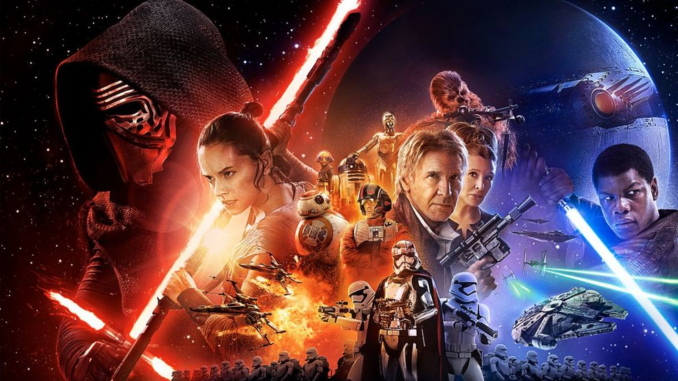
For nearly five decades, Star Wars hasn’t just been a film franchise. It’s been mythology. A generational bond. A cultural compass pointing fans back to hope, heroism, and the eternal battle between light and dark.
But now? The galaxy feels restless.
A major casting shift and creative pivot surrounding the next chapter of the saga have ignited a firestorm of speculation. Is Star Wars entering a bold new era — or standing on the edge of another fandom fracture?
Let’s break down the moment that has everyone talking.
The Rey-Centered Film That Reignited the Debate
When it was officially announced that Daisy Ridley would return as Rey in an upcoming theatrical film set years after The Rise of Skywalker, reactions were immediate — and intense.
For some fans, it was long-awaited redemption. A chance to give Rey the layered arc many felt she deserved.
For others, it reopened old wounds from the sequel trilogy.
The project, developed under Lucasfilm and backed by The Walt Disney Company, promises to explore Rey rebuilding the Jedi Order in a fractured galaxy.
That premise alone carries enormous weight.
Because rebuilding the Jedi means redefining what Star Wars stands for.
Why This Announcement Feels Different
This isn’t just another spin-off. This isn’t a side quest in the outer rim.
This is a direct continuation of the Skywalker saga’s aftermath.
And after years of division surrounding Star Wars: The Rise of Skywalker, bringing Rey back to the center feels like a statement.
A bold one.
It suggests the studio isn’t retreating from the sequel era — it’s doubling down.
That creative confidence has thrilled some corners of the fandom.
It has deeply unsettled others.
The Director Factor: A New Vision or Another Risk?
The film is set to be directed by Sharmeen Obaid-Chinoy, marking a historic milestone for the franchise.
Supporters applaud the fresh perspective and global storytelling background she brings.
Skeptics question whether Star Wars, already navigating tonal shifts between trilogies and streaming series, can handle yet another stylistic evolution.
The debate isn’t just about casting.
It’s about creative identity.
A Fandom Still Recovering
Since the release of Star Wars: The Last Jedi, the franchise has walked a tightrope.
Bold narrative choices sparked passionate praise and equally passionate backlash. Characters were redefined. Expectations were subverted. Online discourse exploded.
The sequel trilogy became more than movies — it became a cultural battleground.
So when news broke that Rey would lead a new chapter, the internet didn’t simply react.
It dissected.
Every interview quote. Every timeline detail. Every hint about legacy characters.
Meanwhile, The Mandalorian Effect Looms Large
While the sequel trilogy divided audiences, The Mandalorian restored a sense of unity for many fans.
The grounded storytelling. The Western tone. The emotional pull of Din Djarin and Grogu.
It felt familiar yet new.
And now, with a theatrical continuation of that storyline also in development under Jon Favreau, comparisons are inevitable.
Will Rey’s film match the goodwill earned on streaming?
Or will it reopen old fractures?
The Cast Questions No One Can Ignore
Another layer of speculation surrounds who — if anyone — from the sequel trilogy might return.
Will John Boyega reprise Finn?
Could Oscar Isaac return as Poe Dameron?
Both actors have spoken candidly in past interviews about their complicated experiences with the franchise.
Their potential involvement — or absence — could dramatically shape fan reception.
Because this isn’t just about Rey.
It’s about unfinished dynamics.
Is Lucasfilm Playing It Safe — or Playing It Smart?
After experimenting with standalone films like Solo: A Star Wars Story and facing mixed box office outcomes, the studio appears to be recalibrating.
Returning to established characters reduces risk.
But it also raises expectations.
Rey rebuilding the Jedi Order isn’t a small story. It’s foundational mythology.
If done right, it could redefine the post-Skywalker galaxy for a new generation.
If mishandled, it could deepen franchise fatigue.
The Cultural Weight of Star Wars
Few franchises carry this kind of emotional investment.
Since George Lucas first introduced audiences to a galaxy far, far away, Star Wars has been about cyclical hope.
Empires rise. Orders fall. Heroes emerge from obscurity.
Rey’s return taps into that core theme.
But it also challenges it.
Can a character once positioned as “nobody” truly anchor a mythic rebirth?
That question alone fuels endless debate.
Social Media: Celebration Meets Skepticism
Within hours of the announcement, timelines split into two camps.
One side celebrated Daisy Ridley’s return as overdue justice for a character who carried enormous narrative pressure.
The other questioned whether revisiting the sequel era would stall the franchise’s ability to move forward creatively.
Hashtags trended. Video essays multiplied. Fandom forums reignited.
The Force, once again, feels polarized.
The Bigger Strategy: Building a New Saga?
There’s another possibility lurking beneath the noise.
This film may not be a one-off.
It could be the foundation for a new trilogy — a deliberate attempt to define the “New Jedi Era.”
That kind of long-term planning would signal stability.
But it would also lock the franchise into a direction that not everyone agrees with.
And once a trilogy begins, there’s no easy course correction.
Why This Moment Feels Like a Crossroads
The franchise is balancing three major forces:
Streaming success
Theatrical uncertainty
Fandom division
Rey’s return sits at the intersection of all three.
It’s not just a casting decision.
It’s a referendum on the sequel era’s legacy.
So… Is This Redemption or Repetition?
Here’s the truth: it could be either.
Handled with emotional depth and careful world-building, this film could transform Rey into the architect of a more nuanced Jedi philosophy.
Rushed or overly nostalgic, it could feel like retreading familiar ground.
The margin for error is razor-thin.
The Galaxy Holds Its Breath
For now, production details remain tightly guarded.
No full cast list. No teaser footage. Only possibility.
But one thing is undeniable:
The return of Daisy Ridley has shifted the conversation from “What’s next for Star Wars?” to “What does Star Wars want to be?”
That’s not a small shift.
That’s existential.
Conclusion: The Beginning of a New Order — or Another Dividing Line?
Every era of Star Wars faces its defining test.
The prequels had generational reevaluation.
The sequels faced cultural scrutiny.
The streaming era rebuilt trust.
Now, the saga stands on the edge of reinvention.
Rey’s journey isn’t just about rebuilding the Jedi.
It’s about rebuilding belief.
Whether this marks a triumphant new chapter or another fault line in the fandom, one truth remains:
The Force still moves the conversation.
And the galaxy is watching.