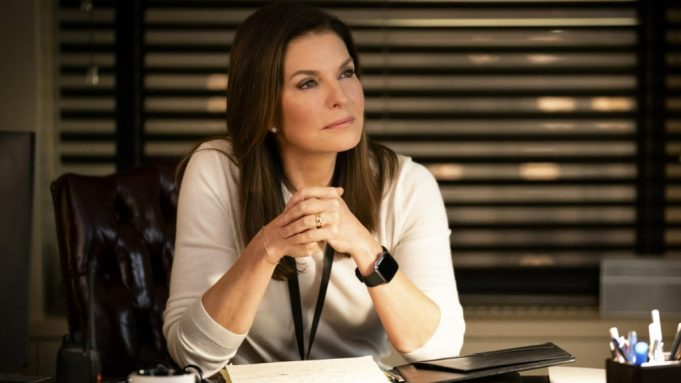
In the fast-paced, high-stakes world of the FBI franchise, characters often come and go with the suddenness of a tactical breach. Yet, few departures have left as sophisticated an imprint as that of Sela Ward. When Ward stepped into the role of Special Agent in Charge Dana Mosier in the show’s inaugural season, she didn’t just fill a vacancy left by a pilot-episode recast; she anchored the series with a gravitas that only a veteran of her caliber could provide. As fans look back on her tenure from the vantage point of 2026, it becomes clear that her exit was never a “goodbye” in the traditional sense. Instead, it was a graceful “farewell” that served as the final victory lap for one of television’s most enduring icons.
The Dana Mosier Standard
Sela Ward’s arrival at the 26 Fed JOC (Joint Operations Center) brought an immediate sense of legitimacy to the fledgling series. Her portrayal of Dana Mosier was a masterclass in “quiet power.” Unlike the high-volume, aggressive archetypes often seen in police procedurals, Ward’s Mosier led with a calm, intellectual intensity. She was the steady hand on the shoulder of Maggie Bell and the strategic mind that kept Jubal Valentine’s kinetic energy focused.
Her departure at the end of Season 1 was scripted with the same dignity she brought to the role. In the finale, Mosier chose to resign after putting her career on the line to support her team—a narrative choice that highlighted the character’s integrity. Behind the scenes, the transition was equally professional. Ward had signed a one-year contract specifically to help launch the show and fulfill a career-long desire to work with producer Dick Wolf in New York City. By completing that mission, she left the series on a high note, handing the baton to Alana De La Garza with the show’s foundations firmly established.
A Legacy Built on Complexity
To understand why Ward’s short stint on FBI resonated so deeply, one must look at the broader tapestry of her career. Sela Ward has spent decades dismantling the “expiration date” often unfairly imposed on women in Hollywood. From her breakthrough as the bohemian Teddy Reed in Sisters—a role that earned her the first of two Primetime Emmy Awards—to her Golden Globe-winning turn in Once and Again, Ward has consistently chosen roles that celebrate the complexity of womanhood.
She transitioned seamlessly into the procedural world with CSI: NY as Jo Danville, proving that she could lead a massive franchise without losing the emotional nuance that defined her early work. By the time she reached FBI, she wasn’t just an actress playing a boss; she was a television stateswoman. Her presence in the first season acted as a bridge, connecting the classic era of character-driven drama to the modern, fast-paced procedural.
The 2026 Perspective: Life After the Badge
In the years since she walked away from the JOC, Sela Ward’s legacy has only grown. In 2026, as the FBI flagship enters its final chapters, fans often cite the “Mosier Era” as the period that set the moral compass for the entire franchise. Her influence is visible in the leadership styles of the characters who followed, emphasizing that a leader’s greatest strength is often their empathy.
Off-screen, Ward has embraced a well-deserved semi-retirement, focusing on her philanthropic work with Hope Village for Children and her passion for the arts. However, she hasn’t vanished from the screen entirely. Her 2026 guest appearance on The Rookie as Mrs. Bradford reminded audiences that her screen presence remains as radiant and commanding as ever. She remains a “racehorse” who knows exactly when to run and when to enjoy the pasture.
Honoring a Trailblazer
Sela Ward’s time on FBI may have been brief, but its impact was structural. She provided the series with a “soul” during its most critical phase, ensuring that the show was more than just a collection of headlines and action sequences. She reminded us that at the heart of every federal investigation are human beings making impossible choices.
As we honor her enduring legacy, we recognize that Sela Ward didn’t just play characters; she built icons. Whether she was navigating the family dynamics of the Reed sisters or managing a crisis at the FBI, she did so with an unmistakable class that raised the bar for everyone around her. Her departure from the JOC wasn’t an end—it was a confirmation of a legendary career that continues to inspire the next generation of actors and viewers alike.