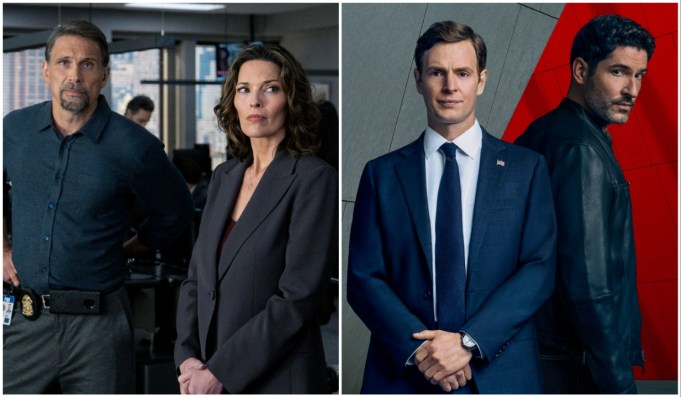
The television landscape of 2026 is witnessing the birth of a new titan. As CBS maneuvers through a significant network reset, the crown jewel of its procedural strategy has finally been unveiled: FBI: CIA. For years, fans of Dick Wolf’s expansive “FBI” universe have watched the New York Field Office, the Fly Team, and the Fugitive Task Force handle domestic and international threats. However, the introduction of FBI: CIA marks a fundamental shift in the franchise’s DNA, moving away from the reactive nature of law enforcement and into the proactive, shadows-drenched world of global intelligence. This spinoff isn’t just an addition to the schedule; it is a high-stakes expansion that promises to redefine the boundaries of the procedural genre.
A New Breed of Hero
At the center of FBI: CIA is a cast that bridges the gap between the familiar “FBI” grit and the sophisticated intrigue of Langley. The series introduces Special Agent turned Case Officer, Jackson “Jax” Vaughn, played by a breakout lead whose casting has been the talk of the 2026 pilot season. Unlike Maggie Bell or OA Zidan, who operate within the strict confines of the U.S. legal system, Jax and his team occupy a “gray zone.”
The premise follows a specialized Joint Task Force where the FBI’s investigative prowess meets the CIA’s clandestine authority. This synergy allows the show to tackle stories that the flagship series simply couldn’t—cases involving state-sponsored cyber-terrorism, deep-cover assets in hostile territories, and the murky ethics of “preventative justice.” Max Thieriot and the creative team behind the “Country” universe have noted that this spinoff aims for a more cinematic, serialized feel, leaning into the “Prestige TV” aesthetic while maintaining the fast-paced energy that CBS viewers crave.
The Langley-Quantico Connection
One of the most compelling aspects of FBI: CIA is its structural tethering to the existing universe. The show is set primarily in Washington D.C. and Northern Virginia, providing a fresh backdrop that feels distinct from the glass-and-steel skyscrapers of New York or the cobblestone streets of Budapest.
The “Inside” look at the series reveals that crossovers will be a foundational element, not just a seasonal event. Because the CIA often holds intelligence that the FBI needs to close a case, we will see frequent appearances from JOC regulars. However, the tension in FBI: CIA stems from the inherent friction between these two agencies. The FBI wants to make arrests and follow the law; the CIA wants to gather intel and protect national interests, often at the cost of “the collar.” This philosophical clash provides a layer of character drama that feels more sophisticated than a standard “whodunit.”
Global Stakes in a 2026 World
The timing of the spinoff’s launch in late 2026 is no coincidence. The writers have leaned heavily into contemporary geopolitical anxieties. The first season’s overarching arc involves a “Ghost Network”—a digital silk road used by rogue states to destabilize Western economies.
By centering the show on the CIA’s perspective, the franchise can explore “the long game.” While an episode of FBI: Most Wanted might end with a suspect in handcuffs, an episode of FBI: CIA might end with a difficult moral compromise: letting a criminal go free in exchange for a piece of code that prevents a national blackout. It is this “lesser of two evils” storytelling that makes the spinoff feel urgent and modern.
Production Value and Visual Identity
CBS has spared no expense in making FBI: CIA look like a blockbuster. Utilizing state-of-the-art virtual production stages (similar to those used in The Mandalorian), the show can seamlessly transport viewers from the high-tech “Pit” at Langley to an extraction point in the Middle East within a single episode. The visual palette is cooler, sleeker, and more atmospheric than the original series, utilizing anamorphic lenses and a moodier score to signal to the audience that they are entering the world of espionage.
The Future of the Franchise
As the flagship FBI prepares for its eventual conclusion in 2027, FBI: CIA is being positioned as the successor to the throne. It represents the “Next-Gen” pivot of the network—a show that is as much a political thriller as it is a procedural. By diversifying the types of stories the “FBI” brand can tell, Dick Wolf and CBS have ensured that the universe remains relevant in an increasingly crowded streaming and broadcast market.
The premiere of FBI: CIA later this year isn’t just another TV launch; it’s the beginning of a new chapter in a legacy that has dominated airwaves for nearly a decade. For fans who thought they had seen everything the Bureau had to offer, Langley is about to prove them wrong.