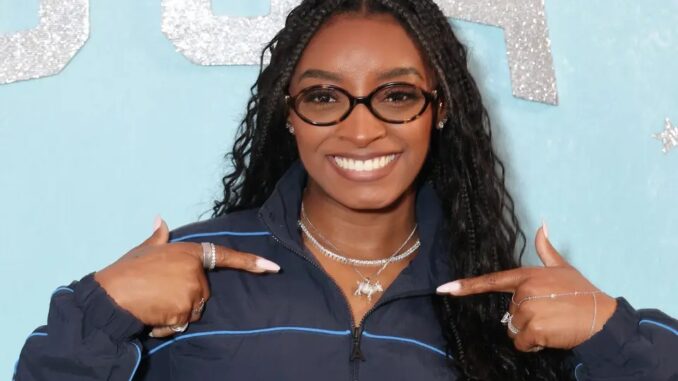
When the greatest gymnast of all time pauses before answering a question about the future, the entire sports world leans in.
That’s exactly what happened when Simone Biles was asked about competing in the 2028 Summer Olympics.
She didn’t commit.
She didn’t decline.
She simply… left the door open.
And sometimes, silence is louder than a gold medal celebration.
Let’s unpack what this means — for her, for gymnastics, and for the future of the Olympic Games.
The Question Everyone Is Asking
Will Simone Biles compete in 2028?
It sounds simple. But the answer? Not so much.
After her triumphant return at the 2024 Summer Olympics, many assumed that chapter was complete. She had nothing left to prove. Her legacy was sealed in gold.
Yet when the topic of Los Angeles 2028 came up, Biles didn’t slam the door shut. Instead, she offered a thoughtful, measured response that hinted at possibility without promising anything.
That ambiguity has ignited global speculation.
Why 2028 Is Different
A Home Olympics Changes Everything
The 2028 Games won’t be just any Olympics. They’ll take place in Los Angeles — on home soil.
For an American athlete, competing in a home Olympics is like playing the Super Bowl in your own backyard. The crowd roars louder. The energy feels personal. The stakes? Emotional.
For Biles, that might matter.
Legacy vs. Longevity
Biles has already cemented her status as the most decorated gymnast in history. So why risk injury? Why endure the grueling training cycle again?
But here’s the thing — champions don’t just think in terms of “done.” They think in terms of “what’s next?”
And 2028 represents something rare: a chance to perform one more time, under the brightest lights, in front of a home crowd.
The Weight of History
The Tokyo Turning Point
We can’t talk about Biles’ future without revisiting the 2020 Summer Olympics.
In Tokyo, Biles made headlines not for a vault or a beam routine, but for prioritizing mental health. She stepped back from several events, introducing the world to the term “the twisties.”
That moment shifted the entire conversation around elite sports.
It wasn’t weakness. It was strength.
Redemption in Paris
Fast forward to Paris 2024, and Biles returned stronger, more focused, and in control. She proved she could write her own narrative.
Which begs the question: does she need another chapter?
Or does she simply want one?
Reading Between the Lines
When athletes hedge their answers, it usually means one of three things:
-
They’re genuinely undecided.
-
They want to keep options open.
-
They understand timing is everything.
Biles’ response felt intentional — not evasive.
She acknowledged the physical demands. She mentioned how far away 2028 feels. She spoke about enjoying life outside the gym.
But she didn’t close the door.
And in sports, an open door is practically an invitation.
The Physical Reality of Gymnastics
Age and Elite Performance
In gymnastics terms, 2028 is a long way away.
Biles would be in her early 30s — an age once considered unthinkable for Olympic gymnasts. But the sport is evolving. Longevity is no longer impossible.
Athletes are competing smarter. Recovery science is better. Training methods are changing.
And Biles has already redefined what’s possible.
The Risk Factor
Gymnastics is brutal. The pounding, the twisting, the impact — it takes a toll.
Every comeback carries risk.
The question isn’t whether she can compete in 2028.
It’s whether she should.
Life Beyond the Mat
Marriage, Business, and Balance
Since marrying Jonathan Owens, Biles has spoken openly about balance and happiness outside gymnastics.
She has business ventures. Endorsements. Advocacy work.
She’s no longer just an athlete. She’s a brand. A voice. A movement.
The Mental Health Advocate
Her impact extends far beyond medals. She changed how we talk about pressure, trauma, and resilience.
Does she need another Olympics to amplify that message?
Probably not.
But would it elevate her platform even further?
Absolutely.
What Fans Want vs. What She Needs
Fans crave storylines. Comebacks. Final bows.
But athletes live real lives.
We want a Hollywood ending. She wants peace of mind.
And sometimes those goals collide.
The Competitive Landscape in 2028
By 2028, a new generation of gymnasts will dominate the scene.
The sport moves quickly. Four years feels like a lifetime.
If Biles returns, she won’t just be competing against rivals.
She’ll be competing against time.
And yet — if anyone can defy time, it’s her.
The Business of a Comeback
Let’s be honest.
A Simone Biles appearance at the 2028 Olympics would be marketing gold.
Ticket sales. Broadcast ratings. Sponsorships. Global attention.
Her presence alone shifts the entire narrative of the Games.
But Biles has never made decisions based solely on hype.
Her silence feels thoughtful — not strategic.
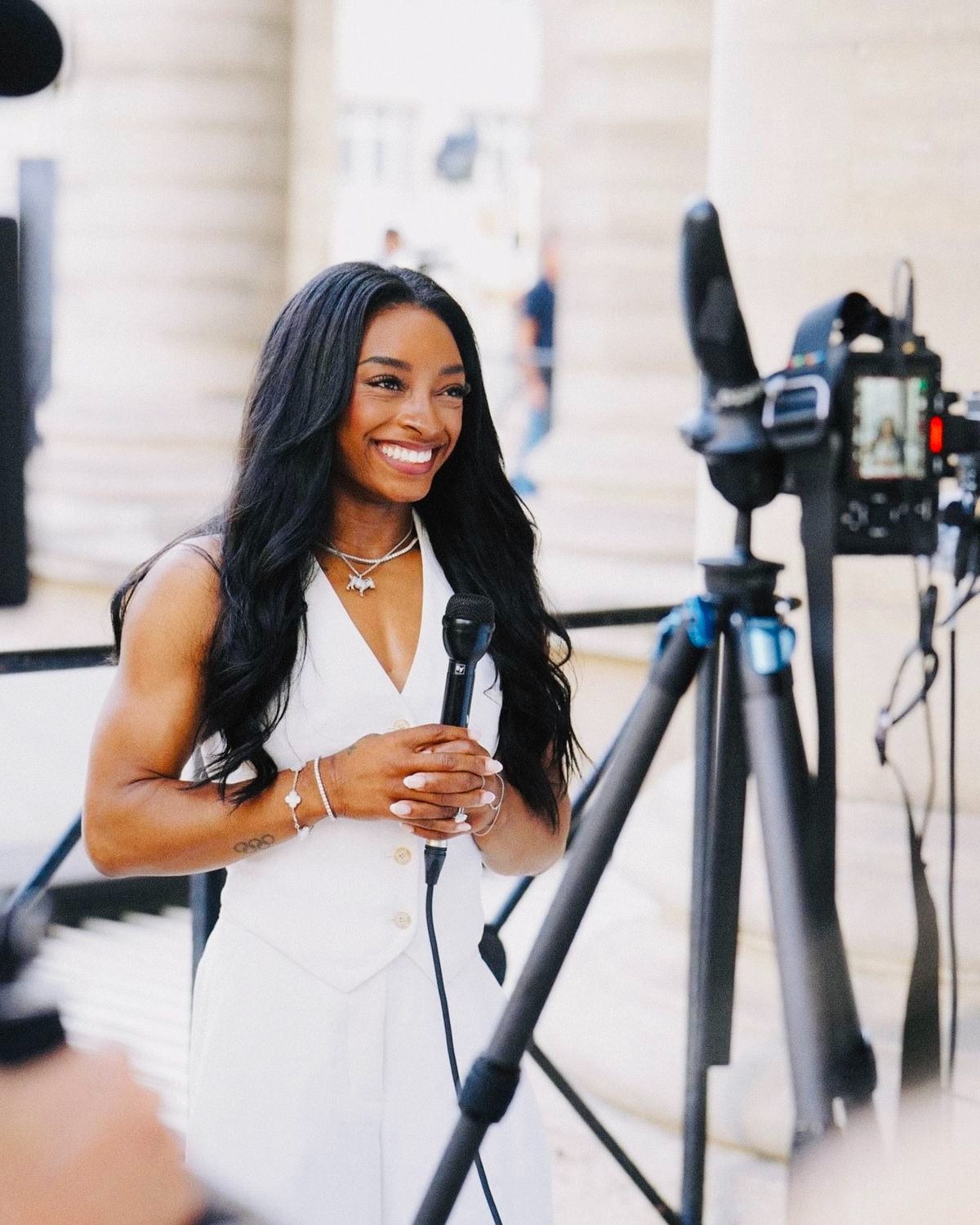
Could 2028 Be Her Perfect Farewell?
Imagine it.
The crowd roaring in Los Angeles. The lights dim. The announcer calls her name.
One final routine. One final salute.
It’s cinematic. Emotional. Almost too perfect.
But real life rarely follows a script.
Why Her Non-Answer Is So Powerful
Here’s the twist: not answering might be the most powerful answer of all.
It says:
-
I’m in control.
-
I decide my timeline.
-
My worth isn’t tied to a medal.
That’s growth.
That’s evolution.
That’s legacy.
What Happens Next?
For now, we wait.
Training cycles don’t start tomorrow. Decisions don’t need to be made today.
Biles has earned the right to pause.
And maybe that’s the point.
Conclusion: The Power of an Open Door
Simone Biles didn’t say yes.
She didn’t say no.
And in that space between certainty and closure lies something rare — possibility.
Whether she competes in the 2028 Olympics or not, her legacy is already untouchable. She redefined greatness. She reshaped conversations around mental health. She proved that stepping back can be just as heroic as stepping forward.
If 2028 becomes her final act, the world will celebrate.
If it doesn’t, the world will still stand in awe.
Because sometimes the strongest move isn’t committing to the future.
It’s owning the present.