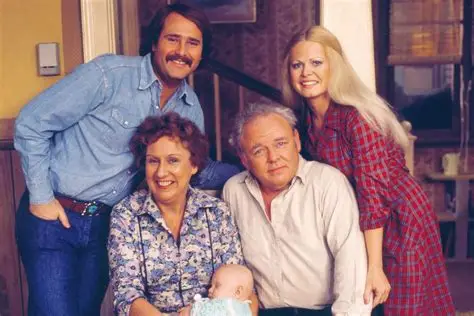
When people think about All in the Family, they usually remember the heated debates at the Bunker dinner table, the groundbreaking social commentary, and the unforgettable performances that helped redefine television comedy. But behind the laughter and cultural impact was another story—one involving contracts, negotiations, and salaries that quietly shaped the show’s legacy.
So just how much were the stars paid? And were they fairly compensated for helping create one of the most influential sitcoms in TV history?
Let’s step behind the curtain.
The Man Who Set a Salary Record
At the center of the series stood Carroll O’Connor, whose portrayal of Archie Bunker turned him into one of the most recognizable faces on television. As the show’s popularity surged, so did his earning power.
By the later years of his career connected to the franchise, O’Connor reportedly earned about $103,000 per episode, with CBS covering roughly half of that cost.
Some reports even suggest his television income reached around $200,000 per episode, placing him among the highest-paid actors of his era—a remarkable feat in the 1970s television landscape.
To put that into perspective, such a contract briefly made him the highest-paid actor on TV, earning about $4.8 million per season for Archie Bunker’s Place, equivalent to roughly $20 million annually today.
Translation? Archie Bunker wasn’t just king of the living room—he was king of the payroll.
Fame Doesn’t Always Equal Fortune
Not every cast member walked away with the same financial security.
Jean Stapleton, beloved for her role as Edith Bunker, made a surprising financial decision during the show’s run. She accepted upfront cash instead of retaining residual rights—meaning she missed out on the massive profits generated through syndication later on.
It was a gamble many actors made in the early days of television, before reruns became a goldmine.
Still, Stapleton built wealth through smart real estate investments and continued acting work, ultimately leaving behind an estate valued at about $10 million.
Her story is a reminder that Hollywood success isn’t just about what you earn—it’s about what you keep.
When Money Sparks Drama Behind the Scenes
Salary disputes weren’t uncommon.
At one point, O’Connor demanded $64,000 in back pay along with extended vacation time. The conflict became so serious that producers filmed three episodes without Archie and even considered killing off his character if negotiations failed.
Imagine All in the Family without Archie Bunker—it’s almost unthinkable today.
Fortunately, the dispute was resolved, and the show continued its historic run.
Why These Salaries Were a Big Deal
Television economics worked differently back then. Networks typically paid licensing fees to producers, who then allocated star salaries from the production budget. As shows became hits, actor paychecks skyrocketed, sometimes forcing networks to absorb part of the cost.
In other words, huge salaries weren’t just rewards—they were risks.
But executives accepted them because hit shows attracted loyal audiences and boosted ratings across entire programming schedules.
The Legacy Behind the Numbers
Looking back, the salaries of All in the Family reveal more than just financial trivia—they highlight the moment television began transforming into a star-driven industry.
Carroll O’Connor proved that sitcom actors could command enormous paychecks.
Jean Stapleton demonstrated the importance of long-term financial strategy.
And the show itself helped set the stage for the million-dollar-per-episode deals we see today.
Yet here’s the real twist:
Even decades later, people don’t remember the contracts nearly as much as they remember the characters.
Because while money may build a show…
timeless performances make it immortal.