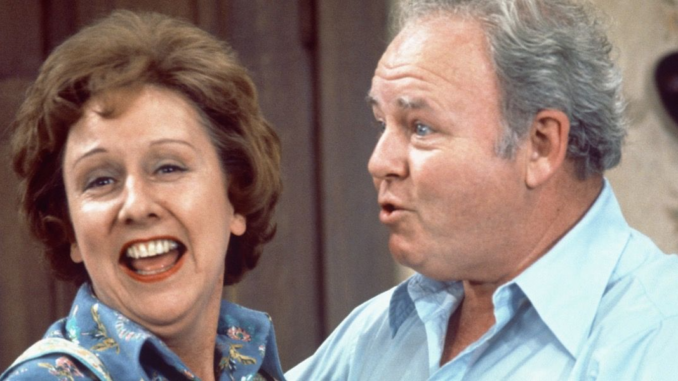
In the history of television, sitcoms have often been associated with laughter, lighthearted misunderstandings, and tidy resolutions. Yet every so often, a single scene comes along that challenges the very foundation of what comedy is supposed to be. One such moment was the unforgettable farewell between Archie and Edith—a scene that didn’t just tug at viewers’ hearts, but reshaped the emotional possibilities of the sitcom format.
At first glance, All in the Family never seemed afraid of taking risks. The show tackled social issues with an honesty rarely seen on television at the time. But even by its own bold standards, the quiet vulnerability displayed in Archie and Edith’s farewell was something entirely new.
When Comedy Made Room for Silence
For years, audiences knew Archie Bunker as stubborn, loud, and resistant to change. He filled every room with his opinions and rarely showed emotional fragility. Edith, on the other hand, was warmth personified—gentle, patient, and often the emotional anchor of their household.
So when the moment came for goodbye, viewers expected discomfort, maybe even denial. What they didn’t expect was the stillness.
There were no elaborate punchlines. No comedic misunderstandings to soften the mood. Instead, the scene leaned into something sitcoms had traditionally avoided: raw emotional dependence.
Archie’s realization was subtle but unmistakable—beneath his gruff exterior was a man who relied deeply on Edith’s presence. Without dramatic speeches, the scene revealed a truth many couples understand but rarely articulate: sometimes love shows itself most clearly in the fear of losing the person who steadies your world.
Breaking the Sitcom Mold
Before this moment, television comedy largely followed a predictable rhythm. Conflict appeared, laughter followed, and by the final minutes everything returned to normal. But Archie and Edith’s farewell refused to reset.
It lingered.
The writers trusted the audience enough to sit with the discomfort. That creative decision helped prove that sitcom characters didn’t have to remain emotionally static—they could grow, ache, and confront change just like real people.
Industry insiders later pointed to scenes like this as the beginning of a tonal shift in television comedy. Future shows would dare to blend humor with sincerity, paving the way for dramedies and character-driven comedies that dominate today’s landscape.
The Performances That Made It Timeless
What truly elevated the farewell was the acting. Carroll O’Connor allowed Archie’s toughness to soften just enough to reveal the man underneath. Meanwhile, Jean Stapleton delivered Edith’s tenderness with such authenticity that it never felt theatrical—only human.
Their chemistry had always been the heartbeat of the show, but in this scene, it reached its fullest expression. You weren’t watching two performers recite lines; you were witnessing decades of shared life compressed into a few unforgettable minutes.
Why the Scene Still Resonates
Even generations later, viewers continue to rediscover the power of this goodbye. Perhaps it’s because the emotions are universal. Relationships evolve, people change, and sometimes we only grasp someone’s importance when faced with the possibility of their absence.
The scene reminds us that strength isn’t always loud. Sometimes it’s found in admitting we need one another.
More importantly, it showed television creators that audiences were ready for emotional complexity. Laughter didn’t have to disappear—it just had to coexist with truth.
A Legacy Larger Than One Episode
Today, many beloved comedies balance humor with heartfelt storytelling. That creative freedom didn’t emerge overnight; it was built on moments like Archie and Edith’s farewell—moments that dared to ask more from both the actors and the audience.
What made the scene revolutionary wasn’t just sadness or nostalgia. It was the recognition that even the most familiar characters could surprise us, revealing emotional depths we hadn’t fully seen before.
And in doing so, the farewell achieved something rare: it didn’t simply close a chapter for two characters—it opened a new era for television comedy itself.