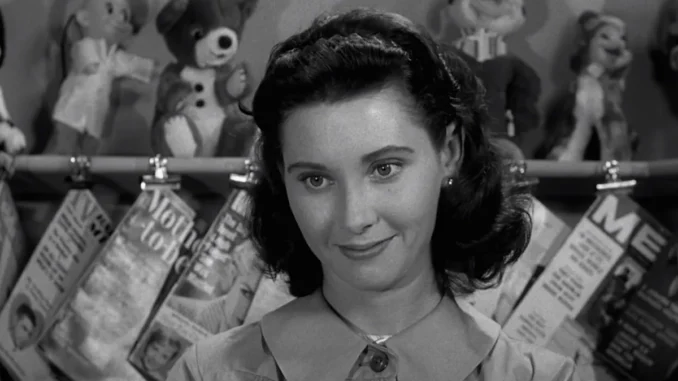
For a brief moment in Mayberry, it seemed Sheriff Andy Taylor might finally have found someone special.
Peggy McMillan — warm, intelligent, and effortlessly charming — entered The Andy Griffith Show during its fourth season and quickly caught viewers’ attention. Played by Joanna Moore, Peggy wasn’t just another passing guest star. She felt like a genuine romantic possibility for Andy, someone who balanced his calm authority with grace and maturity.
And then, almost as quickly as she arrived… she was gone.
No dramatic breakup.
No heartfelt farewell.
Just another quiet disappearance in a town that rarely explained its goodbyes.
So what really happened?
A Romance That Looked Promising
When Peggy first appeared, fans noticed something different. Unlike some earlier romantic interests written mainly for light comedic tension, Peggy seemed naturally woven into Andy’s life.
Their chemistry felt relaxed rather than theatrical. Conversations flowed easily. There was no need for exaggerated humor — just the believable connection of two adults who understood each other.
For a show built on emotional comfort, that kind of relationship had real potential.
Some viewers even assumed Peggy might become Andy’s long-term partner.
But behind the scenes, television storytelling was rarely that predictable.
The Show Was Protecting Its Formula
By the mid-1960s, The Andy Griffith Show had mastered a delicate balance: gentle humor, small-town lessons, and stories centered on community rather than romance.
Producers were careful not to let any ongoing relationship shift the show’s focus too heavily toward serialized storytelling. Mayberry worked best as a place audiences could visit each week without needing to track complicated emotional arcs.
A steady girlfriend for Andy risked changing that rhythm.
Instead of building long romantic narratives, the writers often preferred flexibility — allowing Andy to remain emotionally available while keeping episodes self-contained.
Peggy’s character, though appealing, may simply have felt too permanent for a show that thrived on simplicity.
Joanna Moore Was a Rising Talent
Joanna Moore was not an actress struggling to find work — quite the opposite. By the time she appeared on the series, she had already built a solid reputation through film and television roles.
Hollywood in the 1960s moved quickly, and actors frequently shifted between projects. Guest appearances were common, and long-term television commitments weren’t always the goal for performers with expanding opportunities.
Rather than signaling failure, Moore’s short stay in Mayberry reflected the flexible nature of TV careers at the time.
Sometimes a role was meant to be memorable — not permanent.
Why Her Exit Felt So Noticeable
One reason Peggy’s disappearance still sparks curiosity is simple: she fit.
Nothing about the character suggested she wouldn’t belong in Mayberry long-term. She was kind without being naïve, confident without overpowering Andy, and grounded enough to feel authentic in the show’s quiet world.
When a character clearly works, audiences naturally expect continuity.
So when Peggy stopped appearing, viewers were left with a subtle but persistent question: Was there more story left to tell?
The Andy Taylor Question
There’s another possibility often discussed by longtime fans — and it speaks to the broader storytelling philosophy of the show.
Keeping Andy unmarried preserved a certain emotional openness. He remained not just a sheriff, but a father, a neighbor, and a steady moral center whose life felt relatable to many viewers.
Locking him into a serious relationship too early might have narrowed that universal appeal.
In a way, Andy’s romantic uncertainty became part of the show’s charm.
Every new connection carried possibility.
Every goodbye kept the future unwritten.
A Pattern in Mayberry
Peggy McMillan wasn’t the only character to quietly fade from the series. Early television often operated without the strict continuity audiences expect today. Supporting characters could appear prominently and then vanish without elaborate explanation.
It wasn’t considered unusual — just part of the storytelling style of the era.
Yet time has a funny way of transforming ordinary production decisions into enduring mysteries.
Decades later, Peggy’s short arc feels less like a routine casting choice and more like one of Mayberry’s great “what-ifs.”
Did Peggy Influence Andy’s Later Story?
Even though Joanna Moore’s time on the show was brief, her character contributed to an important evolution: viewers began to see Andy not only as a dependable sheriff but as a man still searching for companionship.
That emotional dimension helped prepare audiences for future relationships introduced later in the series.
Sometimes a character’s purpose isn’t longevity — it’s momentum.
Peggy helped move Andy’s personal story forward, even if she wasn’t there to see where it led.
The Legacy of a Character Who Stayed Too Short
Television history often celebrates the stars who remain for years, but there is something uniquely fascinating about those who arrive, shine brightly, and depart before their story feels complete.
Peggy McMillan belongs firmly in that category.
Her disappearance wasn’t surrounded by scandal or dramatic conflict. More likely, it was the result of creative direction, scheduling realities, and the show’s commitment to preserving its timeless structure.
Still, fans remember.
Because sometimes the characters who leave quietly are the ones we imagine the loudest.
And in a town like Mayberry — where life moved gently and change rarely announced itself — perhaps a soft goodbye was the most fitting ending of all.