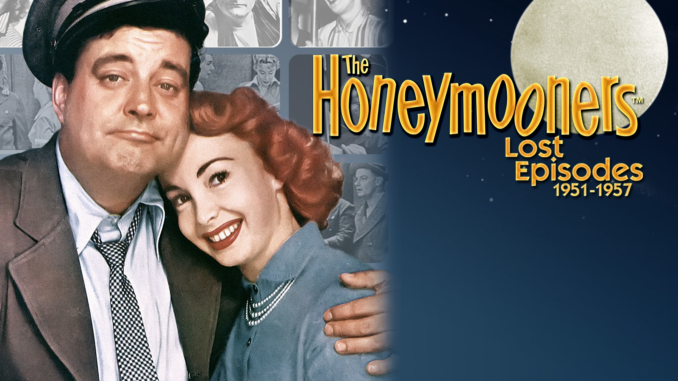
In television history, most shows fade away slowly — ratings drop, storylines weaken, and audiences drift elsewhere. But The Honeymooners did something almost unthinkable.
It stopped while it was still strong.
Decades later, fans still ask the same question: Why would a hit show walk away at the very moment it seemed destined for even greater success?
The answer is surprisingly bold — and reveals just how different early television was from today.
A Show That Defined an Era
When The Honeymooners aired in the mid-1950s, it quickly became more than just a sitcom. The story of Ralph Kramden, the loud but lovable bus driver, and his quick-witted wife Alice captured everyday working-class life with humor that felt both exaggerated and deeply relatable.
Alongside their upstairs neighbors, Norton and Trixie, the characters created a comedic rhythm that audiences couldn’t get enough of.
Catchphrases entered pop culture.
Scenes became iconic.
Chemistry felt effortless.
By all appearances, the show had years ahead of it.
And then — it was over.
After only 39 classic half-hour episodes.
The Man Behind the Decision
The key to the mystery lies with one person: Jackie Gleason.
Unlike many stars who chase longevity, Gleason worried about something else entirely — quality.
He reportedly believed the writers were beginning to run out of strong ideas. Rather than stretching the show thin and risking repetition, he chose a path that was almost unheard of at the time:
End it before it declines.
It was a creative gamble rooted in pride. Gleason didn’t want audiences remembering a weaker version of a once-great show. He wanted the laughter to stay sharp in memory.
In a way, he treated television more like theater — better to close on a high note than linger past the final applause.
A Decision That Shocked Viewers
For audiences, the cancellation felt abrupt. There was no long farewell season, no dramatic finale designed to provide closure.
Just absence.
One week the show existed — the next, it belonged to the past.
That sudden disappearance helped build the mythology surrounding the series. Fans wondered what stories were left untold. What jokes were never written. What moments Ralph and Norton might have shared if given another season.
Sometimes, what doesn’t happen becomes more powerful than what does.
The Pressure Behind the Comedy
Another overlooked factor was the intensity of production. Early television moved fast, often resembling live theater more than modern filming schedules.
Performers had little room for error. Rehearsal time could be tight. Expectations were enormous.
Maintaining that level of performance week after week demanded energy — and Gleason understood that exhaustion can quietly erode creativity.
Ending the show wasn’t just an artistic decision.
It may also have been a protective one.
The Paradox of “Too Short”
Here lies the great irony:
Had The Honeymooners run for many seasons, it might have blended into television history as simply another successful sitcom.
Instead, its brief run made it legendary.
With only a small collection of episodes, nearly every installment feels intentional — polished rather than padded. New generations can watch the entire series without encountering the kind of uneven seasons that often dilute long-running shows.
Scarcity created value.
And value created legacy.
Did Gleason Ever Regret It?
There’s little evidence to suggest deep regret. If anything, the decision reflects a rare kind of creative confidence — the willingness to step away from guaranteed success rather than compromise standards.
But for fans?
The question never fully disappeared.
What if it had continued?
Could it have become even bigger?
Or would it have slowly lost the magic that made it special?
We’ll never know.
Why the Mystery Still Resonates
Today, television is dominated by long runs, reboots, and revivals. Networks rarely let a hit go voluntarily.
That’s exactly why The Honeymooners fascinates modern viewers. It represents a path not often taken — choosing artistic preservation over expansion.
In some ways, the show achieved what many series attempt but few accomplish:
It never overstayed its welcome.
So perhaps the real question isn’t why it ended at its peak.
Maybe the better question is this:
Would we still be talking about it if it hadn’t?
Sometimes, the brightest stars don’t burn the longest —
they just shine intensely enough that we remember them forever.