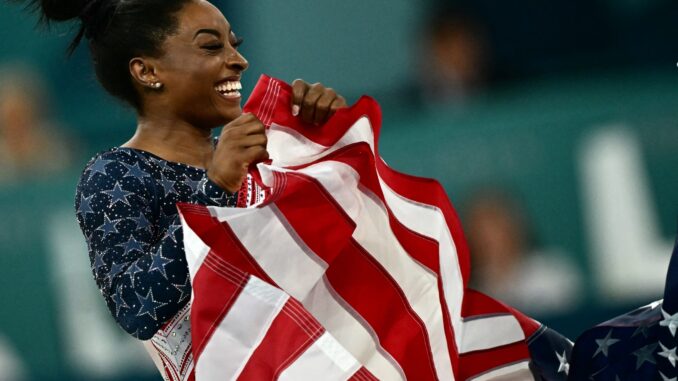
American gymnast Jordan Chiles has been granted an appeal in her efforts to reclaim the bronze medal on floor exercise that was stripped from her at the 2024 Paris Olympics. Switzerland’s supreme court said on Thursday its judges sent the “highly exceptional circumstances” of the bronze medal awarded in the women’s floor exercise back to the Court of Arbitration for Sport to examine new evidence.
The outcome of an event that created a celebrated Olympic photo featuring Chiles, floor exercise silver medalist Simone Biles and gold medalist Rebeca Andrade of Brazil — all women of color — rests on just a handful of seconds: Can the U.S. team prove it made a timely appeal in the Olympic arena on behalf of Chiles? The ruling from Switzerland’s federal judges — highly unusual in cases of this nature — suggested Chiles could regain the bronze medal she originally got in Paris after challenging her judged score.
Chiles’ third-place finish was overturned within days on appeal by the Romanian team to the CAS’ Olympic court in Paris. The medal was awarded in Bucharest the next week to Ana Maria Barbosu. Chiles said at the time that the decision felt “unjust and comes as a significant blow, not just to me, but to everyone who has championed my journey.”
The Olympic Games are supposed to be the final word in sport. Once the medals are handed out, history is written—or so we’re told. But for American gymnastics star Jordan Chiles, the story didn’t end on the podium. Instead, it took a sharp turn into the legal arena.
In a dramatic twist that’s sending ripples through the global gymnastics community, Jordan Chiles has been granted an appeal in the controversial Olympic bronze medal ruling, with a Swiss court agreeing to rehear the case. This decision has reopened a debate about fairness, judging transparency, and athletes’ rights at the highest level of competition.
So, what really happened? And why does this case matter far beyond one medal? Let’s break it all down.
The Olympic Bronze Medal Controversy Explained
What Happened During the Olympic Floor Final?
At the heart of the dispute is the women’s floor exercise final at the Olympics. Jordan Chiles delivered a powerful, expressive routine—one packed with difficulty, precision, and her trademark confidence. Initially, her score placed her outside the podium.
But gymnastics isn’t always black and white. Coaches filed an inquiry, arguing that a key element in Chiles’ routine had been undervalued.
The Score That Changed Everything
After review, judges adjusted Jordan Chiles’ score upward, briefly pushing her into bronze medal position. Celebration followed. History books were updated. Or so it seemed.
Soon after, the decision was challenged, and the score adjustment was overturned, stripping Chiles of the bronze medal. The ruling sparked outrage, confusion, and a wave of questions about how such reversals are handled.
Why Jordan Chiles Filed an Appeal
A Question of Fairness in Olympic Judging
Chiles and her legal team argued that the reversal violated procedural fairness. According to their claim, the inquiry was submitted within the allowed time, and the judging panel followed established rules when adjusting the score.
The sudden reversal, they argued, lacked transparency and consistency—two things athletes rely on when their careers are on the line.
Athletes Don’t Get “Do-Overs”
In gymnastics, every tenth of a point matters. Athletes don’t get second chances. So when administrative decisions impact medal outcomes, the stakes couldn’t be higher.
For Chiles, this wasn’t just about hardware—it was about principle.
Swiss Court Agrees to Rehear the Case
Why a Swiss Court?
Many international sports disputes fall under Swiss jurisdiction because organizations like the Court of Arbitration for Sport (CAS) are based in Switzerland. That’s exactly where Chiles’ appeal landed.
In a significant move, a Swiss federal court granted Jordan Chiles’ request for a rehearing, signaling that her arguments warranted serious reconsideration.
What This Decision Really Means
Let’s be clear: this ruling does not automatically restore the bronze medal. Instead, it opens the door for a full re-examination of how the decision was made.
Think of it like pressing “rewind” on a moment the world thought was settled.
The Role of the Court of Arbitration for Sport (CAS)
How CAS Influences Olympic Outcomes
CAS acts as the highest authority for resolving international sports disputes. Its rulings are typically final—but not untouchable.
In rare cases, Swiss courts can intervene if there are concerns about due process or legal integrity.
Why This Case Is So Unusual
It’s incredibly rare for a Swiss court to agree to rehear a case involving Olympic medals. That alone underscores the significance of Jordan Chiles’ appeal.
Reactions From the Gymnastics World
Athletes Rally Behind Jordan Chiles
Current and former gymnasts have voiced strong support for Chiles. Many see her case as emblematic of a larger issue: athletes having little recourse when judging errors occur.
Social media lit up with messages of encouragement, emphasizing fairness over finality.
Coaches and Experts Weigh In
Several gymnastics experts have pointed out that inquiries and score reviews are standard practice. The controversy lies not in the inquiry itself, but in how the outcome was later reversed.
Why This Case Matters Beyond One Medal
Setting a Legal Precedent in Olympic Sports
If the appeal results in a ruling favorable to Chiles, it could reshape how judging disputes are handled across all Olympic sports.
This case raises an important question:
Should athletes have stronger legal protections when judging errors occur?
Transparency and Accountability in Scoring
Gymnastics has long struggled with public trust in scoring. A clearer, more accountable process could restore confidence—not just for athletes, but for fans worldwide.
Jordan Chiles: More Than a Medal
A Career Built on Resilience
Jordan Chiles is no stranger to adversity. From early career struggles to becoming a world-class competitor, she’s built her reputation on grit and determination.
This appeal is just another chapter in that journey.
Why Her Voice Matters
Chiles isn’t just fighting for herself. By challenging the system, she’s advocating for future athletes who might face similar situations.
What Happens Next in the Rehearing?
Possible Outcomes of the Swiss Court Review
There are several scenarios:
-
The original score adjustment is upheld
-
The bronze medal ruling remains unchanged
-
New procedural guidelines are recommended
Each outcome carries significant implications.

Timeline and Expectations
Legal proceedings take time, especially at this level. While there’s no immediate resolution, the gymnastics world will be watching closely.
Public Opinion and Media Attention
Why Fans Are Paying Attention
Olympic fans crave fairness. The idea that a medal could be lost—or won—due to administrative confusion doesn’t sit well with anyone.
Media Framing and Narrative Shifts
What started as a technical scoring issue has evolved into a broader conversation about justice in sport.
Could Jordan Chiles Get Her Bronze Medal Back?
The Legal Reality
Yes—it’s possible. But nothing is guaranteed. Courts don’t reassign medals lightly.
The Symbolic Victory Matters Too
Even if the medal doesn’t change hands, the case itself may lead to systemic improvements, which could be just as impactful.
Conclusion: A Fight Bigger Than the Podium
Jordan Chiles’ appeal isn’t just about a bronze medal—it’s about fairness, transparency, and respect for athletes who give everything to their sport. The Swiss court’s decision to rehear the case sends a powerful message: even Olympic rulings can be questioned when justice is at stake.
No matter the final outcome, one thing is clear—this case has already changed the conversation around judging accountability in elite sports.
And sometimes, that’s the real victory.