The Honeymooners is often remembered as a landmark sitcom—loud, fast-paced, and endlessly quoted. For many viewers, it represents the golden age of television comedy.
But when revisited today, one element of the show feels impossible to ignore: the way verbal aggression inside a marriage was played for laughs.
Ralph Kramden’s Anger as Entertainment
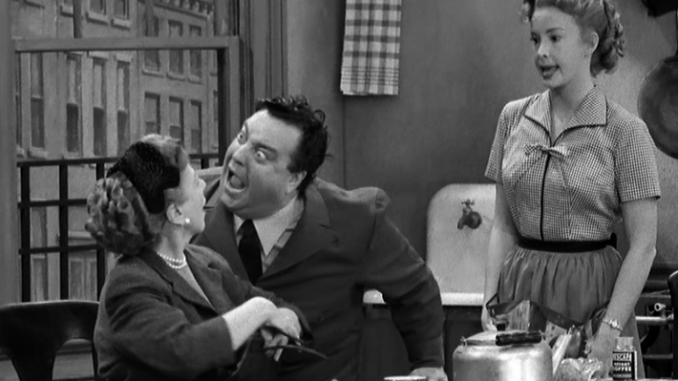
At the center of the show is Ralph Kramden—boisterous, frustrated, and perpetually dissatisfied with his life. His explosive temper, especially toward his wife Alice, became one of the show’s defining comedic traits.
Ralph frequently yelled, insulted, and threatened—his exaggerated outbursts framed as harmless comedy rather than harmful behavior. The audience laughed, the episode moved on, and the cycle repeated.
At the time, this was considered funny. Today, it raises serious questions.
When Comedy Masks Harmful Dynamics
The issue isn’t that The Honeymooners showed conflict. Conflict is a normal part of storytelling—and of marriage.
The problem is how one-sided that conflict often was.
Ralph’s verbal aggression was rarely challenged in a meaningful way. Alice might respond with sharp wit, but the structure of the show usually reset everything by the end of the episode, leaving Ralph’s behavior largely unexamined.
The message, intentional or not, was clear:
anger was just part of being a husband—and wives were expected to endure it.
The Cultural Context Matters—but Doesn’t Erase the Impact
It’s important to acknowledge that The Honeymooners aired in the 1950s, a time when:
-
traditional gender roles were rarely questioned
-
emotional abuse was not widely recognized
-
male frustration was often excused as pressure from work and poverty
Within that context, Ralph was seen as relatable rather than troubling.
But cultural norms don’t erase influence. Television shapes behavior by normalizing it, and The Honeymooners reached millions of households week after week.
Alice Kramden: Strength in a Limited Space
Alice Kramden is often praised for being smart, sarcastic, and emotionally resilient—and rightly so. She pushes back verbally and refuses to be completely submissive.
However, her strength exists within tight boundaries.
She adapts. She tolerates. She manages Ralph’s moods.
Rather than escaping or confronting the deeper problem, Alice becomes responsible for keeping the marriage functional. In modern terms, this would be recognized as emotional labor under pressure.
Why This Feels Uncomfortable Today
Modern audiences are more aware of how verbal abuse works—how it erodes confidence, creates fear, and establishes power imbalance.
What once felt like exaggerated comedy now reads as:
-
normalized hostility
-
gendered power imbalance
-
emotional harm disguised as humor
This doesn’t make The Honeymooners worthless—but it does make it complicated.
A Sitcom That Reveals More Than It Intended
The Honeymooners didn’t set out to promote unhealthy relationships. It reflected the blind spots of its time.
In doing so, it unintentionally preserved a snapshot of how easily harmful behavior can be excused when wrapped in laughter.
Rewatching the show today isn’t about canceling it—it’s about recognizing that what we once laughed at tells us a lot about what we once accepted.
Conclusion: Laughter Isn’t Always Harmless
The Honeymooners remains an important piece of television history. But history deserves examination, not just nostalgia.
Comedy has power. And when anger becomes entertainment, it’s worth asking who pays the price.