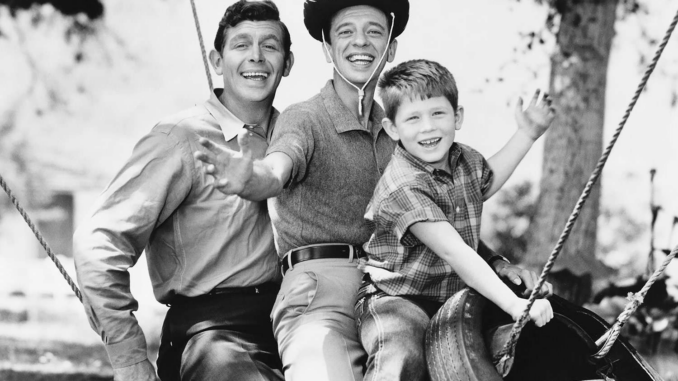
For generations, The Andy Griffith Show has been remembered as the definition of wholesome television.
A gentle sheriff. A peaceful town. Problems solved with patience and folksy wisdom.
But nostalgia has a way of softening edges—and Mayberry was far more carefully constructed than it appeared.
Behind the warmth and laughter, the show quietly avoided much of the reality unfolding in America at the time. And that omission wasn’t accidental.
A Perfect Town Built to Ignore the Real World
When The Andy Griffith Show aired in the early 1960s, the United States was in the middle of profound change. Civil rights protests, political unrest, economic inequality, and cultural tension dominated headlines.
Mayberry reflected none of it.
There were no racial conflicts.
No serious poverty.
No political arguments.
No generational anger.
The town existed in a bubble—an America untouched by discomfort.
Escapism Was the Point
This wasn’t creative laziness. It was strategy.
By keeping the show free of controversy, producers ensured it was:
-
Safe for family viewing
-
Attractive to advertisers
-
Acceptable to stations nationwide
In doing so, The Andy Griffith Show became a rare universal comfort show—but at the cost of realism.
The series didn’t ask viewers to confront the world. It invited them to escape it.
Kind Authority Without Consequences
Andy Taylor is remembered as one of television’s most ideal authority figures. Calm. Reasonable. Fair.
But his authority was never seriously challenged.
He didn’t face systemic injustice, corruption, or moral dilemmas without easy answers. His wisdom worked because Mayberry was designed to cooperate with him.
In real life, authority is messy. In Mayberry, it was gentle—and unquestioned.
What Was Missing Mattered
By presenting a conflict-free version of small-town America, the show helped create a powerful cultural myth:
that the past was simpler, kinder, and more unified than the present.
That myth still lingers today.
When people say, “Things used to be better,” they’re often remembering Mayberry—not history.
A Show That Chose Silence Over Complexity
The Andy Griffith Show didn’t lie—but it chose silence.
It left out voices, struggles, and tensions that didn’t fit its vision of peace. In doing so, it shaped how generations imagined American life, especially rural and small-town life.
That choice made the show timeless—but also incomplete.
Why This Reappraisal Matters Now
Modern television is often criticized for being too dark, too political, too uncomfortable. But comfort itself can be a form of storytelling bias.
Avoiding reality is still a statement.
Looking back at The Andy Griffith Show with clear eyes doesn’t mean rejecting it—it means understanding it fully.
A Gentle Show With a Quiet Blind Spot
Mayberry remains lovable.
Andy Taylor remains admirable.
The show’s warmth still works.
But innocence, like nostalgia, is often curated.
And sometimes, what a show leaves out tells us just as much as what it shows.