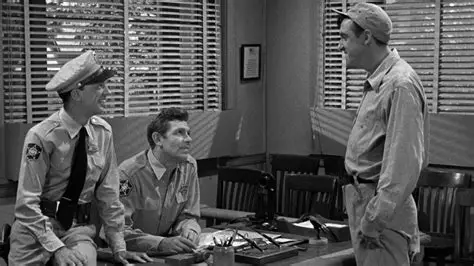
At first glance, The Andy Griffith Show doesn’t look like a billion-dollar idea.
Black and white. Slow pacing. No explosive drama. No flashy production.
And yet, behind the calm streets of Mayberry lies one of the most profitable and enduring financial successes in television history.
A Modest Investment with an Unexpected Payoff
When the show premiered on CBS in 1960, its production costs were relatively low compared to other programs of the era. The series relied on limited sets, simple storytelling, and a cast that—at the time—was not yet commanding top-tier salaries.
What the producers didn’t spend on spectacle, however, they gained back many times over in ratings dominance.
For several seasons, The Andy Griffith Show ranked among the most-watched programs in the United States, even finishing as the #1 show on television during its final season—an incredibly rare achievement.
Advertising Revenue: The First Gold Rush
In the early 1960s, television advertising was booming, and high ratings meant one thing: premium ad prices.
Because The Andy Griffith Show consistently delivered massive audiences, CBS was able to charge advertisers top dollar for commercial slots during its airtime. Over its eight-season run, advertising revenue alone generated tens of millions of dollars, a staggering figure for the time.
Adjusted for inflation, that revenue would equal hundreds of millions of dollars today.
Syndication: Where the Real Money Was Made
If advertising was the short-term win, syndication was the long game—and it paid off spectacularly.
After the series ended in 1968, The Andy Griffith Show entered rerun syndication and never really left. The show was sold to hundreds of local stations across the U.S., airing repeatedly for decades.
Why did it work so well?
-
The stories were timeless
-
The humor was clean and universal
-
The setting avoided controversial or dated topics
As a result, the show became one of the most syndicated sitcoms of all time, generating a steady stream of licensing revenue long after production stopped.
For the producers and rights holders, the reruns eventually earned far more than the original broadcast ever did.
Merchandising and the Business of Nostalgia
Beyond television, the Mayberry brand proved surprisingly lucrative. Revenue streams expanded through:
-
DVD and home video sales
-
Books and licensed memorabilia
-
Mayberry-themed tourism and events
Each generation of viewers rediscovered the show, turning nostalgia into a renewable financial asset.
The Financial Irony Behind the Scenes
While the show made enormous profits for studios and distributors, many cast members—especially early on—did not receive a share of syndication earnings, due to the contracts common at the time.
This financial imbalance later became a cautionary tale in Hollywood, illustrating a hard truth of the industry:
Ownership matters more than fame.
A Legacy Built on Simplicity—and Smart Business
The Andy Griffith Show never chased trends. It didn’t rely on controversy or spectacle. Instead, it offered warmth, consistency, and emotional safety—and audiences kept coming back.
For producers, that translated into something rare: a television investment that paid dividends for decades.
More than half a century later, Mayberry is still earning money—and still proving that sometimes, the quietest shows leave the biggest financial footprints.