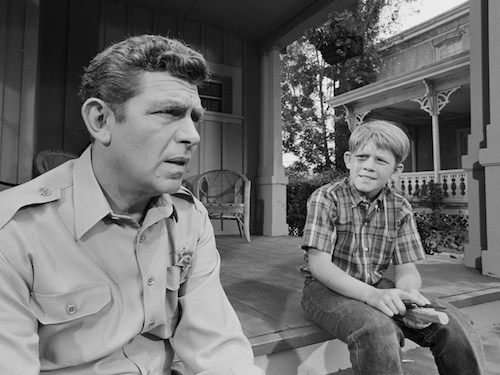
For nearly a decade, The Andy Griffith Show represented the ideal American life — slow days, moral clarity, and a town where everyone knew your name. Mayberry felt eternal. But when the cameras finally stopped rolling in 1968, the illusion faded, and real life began for the actors behind those beloved characters.
What followed was not a fairy tale — but a mix of triumph, struggle, loneliness, and reinvention.
Andy Griffith: Success Came Back — But Not Right Away
After leaving the show, Andy Griffith faced an unexpected problem: he was too beloved.
Audiences struggled to see him as anyone other than Sheriff Andy Taylor. Several post-Mayberry projects failed to gain traction, and for years, Griffith quietly faded from the spotlight. It wasn’t until the legal drama Matlock premiered in 1986 that he finally reclaimed mainstream success.
This time, he leaned into maturity rather than charm — and it worked. Still, even at the height of his later fame, Griffith admitted that Mayberry followed him everywhere. Until his death in 2012, it remained the role he was most closely associated with.
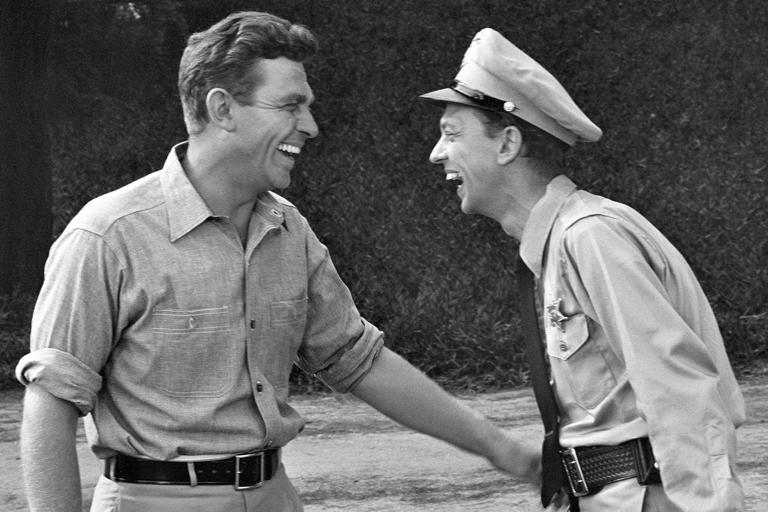
Ron Howard: The Rare Child Star Who Escaped the Trap
While many child actors struggle after early fame, Ron Howard became the exception.
After growing up on The Andy Griffith Show, Howard smoothly transitioned into teenage roles before quietly stepping behind the camera. As a director, he built one of the most respected careers in Hollywood, winning an Academy Award for A Beautiful Mind and directing blockbuster hits like Apollo 13.
Howard didn’t just move on from Mayberry — he outgrew it, proving that early fame doesn’t have to define a lifetime.
Don Knotts: Trapped by the Character Everyone Loved
Don Knotts’ Barney Fife was comedy perfection — and a professional curse.
Leaving the show early to pursue film roles, Knotts found success in a string of comedies, but they all leaned heavily on the same anxious, bumbling persona. Despite fame and steady work, he struggled to break free from the shadow of Barney Fife.
Later in life, Knotts made peace with his legacy, returning to television in Three’s Company and embracing the audience’s affection. He passed away in 2006, remembered as one of television’s greatest comedic talents.
Frances Bavier: The Most Tragic Life After Mayberry
Perhaps the most heartbreaking post-show story belongs to Frances Bavier, who played Aunt Bee.
After the series ended, Bavier withdrew from Hollywood almost entirely. She moved to a small town in North Carolina, living a quiet and increasingly isolated life. Reports from locals painted a picture far removed from Aunt Bee’s warmth — marked by health issues, strained relationships, and deep solitude.
When she died in 1989, fans were stunned by how lonely her final years appeared to be. Her story became a reminder that cheerful characters don’t always reflect happy lives.
The Supporting Cast: Fame That Slowly Faded
Actors like Jim Nabors (Gomer Pyle) and George Lindsey (Goober Pyle) enjoyed brief spin-off success, but most eventually stepped away from the spotlight. Convention appearances and reruns kept their legacies alive, even as new opportunities dwindled.
For many, The Andy Griffith Show was both the highlight and the ceiling of their careers.
The Price of Living in a Perfect Town
When The Andy Griffith Show ended, it didn’t just close a chapter — it froze one.
The cast members went on to vastly different lives: some soared, some struggled, and some quietly disappeared from public view. Yet none ever truly escaped Mayberry. The town lived on through endless reruns, while its actors aged, changed, and, in some cases, suffered in silence.
Maybe that’s the real story.
Mayberry was perfect because it wasn’t real — but the lives after it were.