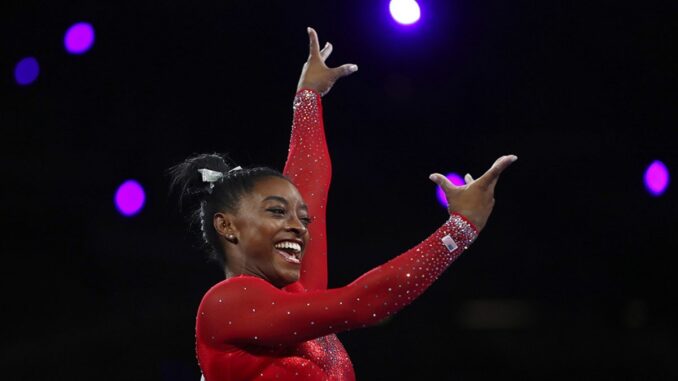
Despite their very different sports, Mikaela Shiffrin and Simone Biles understand each other’s experiences better than almost anyone else. Biles was a guest on Shiffrin’s “What’s the Point” podcast released Friday, and the two talked about relating to the other’s very public struggles at the Olympics. Though the two did not meet until the Paris Games in 2024, Shiffrin reached out to show her support after Biles developed the “twisties” at the Tokyo Games.
Unable to tell where she was in the air, Biles pulled out midway through the team competition and missed four individual events before returning for balance beam, where she won a bronze medal.
When Legends Admit It’s Hard
The Olympics are supposed to be about glory, gold medals, and unforgettable moments. But what happens when even the greatest athletes in the world struggle under the weight of expectation? Simone Biles and Mikaela Shiffrin—two of the most dominant athletes of their generation—have done something revolutionary. They talked openly about their Olympic struggles. And in doing so, they changed the conversation around success, failure, and mental health in elite sports.
This isn’t a story about weakness. It’s a story about courage.
Who Are Simone Biles and Mikaela Shiffrin? A Brief Snapshot
Simone Biles: The Face of Modern Gymnastics
Simone Biles isn’t just a gymnast—she’s a movement. With multiple skills named after her and more medals than most nations can dream of, Biles redefined what the human body can do. Her dominance made perfection feel expected.
Mikaela Shiffrin: Alpine Skiing’s Precision Machine
Mikaela Shiffrin rose to fame as a technical genius on snow. Calm, calculated, and consistent, she became the most successful alpine skier in World Cup history. Like Biles, excellence became her baseline.
The Crushing Weight of Expectations at the Olympics
Why the Olympics Are Different
The Olympics aren’t just another competition. They’re a pressure cooker. One mistake can erase four years of preparation. Cameras magnify every move. Social media judges in real time.
When Greatness Becomes a Burden
For Biles and Shiffrin, expectations weren’t just high—they were suffocating. Winning wasn’t celebrated; it was assumed. Anything less felt like failure, even when it wasn’t.
Simone Biles and the “Twisties”: A Mental Block Explained
What Are the Twisties?
During the Tokyo Olympics, Simone Biles stepped back from several events, citing the “twisties”—a dangerous mental block where gymnasts lose spatial awareness mid-air. In gymnastics, that’s not just scary. It’s life-threatening.
Choosing Safety Over Medals
Biles made a choice few expected. She prioritized her mental and physical health over gold. The backlash was loud. But her resolve was louder.
Public Reaction: From Criticism to Cultural Shift
The Internet’s Initial Backlash
Some critics called Biles a quitter. Others questioned her toughness. But those voices missed the bigger picture.
Why Biles’ Decision Mattered
By stepping back, Biles gave permission to athletes everywhere to say, “I’m not okay.” That moment sparked a global conversation about mental health in sports.
Mikaela Shiffrin’s Olympic Nightmare in Beijing
A Start No One Expected
At the Beijing Winter Olympics, Shiffrin was favored to dominate. Instead, she suffered shocking early exits, failing to finish several races.
When Muscle Memory Fails
Shiffrin later described feeling disconnected from her skiing. Movements that once felt automatic suddenly felt foreign—like trying to write with your non-dominant hand.
Failure in the Spotlight: A Different Kind of Pain
The Loneliness of Public Struggle
Unlike team sports, Olympic events are brutally individual. When things go wrong, there’s nowhere to hide. Shiffrin stood alone with her disappointment, replayed endlessly on screens worldwide.
Grief, Pressure, and Timing
Shiffrin’s struggles didn’t exist in a vacuum. Personal loss, media pressure, and Olympic expectations collided at the worst possible moment.
Simone Biles and Mikaela Shiffrin: A Shared Experience
Different Sports, Same Mental Battle
Gymnastics and skiing couldn’t be more different. Yet Biles and Shiffrin faced the same invisible opponent: overwhelming pressure.
Why Their Stories Resonated Globally
People saw themselves in these champions. Who hasn’t felt crushed by expectations? Who hasn’t struggled when everything was supposed to go right?
The Myth of the Invincible Athlete
Why We Expect Athletes to Be Superhuman
Fans often forget athletes are human. We project our dreams onto them, then feel betrayed when they struggle.
Breaking the Illusion
Biles and Shiffrin shattered the myth that greatness means emotional immunity. True strength, they showed, includes vulnerability.
Mental Health in Elite Sports: A Long-Overdue Conversation
From Taboo to Talking Point
For decades, mental health was ignored in sports. Pain was something you pushed through. Biles and Shiffrin helped change that narrative.
Athletes as Role Models Beyond Medals
By speaking openly, they modeled healthy behavior—not just for athletes, but for anyone facing high-pressure environments.
Media Responsibility in Olympic Coverage
Sensationalism vs. Sensitivity
Media coverage often amplifies failure instead of context. Headlines scream “collapse” instead of “human moment.”
How Coverage Is Slowly Changing
Thanks to voices like Biles and Shiffrin, more outlets now approach athlete struggles with empathy rather than judgment.
Resilience Redefined: What Comebacks Really Mean
Not Every Comeback Is About Winning
Biles returned to competition on her own terms. Shiffrin reclaimed joy in skiing. Their comebacks weren’t about medals—they were about healing.
The Quiet Victories We Don’t See
Sometimes the biggest win is showing up again, even when confidence is shaken.
Why Their Honesty Matters to Young Athletes
A New Blueprint for Success
Young athletes watching learned something powerful: your worth isn’t tied to podiums.
Permission to Be Human
Biles and Shiffrin gave the next generation permission to speak up, rest, and ask for help.
Social Media: Amplifier or Enemy?
The Double-Edged Sword
Social media connects fans to athletes—but it also magnifies criticism. One bad moment can become a trending topic.
Learning to Set Boundaries
Both athletes have spoken about limiting online exposure to protect their mental space. Sometimes, logging off is self-care.
Lessons Beyond Sports: What We Can All Learn
Pressure Exists Everywhere
You don’t have to be an Olympian to understand pressure. Jobs, school, family expectations—it’s universal.
Redefining Success in Our Own Lives
Biles and Shiffrin remind us that success isn’t linear. Sometimes stepping back is the smartest move forward.
The Legacy of Simone Biles and Mikaela Shiffrin
More Than Champions
Their medals are impressive. But their honesty may be their greatest legacy.
Changing Sports Culture Forever
They didn’t just compete. They transformed how we talk about mental health, failure, and resilience.
Conclusion: Strength Looks Different Now
Simone Biles and Mikaela Shiffrin didn’t fail at the Olympics. They evolved. By confronting their struggles publicly, they showed the world that strength isn’t about never falling—it’s about knowing when to pause, reflect, and rise again.
In a world obsessed with winning, they taught us something far more valuable: how to be human under pressure.
FAQs
1. Why did Simone Biles withdraw from Olympic events?
She experienced the “twisties,” a dangerous mental block that made competing unsafe.
2. What went wrong for Mikaela Shiffrin at the Olympics?
A combination of pressure, timing, and mental disconnect led to unexpected early exits.
3. Did Simone Biles and Mikaela Shiffrin support each other?
Yes, both athletes publicly expressed empathy and understanding for each other’s struggles.
4. How did their stories change sports culture?
They normalized mental health conversations and challenged outdated ideas of toughness.
5. What can everyday people learn from their experiences?
That success includes self-awareness, rest, and the courage to prioritize well-being.