
Few casting changes in television history continue to spark debate quite like Suzanne Somers’ departure from Three’s Company. Decades later, fans still ask the same question: what would have happened if she had stayed?
Not just to the show—but to its tone, its legacy, and the relationships at its core.
The answer reveals how fragile sitcom success truly is.
A Balance That Once Worked Perfectly
In its early seasons, Three’s Company thrived on balance. Jack’s frantic physical comedy, Janet’s grounding presence, and Chrissy’s exaggerated innocence created a dynamic that felt effortless. Each character amplified the others without overwhelming them.
Suzanne Somers’ Chrissy Snow was not just a source of jokes. She was a structural anchor. Her timing, reactions, and chemistry helped keep the show from tipping into pure chaos.
If she had stayed, that balance might have lasted longer than it did.
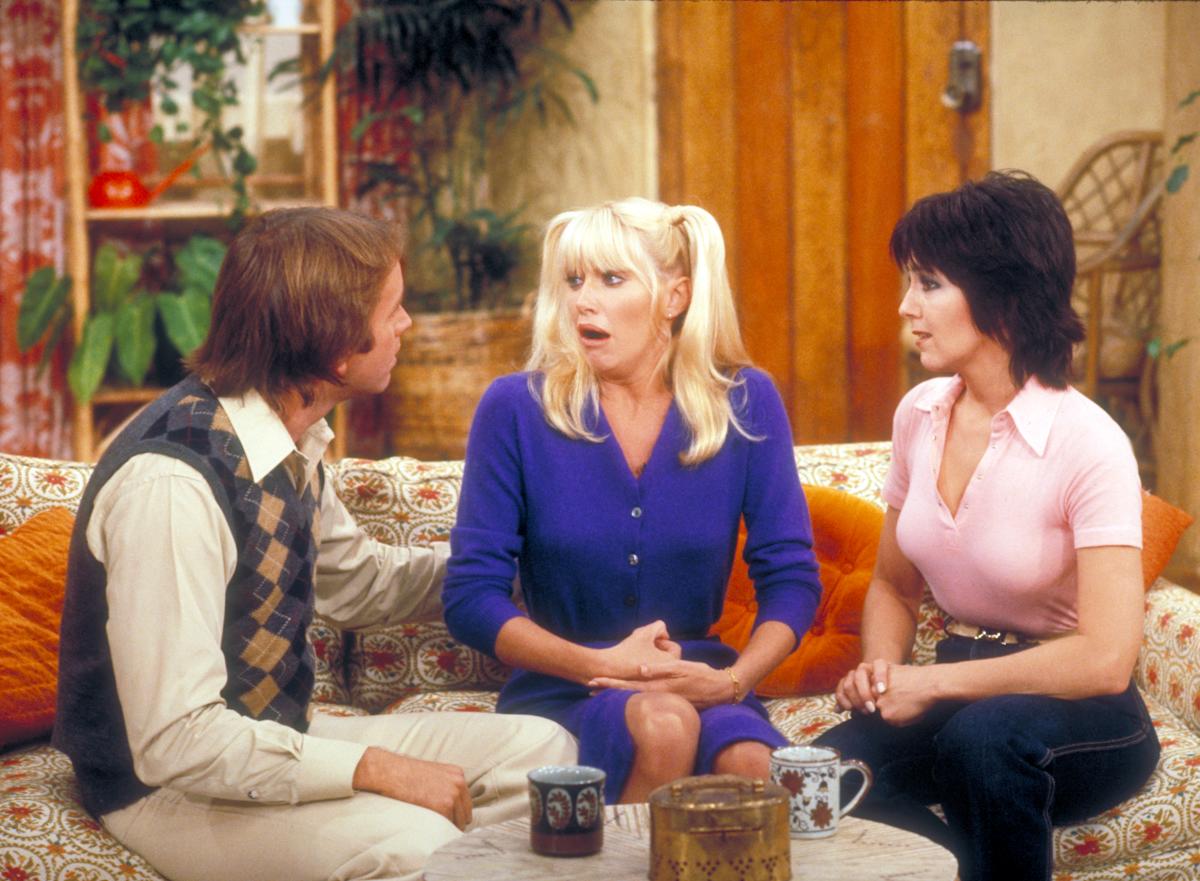
How the Tone Might Have Evolved—Not Escalated
After Somers’ exit, the show leaned into broader comedy. Misunderstandings became louder, characters more exaggerated. The humor still worked—but it shifted from situational charm to controlled absurdity.
Had Somers remained, Three’s Company might have evolved instead of escalated. The writers may have felt freer to explore variation rather than repetition, character growth rather than amplification.
The show didn’t need to get bigger. It needed to get deeper.
Would the Chemistry Have Survived Success?
This is the hardest question. Keeping Somers would not have erased tension. Fame, money, and recognition were already reshaping relationships behind the scenes. But her continued presence might have preserved a sense of shared ownership.
Instead of becoming a show about maintaining momentum, Three’s Company could have remained a collaboration—messy, imperfect, but emotionally intact.
Chemistry doesn’t disappear suddenly. It erodes. And sometimes, it can be protected.
A Different Legacy Entirely
Imagine a version of Three’s Company remembered not only for its longevity, but for its consistency. A show that matured without losing warmth. A cast that aged together on screen rather than being reassembled around absence.
In that version of history, Three’s Company might be discussed less as a cautionary tale and more as a rare example of sustained balance in television comedy.
That possibility is what makes the question linger.
Why the “What If” Still Matters
Speculating about Suzanne Somers staying isn’t about rewriting history. It’s about understanding it. Her departure exposed the invisible forces that shape television—power, negotiation, ego, and fear.
Three’s Company survived without her. But it became a different show. Not worse—just changed.
And that change reminds us that sometimes, the most important turning points in television happen off camera, long before viewers realize what they’ve lost.
The Sitcom That Teaches Us About Fragility
The enduring fascination with this “what if” proves how deeply audiences connected with the original dynamic. Three’s Company was never just about jokes. It was about balance.
And once that balance shifted, it could never fully be restored.
That may be the most revealing lesson the show left behind.