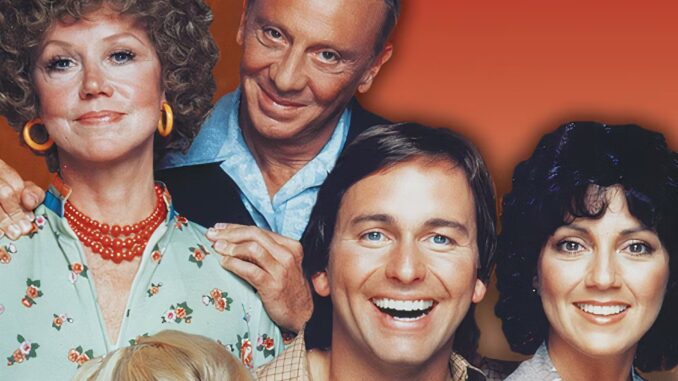
At first glance, Three’s Company looked like effortless fun. Doors slammed, misunderstandings escalated, laughter followed. For millions of viewers in the late 1970s and early 1980s, the show felt light, breezy, and harmless. But behind the bright sets and canned laughter was a workplace far more complicated—and at times deeply fractured—than the sitcom ever let on.
The real story of Three’s Company is not just about comedy. It is about ambition, power, money, and the quiet tensions that can build even inside television’s most successful hits.
A Smash Hit That Grew Too Fast
When Three’s Company premiered in 1977, no one expected it to become one of ABC’s biggest ratings winners almost overnight. The chemistry between John Ritter, Joyce DeWitt, and Suzanne Somers clicked instantly. As ratings soared, so did pressure—from the network, producers, and advertisers.
Success came quickly, but stability did not. Long shooting hours, rigid scripts built around precise timing, and relentless expectations turned what looked like a joyful set into a high-stress environment. Comedy, especially physical comedy like Ritter’s, demanded perfection. Mistakes were costly, and tension followed.
The Suzanne Somers Salary War
No behind-the-scenes story looms larger than Suzanne Somers’ contract dispute. By the early 1980s, Somers was a breakout star, heavily marketed and increasingly visible outside the show. She believed her salary should reflect that success.
Producers disagreed.
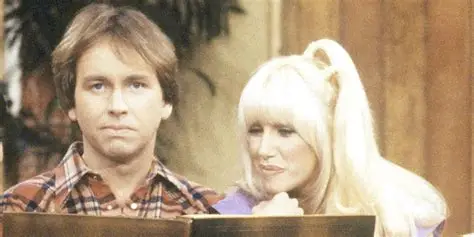
What followed was one of television’s most infamous standoffs. Somers’ role was reduced dramatically, her scenes filmed separately from the rest of the cast. The show continued, but the atmosphere changed. Viewers sensed something was off—even if they didn’t yet know why.
Her eventual exit was not just a casting decision; it was a warning shot about how power worked in network television at the time.
A Cast Divided by Silence
While John Ritter often tried to remain neutral, the conflict affected everyone. Joyce DeWitt later spoke about feeling trapped between loyalty to a co-star and fear of professional consequences. Communication broke down. Scenes that once felt natural became carefully managed.
The irony was hard to miss: a show built on chemistry was now struggling to maintain it.
The laughter continued on screen, but off camera, relationships cooled. Trust was fragile. And once broken, it proved difficult to repair.
Don Knotts and the Pressure to Save the Show
After Somers’ departure, Three’s Company needed stability. Enter Don Knotts, already a television legend. His arrival gave the series new energy and helped maintain ratings—but it also added pressure.
Knotts was not replacing just a character; he was helping hold together a show still reeling from public controversy. His professionalism was widely praised, yet even his presence could not fully restore what had been lost behind the scenes.
Why the Show Never Felt the Same Again
Three’s Company remained popular for years after its biggest conflicts, but many fans argue the magic subtly shifted. The misunderstandings grew broader, the emotional warmth thinner. What once felt spontaneous began to feel mechanical.
That change did not happen by accident. It was the result of unresolved tension, creative compromises, and a production environment shaped by fear of disruption rather than joy.
The Hidden Cost of Sitcom Success
The legacy of Three’s Company is not tarnished—but it is more complex than nostalgia suggests. It stands as a reminder that television history is often shaped as much by off-screen decisions as by what airs each week.
Behind the laughter was a real human story: one about what happens when success arrives faster than systems can handle it. And that may be the most revealing truth behind the scenes of Three’s Company.