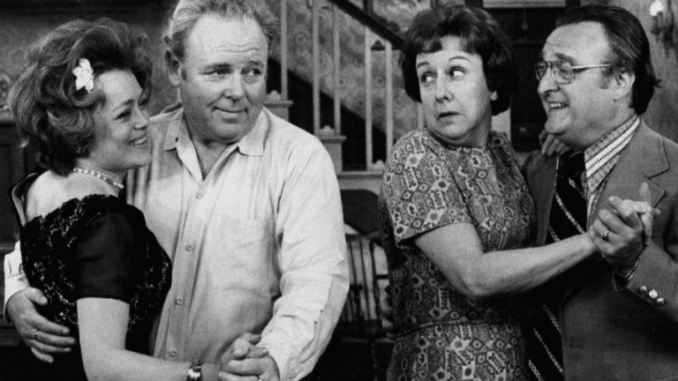
When All in the Family premiered in 1971, it did not simply entertain—it detonated. Viewers were stunned to hear words, opinions, and arguments on a primetime sitcom that had previously been confined to private living rooms or political rallies. Almost overnight, the show became the most talked-about—and argued over—program on American television. Its controversy was not accidental. It was the point.
A Sitcom That Spoke the Unspeakable
At a time when television comedy carefully avoided conflict, All in the Family did the opposite. It brought taboo subjects directly into the American home. Racism, sexism, immigration, feminism, religion, and the Vietnam War were no longer distant political debates—they were dinner-table conversations.
The shock came not only from what was said, but from how casually it was said. These topics were not framed as moral lessons or “very special episodes.” They were treated as part of everyday life, forcing viewers to confront issues they might otherwise avoid.
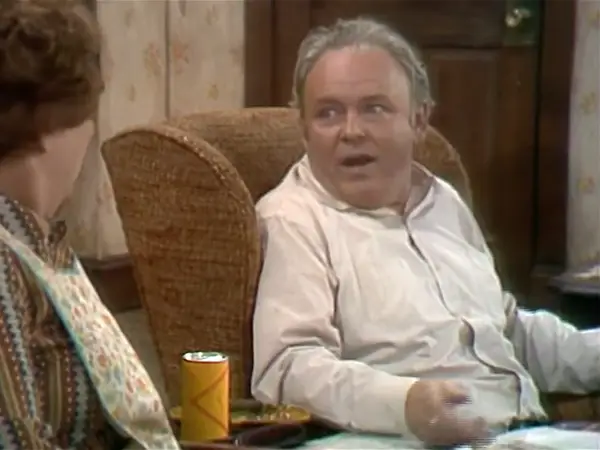
Archie Bunker: The Character Who Made America Uncomfortable
At the center of the controversy stood Archie Bunker. Loud, stubborn, openly prejudiced, and politically opinionated, Archie was unlike any sitcom character before him. Critics worried that giving such a man the spotlight would legitimize bigotry. Supporters argued that exposing prejudice was the first step toward challenging it.
What unsettled audiences most was that Archie was not a cartoon villain. He was emotionally vulnerable, occasionally sympathetic, and deeply human. The show refused to simplify him—and that refusal made viewers uneasy.
No Clear Moral Safety Net
Unlike traditional sitcoms, All in the Family did not guide the audience toward a comfortable conclusion. Archie was often wrong, but he was not always punished. He was challenged, but not consistently defeated. The show trusted viewers to think for themselves, rather than instructing them what to believe.
This ambiguity sparked fierce debate. Was the show condemning Archie’s views—or merely presenting them? The lack of a clear moral verdict became one of its most controversial features.
A Mirror of a Divided America
The timing of All in the Family amplified its impact. The early 1970s were marked by generational conflict, social movements, and political unrest. The show condensed these national tensions into a single household, transforming abstract ideological battles into intimate family arguments.
Viewers did not watch strangers clash—they recognized relatives, neighbors, and even themselves. That familiarity made the show impossible to ignore.
Why the Controversy Never Truly Ended
Decades later, All in the Family still provokes debate. Some see it as a progressive masterpiece. Others view it as dangerously ambiguous. The fact that the argument persists is proof of its enduring relevance.
The show did not age into harmless nostalgia. It remains sharp, unsettling, and provocative—because the social divisions it explored never disappeared.
A Sitcom That Changed Television Forever
All in the Family became the most controversial sitcom in American television history because it redefined what comedy could do. It refused to comfort. It refused to simplify. Instead, it forced a nation to laugh while arguing with itself.
In doing so, it transformed the sitcom from escapist entertainment into a platform for cultural confrontation—and television was never the same again.