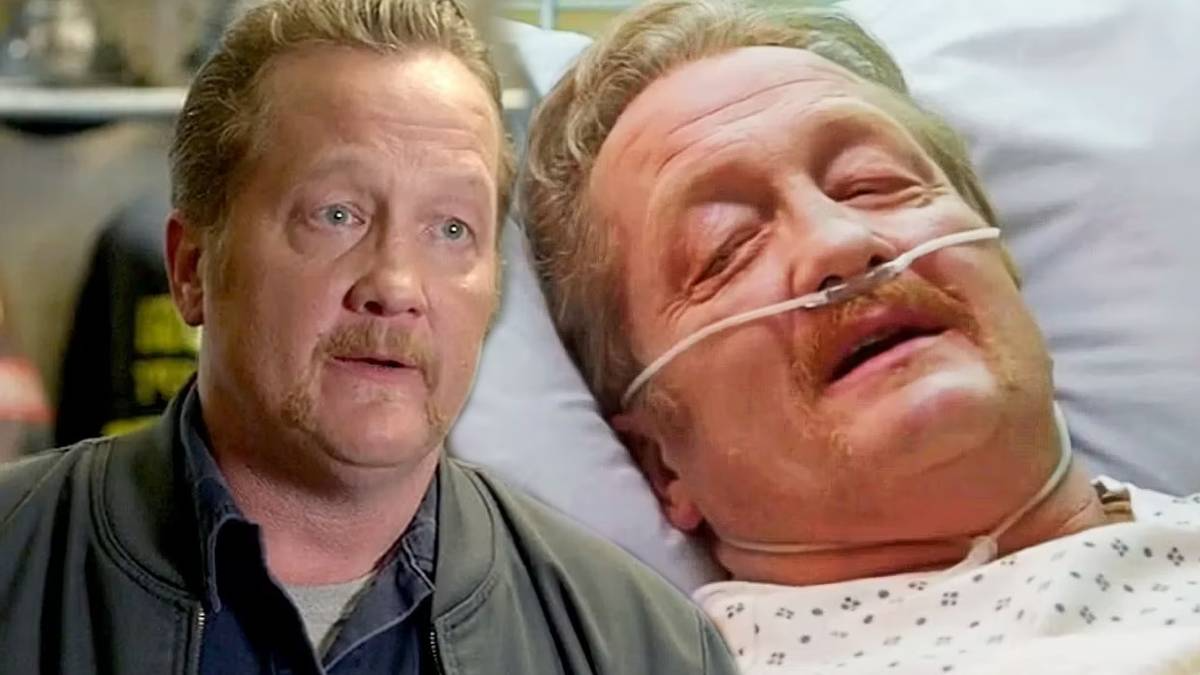
For over a decade, Randall “Mouch” McHolland has been the steady heartbeat of Firehouse 51. As the elder statesman of the truck and the union representative who fought for his brothers and sisters in blue, he represented the bridge between the old guard of firefighting and the modern era of the Chicago Fire Department. However, the latest season has delivered a blow that the fandom is still struggling to process: the departure of a legend through a narrative arc defined by the “ultimate sacrifice.” Mouch’s exit isn’t just a sad farewell to a beloved character; it is a seismic shift that effectively re-writes the future of Chicago Fire, forcing the show to confront a reality where its most reliable anchor is no longer there to steady the ship.
The journey toward this heartbreaking conclusion began with a call that seemed like any other—a routine response that quickly spiraled into a nightmare scenario. In a masterclass of tension and emotional payoff, the writers placed Mouch in a position where the safety of the younger generation of firefighters depended entirely on his willingness to hold the line. When he chose to put himself in harm’s way to ensure that the rest of 51 could make it out alive, he fulfilled the destiny of a true “quiet professional.” This wasn’t a flashy, action-movie death; it was a gritty, selfless act that mirrored the real-life sacrifices of first responders. By making Mouch the center of this ultimate sacrifice, the show honored his legacy while simultaneously pulling the rug out from under the audience.
The immediate fallout of Mouch’s exit has sent shockwaves through the firehouse, and the creative implications are massive. For years, Mouch served as the “firehouse philosopher,” the man who occupied the couch and offered sage advice to anyone from Casey and Severide to the newest candidates. Without his grounding presence, the social hierarchy of 51 is in total disarray. We are already seeing the “takeover” of his responsibilities by younger characters who aren’t quite ready for the burden. The power vacuum left by his departure is forcing a rapid, and often painful, maturation process for the rest of the crew. Herrmann, in particular, is left as the sole bearer of the “old school” mantle, and his journey through grief is currently providing some of the most gut-wrenching performances in the show’s history.
Furthermore, Mouch’s exit re-writes the show’s future by removing its primary source of comedic relief and workplace stability. Chicago Fire has always balanced its intense drama with the warmth of its characters’ personal lives, and Mouch was often the pivot point for that balance. His relationship with Trudy Platt from Chicago PD was the gold standard for One Chicago romances, representing a stable, mature love that anchored both shows. With him gone, that crossover link is severed, and the tone of the show has noticeably shifted toward something darker and more uncertain. The “future” of the franchise now feels more dangerous; if a character as foundational as Mouch can be taken away, then truly no one is safe.
From a production standpoint, this move signals a “new era” for the series. As the show ages, the cost of keeping veteran cast members rises, and creative “resets” become necessary to keep the storytelling fresh. However, choosing Mouch for this exit was a bold gamble. It was a clear signal from the producers that they are willing to break the hearts of the fandom to maintain the show’s reputation for realism and high stakes. It challenges the “plot armor” that often protects long-running characters in procedurals. By allowing Mouch to make the ultimate sacrifice, the show has regained an edge that some critics felt had softened over recent seasons.
The fandom’s reaction has been a mixture of tears and deep respect. Social media is currently flooded with tributes to “the man on the couch,” with viewers sharing their favorite Mouch moments from the past twelve seasons. The consensus is that while the exit is devastating, it was the only way for a character of his stature to go out—as a hero, protecting the family he helped build. This “ultimate sacrifice” has revitalized the conversation around the show, proving that Chicago Fire still has the power to shock and move its audience in profound ways.
As we look toward the remainder of the season, the shadow of Mouch will undoubtedly loom large. The empty spot on the couch at 51 is a physical reminder of the void he left behind. The future of the show will be defined by how the characters honor his memory—whether through the union work he championed or the simple act of looking out for one another. Mouch may have exited the series, but his sacrifice has ensured that the spirit of Firehouse 51 will burn brighter than ever, even as the crew navigates a world that feels a little less certain without him. The legend of Mouch is now part of the firehouse’s DNA, a permanent testament to what it means to give everything for the job.