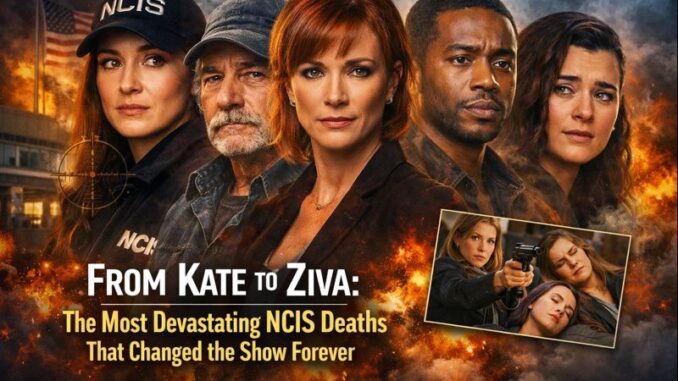
For over two decades, NCIS has dominated television screens, blending crime, loyalty, humor, and heartbreak into one unforgettable franchise. But while fans tuned in for clever investigations and iconic one-liners, it was the unexpected deaths of beloved characters that truly shook the foundation of the show.
Some losses were sudden. Others were long and painful. All of them left scars.
Let’s revisit the most devastating NCIS deaths—from Kate Todd to Ziva David—and explore how each one permanently reshaped the show, the team, and the fans who never saw it coming.
Why Character Deaths Matter So Much in NCIS
More Than Just Shock Value
NCIS never killed characters just for ratings. Each death served a purpose—raising stakes, deepening emotional bonds, and reminding viewers that even heroes aren’t safe.
Emotional Investment Is the Secret Weapon
When fans spend years with characters, their deaths feel personal. NCIS understood that pain equals power—and used it sparingly but effectively.
Kate Todd: The Death That Changed Everything
Who Was Kate Todd?
Special Agent Caitlin Todd was sharp, compassionate, and fiercely loyal. She balanced Gibbs’ intensity with empathy and became the emotional heart of the early team.
The Shocking Moment That No One Expected
In the Season 2 finale, Kate is suddenly shot in the head by Ari Haswari—no warning, no goodbye. One second she’s alive. The next, she’s gone.
Why Kate’s Death Was Revolutionary
-
It proved NCIS wasn’t playing it safe
-
It raised the stakes permanently
-
It traumatized the team—and the audience
Kate’s death was a turning point. NCIS grew darker, deeper, and more serious from that moment on.
Mike Franks: The Loss of a Legend
The Mentor Behind the Myth
Mike Franks wasn’t just Gibbs’ former boss—he was the moral compass that shaped Gibbs into who he became.
A Brutal and Personal End
Franks is stabbed by a serial killer connected to Gibbs’ past, dying slowly in a hospital bed while delivering haunting final words.
The Emotional Fallout
-
Gibbs loses his last link to his former self
-
The show leans harder into legacy and regret
-
Fans witness Gibbs’ vulnerability like never before
Franks’ death didn’t shock—it lingered.
Paula Cassidy: A Hero’s Sacrifice
An Underrated Character with a Tragic End
Paula Cassidy was competent, fearless, and respected. Her death came during an undercover mission gone wrong.
Why Her Death Hurt So Much
-
She died saving others
-
There was no justice, only loss
-
Gibbs blamed himself deeply
Her death reinforced a harsh truth: good agents don’t always get happy endings.
Jenny Shepard: Power, Pain, and Tragedy
A Director with a Complicated Heart
Jenny Shepard wasn’t perfect—but she was strong, intelligent, and deeply tied to Gibbs’ past.
Death by Choice
Refusing treatment for terminal illness, Jenny walks into a deadly ambush and dies in a hail of bullets.
Symbolism Behind Her Death
-
Closure for Gibbs’ unresolved love
-
A warning about obsession and revenge
-
A shift in NCIS leadership tone
Jenny’s death was poetic, painful, and deeply human.
Clayton Reeves: The Death No One Was Ready For
A Gentle Soul in a Violent World
Reeves brought empathy, humor, and kindness—qualities that made him instantly lovable.
A Random, Meaningless Killing
He is stabbed while protecting Abby during a mugging. No mastermind. No larger plot. Just chaos.
Why Fans Still Can’t Accept It
-
The death felt unfair
-
It mirrored real-world violence
-
It broke Abby—and the audience
Reeves’ death led directly to Abby’s departure, doubling the emotional blow.
Emily Fornell: A Tragedy Beyond the Team
The Cost of Addiction and Trauma
Emily, the daughter of FBI Agent Tobias Fornell, dies from an overdose—off-screen, quiet, and devastating.
Why This Death Hit Differently
-
It wasn’t heroic
-
It wasn’t sudden violence
-
It felt painfully real
This loss showed NCIS confronting modern tragedies beyond bullets and bombs.
Ziva David: The Death That Wasn’t (But Felt Real)
Ziva’s “Death” Shattered the Fanbase
When NCIS revealed Ziva had died off-screen in a mortar attack, fans were stunned.
Why Her Absence Changed the Show
-
Tony leaves to raise their daughter
-
The team fractures emotionally
-
Viewership reactions explode
The Twist That Saved Everything
Ziva was later revealed to be alive—but the damage was already done. Her “death” altered NCIS forever.
How NCIS Deaths Redefined the Series
A Shift in Tone and Storytelling
After Kate, the show became darker. After Ziva, it became more introspective.
Character Deaths Became Emotional Anchors
Each loss influenced future decisions, relationships, and long-term arcs.
Why Fans Stayed Anyway
Because NCIS didn’t just kill characters—it honored them.
Why These Deaths Still Matter Today
-
They raised emotional intelligence in procedural TV
-
They set a standard for meaningful character exits
-
They proved long-running shows can still take risks
NCIS didn’t just survive these losses—it evolved because of them.
Conclusion: Loss Is the Soul of NCIS
From Kate’s sudden execution to Ziva’s haunting absence, NCIS taught us that loss isn’t a side effect—it’s the story. These deaths didn’t weaken the show. They defined it.
They reminded us that behind every badge is a human being—and sometimes, the most powerful moments come when everything falls apart.
And that’s why, decades later, NCIS still matters.
FAQs
1. Who was the most shocking death in NCIS history?
Kate Todd’s death remains the most shocking due to its suddenness and lack of buildup.
2. Did Ziva really die in NCIS?
No. Ziva was believed dead but later revealed to be alive.
3. Why do NCIS deaths feel so emotional?
Because the show invests deeply in character development before loss.
4. Which death caused the biggest cast change?
Clayton Reeves’ death led directly to Abby Sciuto’s departure.
5. Will NCIS ever kill a main character again?
Given its history, NCIS never rules anything out—and that uncertainty keeps fans watching.