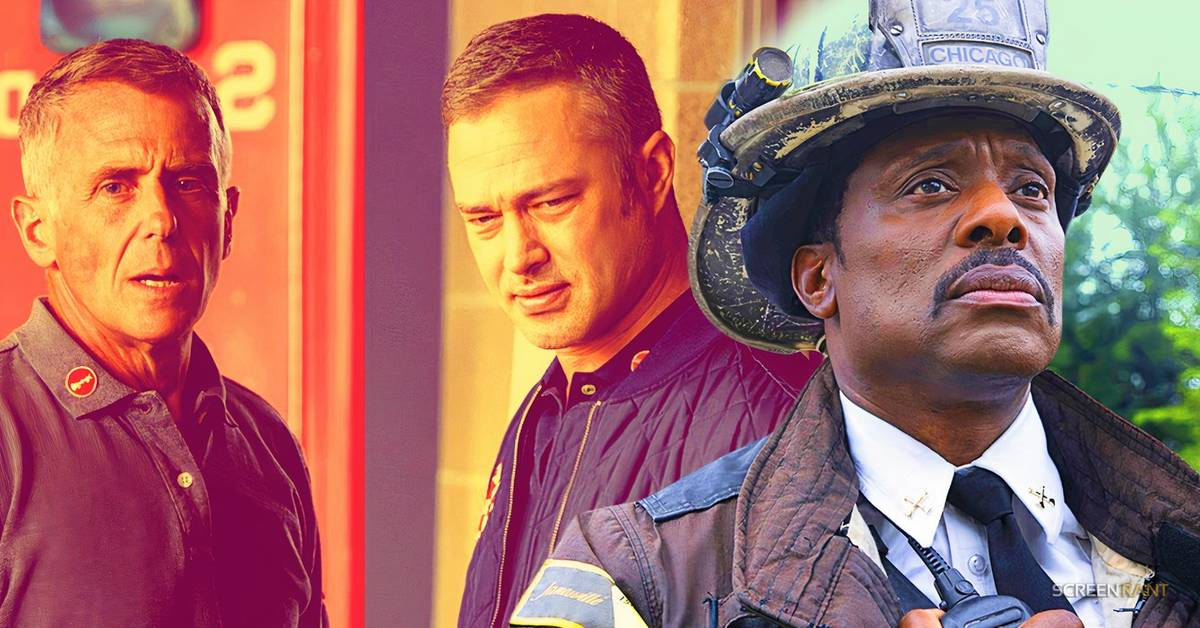
The long shadow cast by Wallace Boden has finally found its successor, and the halls of Firehouse 51 will never be the same. After months of intense speculation, boardroom rumors, and a palpable sense of anxiety among the “One Chicago” faithful, NBC has officially unveiled the new leader stepping into the most prestigious office in the Chicago Fire Department. The transition marks the end of an era and the beginning of a challenging new chapter for the crew of Truck 81, Squad 3, and Ambulance 61. Taking over the reigns is a character designed to shake the very foundations of the station: Chief Dom Pascal.
The departure of Eamonn Walker’s Wallace Boden at the end of the previous season was a seismic event. Boden wasn’t just a Chief; he was the moral compass, the protective patriarch, and the emotional glue that held 51 together through a decade of trauma and triumph. Finding someone to fill those boots was a Herculean task for the show’s writers, and in Dom Pascal, portrayed with a sharp, commanding edge by Dermot Mulroney, they have found a leader who is the antithesis of his predecessor. While Boden led with a mix of stoic wisdom and fatherly compassion, the early glimpses of Chief Pascal suggest a leadership style defined by clinical efficiency, strict adherence to protocol, and a “new broom” mentality that aims to sweep away the house’s tradition of bending the rules for the sake of family.
Chief Pascal arrives in Chicago by way of Miami, bringing a different tactical philosophy and a distinct lack of sentimentality regarding the history of Firehouse 51. His introduction serves as a “culture shock” for the veteran members of the house. For characters like Christopher Herrmann and Randall “Mouch” McHolland, who have spent years operating under Boden’s “family first” umbrella, Pascal’s arrival feels less like a promotion and more like an occupation. The new leader is focused on metrics, response times, and departmental optics—elements that often clash with the intuitive, high-risk heroics that have become the station’s trademark. The wait may be over, but the conflict is only just beginning.
The internal dynamics of the station are already shifting under Pascal’s gaze. One of the most significant points of tension involves Lieutenant Stella Kidd. As someone who has thrived under Boden’s mentorship, Stella now finds herself having to re-prove her worth to a man who values data over reputation. Pascal’s skepticism toward the “Stellaride” dynamic and his scrutiny of the station’s internal politics suggest that the days of 51 acting as a semi-autonomous unit are over. The new Chief is not interested in being a father figure; he is interested in being a commander. This shift creates a fascinating narrative friction, forcing the crew to decide if their loyalty lies with the badge or with the traditions they’ve spent years building.
Furthermore, the “New Leader” storyline allows the show to explore the broader political landscape of the CFD. Pascal’s appointment wasn’t a random occurrence; it was a strategic move by the higher-ups at headquarters to rein in a firehouse that was often seen as too independent. As Pascal settles into Boden’s old office, he brings with him a different visual energy—cleaner desks, tighter schedules, and a colder atmosphere. The familiar warmth of the common room is being replaced by a professional sterility that reflects the changing face of modern emergency services. This evolution is a bold move for the series, challenging the audience to stay invested even as the “heart” of the station undergoes a transplant.
However, beneath Pascal’s icy exterior, the showrunners have teased a complex backstory that may eventually explain his rigid demeanor. As the season progresses, viewers will likely see the cracks in his professional armor, revealing the personal costs of his career in Miami and the secrets he brought with him to the Windy City. This ensures that Pascal isn’t just a villainous obstacle for our heroes, but a three-dimensional character capable of his own redemption or descent. The transition from Boden to Pascal is a masterclass in how to sustain a long-running procedural: by introducing a catalyst that forces the original cast to adapt or break.
As the first episodes featuring the new Chief air, the verdict from the fanbase is clear: the wait was worth it for the sheer drama the change has ignited. While nobody can truly replace Wallace Boden, Dom Pascal has succeeded in making Firehouse 51 feel dangerous and unpredictable again. The office is the same, but the voice behind the desk is new, and for the brave men and women of 51, the mission has never been more complicated. The fire is still burning, but the man holding the extinguisher has a whole new set of rules.