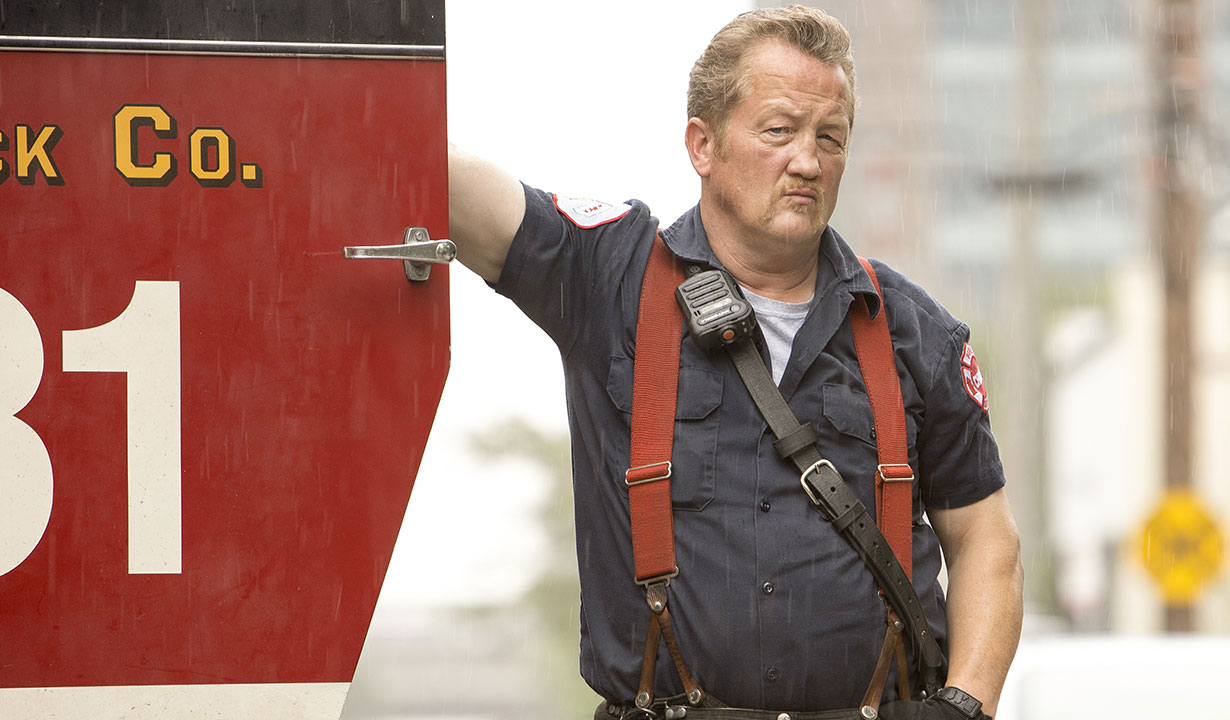
The sirens of Firehouse 51 are sounding a somber note as 2026 brings an announcement that many fans have dreaded for years: Randall “Mouch” McHolland is officially hanging up his turnouts. After fourteen seasons of unwavering service, the departure of Christian Stolte’s beloved character marks the definitive end of an era for Chicago Fire. As the show moves deeper into its transformative fourteenth season, the exit of Mouch represents more than just a personnel change; it is the loss of the station’s historical memory and its most relatable, salt-of-the-earth hero.
The narrative journey leading to this departure has been carefully crafted to reflect the reality of a long career in the Chicago Fire Department. For Mouch, the decision to leave isn’t a sudden whim but the culmination of a “Long Haul” that has seen him survive life-threatening injuries, heart-wrenching losses, and the physical toll of decades on the back of a truck. In recent episodes, the writers have subtly highlighted Mouch’s transition from a frontline warrior to a mentor and elder statesman. His retirement represents a hard-earned peace, a chance to step away from the sirens before the job takes everything from him.
One of the primary reasons this exit feels so heavy is Mouch’s role as the “Soul of 51.” While characters like Severide and Casey often handled the high-octane heroics, Mouch was the anchor for the “everyman.” He was the king of the bullpen couch, the union representative who fought for his colleagues’ rights, and the man who proved that you don’t need to be a superstar to be a hero. His relationship with Trudy Platt provided the show with its most stable and humorous domestic core, and his departure leaves a void in the firehouse’s social fabric that cannot be filled by a younger recruit.
The timing of his exit coincides with a broader leadership shake-up and the return of Wallace Boden, suggesting that Season 14 is a season of passing the torch. By having Mouch leave now, the show is forcing the newer generation—firefighters like Ritter and Gallo—to find their own footing without the steady, cynical, yet deeply compassionate guidance of their mentor. It is a “scorched earth” approach to character development that ensures the firehouse must evolve to survive. Without Mouch to provide the historical context of the CFD, the younger crew must now write their own history.
Fans have expressed a mix of devastation and respect for the character’s “official” exit. Unlike many departures in the One Chicago universe that occur abruptly due to contract disputes, Christian Stolte’s exit appears to be a mutual and respectful conclusion to a storied run. This allows the writers to give Mouch the “hero’s send-off” he deserves—perhaps a final, quiet walk out of the bay doors rather than a tragic accident. This sense of closure is a rare gift in a procedural drama, honoring the fourteen years Stolte spent bringing the character to life with such dry wit and genuine heart.
As we look toward the future of Firehouse 51, the absence of Mouch will be felt in every quiet moment in the common room. The “unbeatable” spirit of the station has always been built on the backs of veterans like him, who showed up shift after shift, regardless of the danger. While the station will continue to respond to calls and save lives, the atmosphere will be fundamentally different. The couch may find a new occupant, but the specific brand of wisdom and “Mouch-isms” that defined an era of television will be sorely missed.
Ultimately, Mouch’s departure is a reminder that even the most enduring legends must eventually find their way home. He leaves behind a legacy of loyalty, brotherhood, and a reminder that the heart of the fire service isn’t just in the fires fought, but in the family kept together. As the bay doors close on Mouch’s career in 2026, the Chicago Fire family stands at a crossroads, forever changed by the man who sat on the couch and watched over them all.