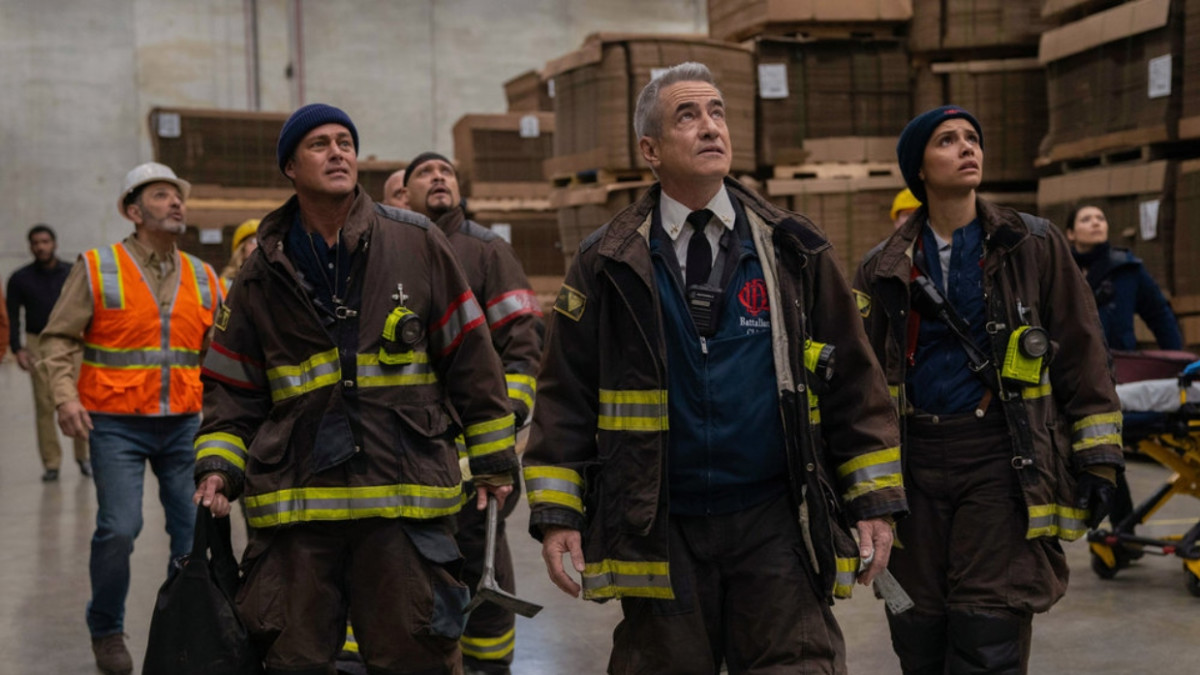
The winter premiere of Chicago Fire Season 14, titled “A Man Possessed,” has officially set a new benchmark for destruction in the One Chicago universe. Airing on January 7, 2026, the episode did not just feature larger explosions or hotter fires; it introduced a multi-layered inferno that threatens the physical, systemic, and emotional foundation of Firehouse 51. For a show that has thrived for over a decade on high-stakes rescues, this premiere signaled a grim shift: the firehouse is no longer just fighting fires—it is fighting for its very survival.
The Literal Inferno: High-Rise Horrors and a Coma
The episode opened with a visceral reminder of why Kelly Severide is the show’s most enduring hero. Trapped in a high-rise luxury apartment with Captain Van Meter and a civilian, Severide faced a nightmare scenario: both exits were blocked by a wall of flame, and they had no firefighting gear. In a sequence that left fans breathless, Severide utilized a desperate “old school” tactic, using bedsheets to rappel the others out of the window.
While the escape was a feat of tactical brilliance, the cost was devastating. Captain Van Meter, a cornerstone of the arson investigation unit (OFI), collapsed shortly after reaching the ground. The diagnosis at Chicago Med was grim—acute respiratory distress syndrome and severe internal lung damage. By the end of the premiere, Van Meter was placed in a medically induced coma, a move that has left the arson investigation in shambles and Severide wracked with guilt.
The Systemic Destruction: The “Rolling Brownouts”
Perhaps the most “destructive” element of the 2026 premiere wasn’t the fire itself, but the cold reality of municipal politics. The city of Chicago is currently undergoing a “budget bloodbath,” resulting in a policy known as “Rolling Brownouts.” This means that at any given moment, random fire rigs or entire stations are taken offline to save money.
The consequences of this were shown in terrifying detail:
-
Unanswered Calls: A staggering 49% of 911 emergency calls in Chicago are currently going unanswered because there are simply no available trucks.
-
The Decommissioning of Engine 51: In a shocking twist, Chief Pascal was notified that Engine 51—the heartbeat of the station—is officially on the list to be permanently decommissioned. This move puts the newly promoted Lieutenant Mouch in immediate danger of losing his hard-won rank, or worse, his job.
Watching the crew of 51 realize that they are being abandoned by the city they serve has created a sense of hopelessness that we haven’t seen in previous seasons. The message is clear: the firehouse is being dismantled from the inside out.
Emotional Ruins: The “Stellaride” Grief
While the sirens wail outside, the internal lives of the characters are in a state of wreckage. The premiere confirmed the “hard truth” that many fans had feared: Stella Kidd suffered a miscarriage in the weeks following the Season 13 finale. This tragedy has cast a somber, grey pall over her relationship with Severide.
Rather than being able to grieve in private, the couple is currently fostering a traumatized teenager named Isaiah. Balancing the demands of a high-risk career with the delicate needs of a child in crisis—all while processing their own profound loss—has pushed the “Stellaride” marriage to its most fragile point yet. The emotional destruction here is quiet but deep, making the “dream wedding” from previous seasons feel like a distant memory.
A Man Possessed: Severide’s Obsession
The title of the episode refers to Severide’s singular, destructive focus on catching the serial arsonist responsible for the luxury apartment fire. His obsession led to a volatile breach of protocol in the interrogation room, resulting in a one-month suspension from the investigation. By being benched, Severide has lost his only outlet for his rage, turning his focus inward in a way that worries his colleagues.
The revelation that the arsonist might be a parent seeking vengeance against the city’s failed services adds a layer of tragic irony to the plot. The “destructive” nature of this premiere lies in the fact that everyone—the victims, the firefighters, and even the villain—is a casualty of a city that is falling apart.
Conclusion: The Future of Firehouse 51
As we move into the 2026 season, Chicago Fire is no longer a show about “the save.” It is a show about resilience in the face of collapse. With Van Meter in a coma, Engine 51 on the chopping block, and the leads navigating deep personal trauma, the 2026 premiere has set the stage for the most challenging year in the history of Firehouse 51.