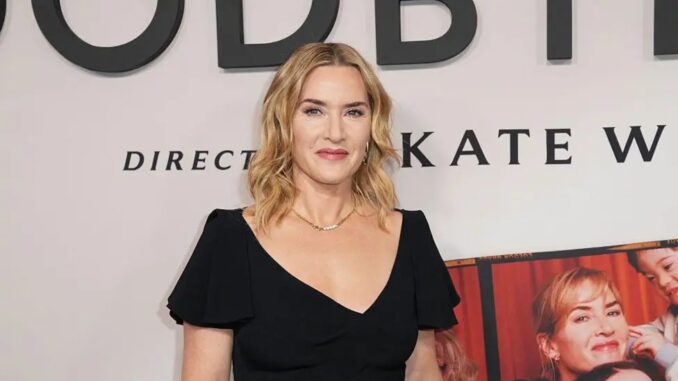
🕊️ The Wisdom of Kate Winslet: Finding Peace in the Mundane
Let’s be honest: if you became a global superstar overnight at age 22, you’d probably lose your mind. For Kate Winslet, the release of Titanic in 1997 wasn’t just a career launch; it was an invasion. People weren’t just watching her on screen; they were rifling through her trash and tapping her phones. So, how do you keep your sanity when the whole world is obsessed with what you eat and what you weigh?
In a recent, wonderfully candid interview on BBC Radio 4’s Desert Island Discs, Kate dropped some truth bombs that are as hilarious as they are refreshing. Forget expensive retreats or specialized gurus. Her secret weapons? “A good meal, a shared conversation, a nice cup of coffee, a bit of Radiohead, and a good poo.”
It sounds simple—maybe even a bit crude to the “Hollywood elite”—but it’s a profound testament to the power of the biological basics. It’s about being a human being first and a movie star second. We need to explore why this “biological grounding” was so essential during her darkest years of media scrutiny.
📉 The “Horrific” Reality of Post-Titanic Fame
We often see the glamour of the red carpet and assume it’s all champagne and roses. For Kate, the reality was far more sinister. After she became Rose DeWitt Bukater, the British tabloids turned into vultures.
Surveillance and Bin-Diving
Kate recently revealed that the intrusion wasn’t just annoying; it was surveillance-level harassment.
-
Phone Tapping: Journalists were literally listening to her private conversations to find a scoop. Imagine being afraid to call your mother because you don’t know who’s listening.
-
The Diet Obsession: Paparazzi would follow her to local shops and interview the shopkeepers. Why? They wanted to track exactly what she was buying to “calculate” her diet. It was a calculated effort to body-shame her under the guise of reporting.
The Psychological Toll of Being “Blubber”
This media obsession hit a raw nerve. Before she was an Oscar winner, Kate was a girl in school who was nicknamed “blubber” and locked in art cupboards. Her own drama teacher told her she’d only ever get the “fat girl parts.” When the media picked up that baton and started calling her “melted and poured” into dresses, it wasn’t just news; it was a continuation of childhood trauma.
🍝 The Secret Remedy: Pasta and Red Wine on the Wall
How did she survive? She didn’t do it alone. Kate credits her small circle of friends and neighbors for keeping her tethered to reality when the paparazzi were camped outside her door.
H3: The Neighborly Lifeline
During one of the most intense periods of her life—her divorce from director Sam Mendes—Kate lived in a state of siege. Paparazzi followed her in New York, even when she was with her children. Her saving grace? A neighboring couple who understood the assignment.
-
The Garden Wall Ritual: They would leave a bowl of steaming pasta and a little glass of red wine on the garden wall between their houses.
-
A Gesture of Humanity: This wasn’t just food; it was a message that she was still a person, a neighbor, and a friend. It provided a moment of warmth in a world that felt cold and invasive.
🚽 The “Good Poo” Philosophy: Biological Grounding
Let’s talk about the quote that went viral. Why would one of the world’s most respected actresses mention her digestion in the same breath as media intrusion?
The Great Equalizer
When the media tries to turn you into a statue or a “perfection” icon, there is nothing more grounding than a basic bodily function. Using the phrase “a good poo” is Kate’s way of reclaiming her body.
-
Stripping Away the Glamour: It’s an analogy for life itself. You take in the good (the meal, the conversation) and you let go of the waste (the tabloid lies, the negativity).
-
Active Voice in Healing: She isn’t just “coping”; she is actively choosing things that make her feel physically and mentally well.
H4: The Radiohead Connection
Adding Radiohead to her list of remedies is equally telling. Their music is famously complex, often dealing with themes of alienation and modern anxiety. For Kate, losing herself in music was a way to drown out the noise of the paparazzi cameras clicking outside her window.
🚫 Defying the “Brave” Label
Kate Winslet has become a vocal critic of the way Hollywood discusses women’s bodies. She’s famously refused to let directors edit out her “bulgy belly” or wrinkles. But don’t call her “brave.”
The Misogyny of “Brave”
Kate argues that we never call men “brave” for growing a beard or looking tired on screen.
-
Double Standards: If a man looks “real,” he’s a “serious actor.” If a woman looks real, she’s “brave.”
-
A Real Person: She maintains that she is simply being a real person. In her film Lee, she played war photographer Lee Miller, who ate cheese and bread and didn’t do Pilates. Kate insisted her body reflect that reality, “belly rolls” and all.
🎨 Directorial Debut: Goodbye June
Today, Kate is moving behind the camera. Her directorial debut, Goodbye June, marks a new chapter. Interestingly, the film was written by her son, Joe Anders.
H3: Commanding the Set with Confidence
Kate has noted that even as a director, she still faces different treatment than her male counterparts. Crew members occasionally offer her “advice” on being confident—advice they would never give a man. Her response now? A simple, laughing, “Shut up.”
H3: The Legacy of a Thick Skin
The “thick skin” she developed during the Titanic era is now her greatest asset. She isn’t afraid of a bad review or a difficult shoot. Why would she be? She’s already survived the worst of the British tabloids.
💡 Why Kate’s Approach Matters to Us
You might not be an Oscar winner, but we all face “intrusion” in the form of social media pressure and the constant “likes” game.
Kate’s advice to young women is to ignore the idea of perfection. Perfection is a lie sold to us by filters and Ozempic. The truth is found in the “juiciness” of getting older and caring less about what the world thinks. It’s about enjoying that cup of coffee and that shared conversation without checking your phone every five seconds.
Conclusion
Kate Winslet’s survival guide—a good meal, a conversation, and a good poo—is the ultimate middle finger to the toxic culture of celebrity worship and body shaming. By prioritizing her humanity over her “image,” she has not only survived the horrific media intrusion of the 90s and 2000s but has emerged as a powerhouse director and advocate for authenticity. She reminds us that when the world gets too loud, the best thing you can do is look down, keep walking, and lean on the simple, physical joys of being alive.
❓ 5 Unique FAQs After The Conclusion
Q1: What exactly did journalists do during the Titanic era to invade Kate’s privacy?
A1: Kate revealed that journalists tapped her phones, followed her constantly, and even searched through her trash bins. They even questioned local shopkeepers about her grocery purchases to try and determine her diet.
Q2: Why does Kate Winslet dislike being called “brave” for showing her natural body?
A2: She feels it’s a sexist double standard. She points out that men are never called “brave” for looking unkempt or natural in a role, whereas for women, just “being real” is treated as an act of heroism rather than just doing the job.
Q3: Who wrote the screenplay for Kate Winslet’s directorial debut, Goodbye June?
A3: The screenplay was written by her son, Joe Anders. Kate has expressed great pride in collaborating with him on her first project as a director.
Q4: How did Kate Winslet’s neighbors help her during her divorce?
A4: During her split from Sam Mendes, her neighbors in New York would leave a bowl of pasta and a glass of wine on the garden wall as a quiet gesture of support while she was being hounded by paparazzi.
Q5: What is Kate’s current stance on weight-loss drugs like Ozempic?
A5: Kate has called the obsession with weight-loss drugs “terrifying” and “f—ing chaos.” She is a staunch advocate for body positivity and fears that these drugs are destroying young women’s self-esteem by chasing an impossible idea of perfection.