📺 The Unseen Drama Behind the Laughs
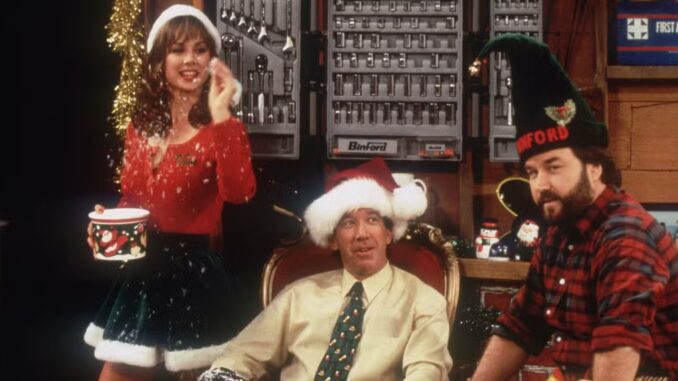
If you grew up in the 90s, you probably remember the catchy theme song, the grunting, and the iconic “Does everybody know what time it is?” line from Home Improvement. We saw Heidi Keppert, played by the charismatic Debbe Dunning, as the glue that held the fictional “Tool Time” show together. She was the steady hand while Tim Taylor was busy blowing up another lawnmower.
But recently, Dunning pulled back the curtain on a moment that was anything but funny. It turns out that a casual suggestion from Tim Allen almost led to her being pushed out—or at least sidelined—by the very woman she replaced: Pamela Anderson. This revelation isn’t just a piece of juicy gossip; it’s a fascinating look at power dynamics, job security, and the raw emotions of a new mother trying to hold onto her career in the spotlight.
🚨 The Moment of Friction: A Casual Suggestion with Heavy Weight
The drama started with a simple conversation. Tim Allen had run into Pamela Anderson (who played the original “Tool Time Girl,” Lisa) at a fight in Las Vegas. Anderson mentioned she missed the show, and Allen, being the king of the castle, threw out a “what if” idea to Dunning back on set.
The “Shared Role” Pitch
Allen suggested that they could “sprinkle” Anderson back into the show, effectively having the two actresses share the role of the Tool Time assistant. To the lead star, it probably felt like a fun reunion idea. To Debbe Dunning, it felt like a pink slip in disguise.
A Physical Reaction to Professional Threat
Dunning has recalled the moment vividly. She didn’t just feel annoyed; her body physically reacted. Her neck broke out in red splotches—a classic sign of extreme stress and “fight or flight” response. Have you ever had your boss suggest someone else do your job “part-time”? It’s terrifying. For Dunning, who had recently given birth, the stakes were even higher.
🤱 Postpartum Pressure: Why the Stakes Were So High
To understand Dunning’s reaction, we have to look at where she was in her life. She was a new mother, supporting a household and a child. In the fickle world of television, your spot is never truly guaranteed until you become “essential.”
The Fragility of the “Sidekick” Role
Let’s be honest: in the early 90s, the “Tool Time Girl” was often viewed as replaceable. Pamela Anderson had already left for Baywatch, proving the role could survive a cast change. Dunning knew this hierarchy all too well. She wasn’t one of the Taylor kids; she was a supporting player in a world dominated by a massive star.
The Fear of Being “Replaced” by a Legend
Pamela Anderson was becoming a global icon. If she returned, would the cameras even bother looking at Heidi? Dunning’s fear wasn’t just ego; it was about the cold, hard reality of screen time and career longevity.
🎭 From Reality to Script: “The Kiss & The Kiss-Off”
One of the most unique aspects of this story is how Hollywood turned real-life trauma into entertainment. Instead of just burying the tension, the producers of Home Improvement decided to lean into it.
H3: Art Imitating Life
After Dunning expressed her discomfort (and cried “like a baby,” as she put it), a producer called her. They reassured her that her job was safe but asked a bold question: “Can we write about this?”
H3: The Iconic Season 6 Crossover
This led to the episode “The Kiss & The Kiss-Off,” where Pamela Anderson officially guest-starred as Lisa. In the episode, Heidi feels threatened and eventually quits Tool Time. It’s rare to see a sitcom meta-commentary that so closely mirrors the actor’s actual anxiety.
🤝 Professionalism vs. Personal Anxiety
Despite the blotchy neck and the tears in the dressing room, Dunning has nothing but praise for how the actual filming went.
The Professionalism of Pamela Anderson
Dunning noted that when Anderson showed up to film the guest spot, she was a total pro. She brought her kids, stayed in her dressing room being a mom between takes, and there was zero “diva” behavior. It turns out the “threat” was entirely in the logistics of the job, not in the person herself.
H4: The Reassurance of the Crew
It was the show’s stage manager and producers who ultimately saved the day. They stepped in to tell Dunning, “This is your role. You aren’t sharing.” That validation is often all a performer needs to get back in front of the camera and deliver their lines.
🛠️ The Growth of Heidi Keppert: From Accessory to Star
Interestingly, this brush with being pushed out might have actually helped Dunning in the long run.
Proving Her Worth
By standing her ground—even through tears—Dunning showed the producers how much she valued the role. Shortly after this period, she was promoted from a recurring guest to a full-time starring cast member for the final seasons.
H3: The “Second Act” of Heidi
Heidi became more than just a woman handing over a wrench. She got storylines about her pregnancy, her marriage, and her own personality. She moved from being a “banana” to a pillar of the show-within-a-show.
💡 The Broader Meaning: Job Security in the 90s
What does this whole saga mean for the way we view classic TV? It reminds us that behind every “perfect” sitcom family, there is a workplace with real fears.
-
Star Power: It shows the immense power lead actors like Tim Allen held. A casual thought from them could derail someone else’s career.
-
The Power of No: It proves that even a “supporting” player has the right to say, “I’m not comfortable with this.”
-
Vulnerability is Human: Dunning’s willingness to admit she was “emotional” and “cried” makes her incredibly relatable. We’ve all been the person in the bathroom trying to fix our makeup after a stressful meeting.
Conclusion
The story of Debbe Dunning almost being pushed out of Home Improvement is a powerful reminder that “Tool Time” wasn’t just about hammers and nails—it was about people. Dunning’s reaction to the threat of sharing her role with Pamela Anderson reveals the intense pressure of being a working mother in Hollywood and the fragility of supporting roles in a star-driven medium. However, by turning that real-world tension into one of the show’s most memorable episodes, the creators validated Dunning’s place in the series. Ultimately, she didn’t just survive the threat; she thrived, proving that Heidi Keppert was an irreplaceable part of the Home Improvement legacy.
❓ 5 Unique FAQs After The Conclusion
Q1: Did Debbe Dunning and Pamela Anderson ever have a real-life feud?
A1: No. While Dunning felt professional anxiety about Anderson returning, she has explicitly stated that Anderson was a “complete professional” on set and that the two worked together well during the guest appearance.
Q2: Why did Pamela Anderson leave Home Improvement in the first place?
A2: Anderson left after Season 2 to take on a more prominent role in Baywatch, which skyrocketed her to international superstardom.
Q3: Was Debbe Dunning’s blotchy neck a real thing mentioned in the show?
A3: Dunning mentions her neck turned blotchy in real life during the conversation with Tim Allen. While the show referenced her character’s jealousy, the “blotchy neck” was a real-world physical symptom of her stress.
Q4: Did Tim Allen apologize for the suggestion?
A4: While there isn’t a public record of a formal “apology,” Dunning remains close friends with Allen and Richard Karn today. It seems the situation was handled internally by producers who clarified that Allen was just “throwing ideas out there.”
Q5: How many episodes was Pamela Anderson in compared to Debbe Dunning?
A5: Pamela Anderson appeared in 23 episodes as Lisa. Debbe Dunning appeared in over 140 episodes as Heidi, far surpassing the original Tool Time girl’s tenure.