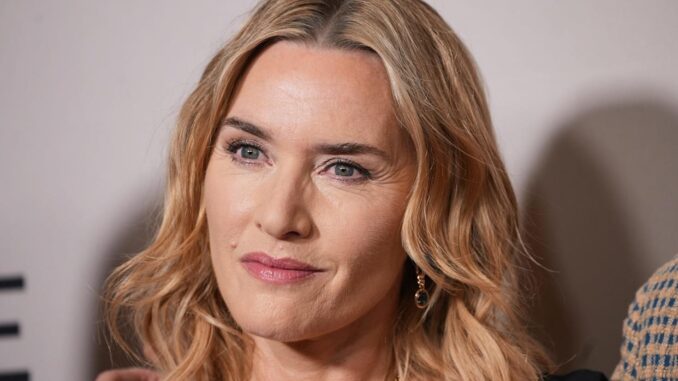
🌟 Beyond the Spotlight: The Hidden Struggle of a Global Icon
Imagine being 22 years old and suddenly becoming the most famous woman on the planet. For Kate Winslet, the release of Titanic in 1997 wasn’t just a career milestone; it was an overnight explosion that shattered her sense of privacy and safety. While the world saw a glamorous movie star, Kate was living through what she describes as a “horrible” experience. The media intrusion was relentless, the body-shaming was brutal, and the pressure to conform to a specific Hollywood image was suffocating.
But amidst this chaotic storm of global fame, something profound happened. Kate Winslet became a mother. In recent interviews, including a heart-to-heart on the Talk Easy with Sam Fragoso podcast, Kate revealed a startling truth: becoming a mother at a young age didn’t just change her schedule—it saved her mental health. It provided a grounding force that allowed her to navigate the toxic waters of celebrity life without losing herself. Let’s dive into why the role of “Mum” became the most important performance of her life.
🌊 The Titanic Aftermath: When Fame Feels Like a Trap
To understand why motherhood was such a lifesaver, we have to look at the wreckage Titanic left behind in Kate’s personal life.
The Brutality of the 90s Tabloids
The late 90s were a “wild west” for celebrity gossip. Kate was followed into grocery stores, her phone was tapped, and her physical appearance was dissected with a cruelty that would be unthinkable today.
-
Constant Harassment: “I didn’t want to be followed literally feeding the ducks,” she recalled. The feeling of being hunted took a massive toll on her mental stability.
-
The Weight of Expectation: Critics and journalists couldn’t understand why she chose smaller, independent films after a billion-dollar blockbuster. To them, she was “wasting” her potential; to her, she was reclaiming her sanity.
The Loneliness of the Spotlight
Despite her success, Kate felt incredibly alone. She was a young woman in her early twenties trying to manage a level of exposure that few human beings ever experience. There was no manual for how to survive being “Rose.”
🐣 The Arrival of Mia: A Directional Shift
In 2000, just three years after the world met Rose DeWitt Bukater, Kate welcomed her first daughter, Mia Threapleton. This event acted as a massive psychological anchor.
Finding Meaning in the Mundane
Suddenly, the headlines about her weight or her wardrobe didn’t matter as much. Why? Because she had a tiny human being who needed her to be present, healthy, and “real.”
-
A Connection to Reality: Motherhood allowed her to maintain a connection to the real world. Paparazzi flashes aren’t as scary when you’re focused on a baby’s first steps or a late-night feeding.
-
Discarding Public Opinion: Kate noted that having children gave her the strength to disregard public attention and negative comments. Her priority shifted from “What does the media think?” to “How do I protect my child?”
H3: The Gift of Young Motherhood
Kate has often said she felt “very lucky” to become a mother at 25. While many starlets were chasing the next big party or red carpet, Kate was in the trenches of parenting. This provided a built-in “shield” against the more destructive elements of fame.
🛡️ Motherhood as a Mental Health Safeguard
How exactly does raising kids help someone cope with trauma and extreme public scrutiny? For Kate, it was about structure and purpose.
The Hands-On Approach to Parenting
Kate is famous for being a “hands-on” mom. She doesn’t have a fleet of drivers or private chefs. She does the school runs, packs the lunches, and makes the chicken soup.
-
Staying Grounded: “I would be so unhappy if I had those things and I wouldn’t feel like I was being a real person anymore,” she told Harper’s Bazaar. By choosing to do the “normal” stuff, she kept her ego in check and her mental health stable.
-
The “Real Person” Anchor: Doing domestic chores isn’t just about chores; it’s about maintaining an identity that isn’t defined by an Oscar or a movie poster.
H3: Turning the “Horrible” into “Healing”
The self-criticism that plagued Kate in her early twenties began to melt away as she focused on her children. Motherhood taught her a level of self-compassion that she had previously lacked. She realized she couldn’t be a good mother if she was constantly being her own harshest critic.
🎬 A Legacy of Resilience: The Winslet Children Today
Fast forward to today, and Kate’s approach has clearly paid off. Her children—Mia, Joe, and Bear—are not only her biggest supporters but are also entering the creative world with their own voices.
Working with the New Generation
Kate recently starred in I Am Ruth alongside her daughter, Mia. She was “blown away” by Mia’s naturalism and courage.
-
Empowering Her Kids: Seeing her children flourish in the industry without the “trauma” she experienced has been a healing experience for Kate. She has given them the tools to speak up for themselves—tools she had to forge in the fire of the post-Titanic era.
-
Creative Collaboration: Her son, Joe Anders, wrote the screenplay for her directorial debut, Goodbye June. This level of collaboration shows a family bond that is built on trust, not just fame.
H4: The Social Media Stance
One way Kate protects her children’s mental health (and her own) is by keeping social media out of the house. She’s been vocal about the dangers of the digital world, viewing it as a modern-day version of the tabloid harassment she faced. This protective instinct is just another layer of how her role as a mother continues to prioritize mental well-being over “likes.”
💡 The Universal Lesson: Purpose Over Perception
Kate Winslet’s journey offers a powerful lesson for everyone, not just movie stars. When life feels overwhelming—whether from work pressure, social media scrutiny, or personal trauma—finding a “purpose” that is bigger than yourself is the ultimate survival tactic.
For Kate, that purpose was motherhood. It forced her to look up, to stay brave, and to realize that “being famous” is a “ridiculous word” compared to the reality of family. She used the love for her children as a compass to navigate back to her own self-worth.
Conclusion
Kate Winslet’s revelation that motherhood saved her mental health is a poignant reminder that even the most glittering success has a dark side. The extreme “shock” of Titanic fame could have easily led down a path of burnout and despair. Instead, Winslet leaned into the grounding, exhausting, and beautiful reality of raising children. By choosing packed lunches over paparazzi-fueled parties, she built a fortress of resilience that has allowed her to remain one of the world’s most respected and mentally healthy actresses. In the end, the woman who survived the sinking of the Titanic on screen used motherhood to survive the rising tides of fame in her real life.
❓ 5 Unique FAQs After The Conclusion
Q1: Who are Kate Winslet’s three children?
A1: Kate has three children: Mia Honey Threapleton (born 2000), Joe Anders (born 2003), and Bear Blaze Winslet (born 2013). They are from her three respective marriages to Jim Threapleton, Sam Mendes, and Edward Abel Smith.
Q2: Why did Kate Winslet describe the period after Titanic as “horrible”?
A2: Despite the film’s success, Kate faced intense media bullying, phone tapping, and physical stalking by paparazzi. She also faced significant body-shaming from the press, which she says made her life “unpleasant” and affected her mental health at age 22.
Q3: Has Kate Winslet ever acted with her children?
A3: Yes! She starred alongside her daughter, Mia Threapleton, in the 2022 emotional drama I Am Ruth. Additionally, her son Joe Anders wrote the screenplay for her directorial debut, Goodbye June.
Q4: Why does Kate Winslet refuse to have a chef or a driver?
A4: Kate believes that doing her own cooking and driving helps her stay a “real person.” She wants her children to remember her doing the school run and making chicken soup, rather than growing up in a detached celebrity bubble.
Q5: What is Kate Winslet’s stance on social media for her kids?
A5: Kate is strictly against her children using social media. She believes it places undue pressure on young people’s mental health and self-image, and she has advocated for parents to keep their children “offline” to protect their childhood for as long as possible.