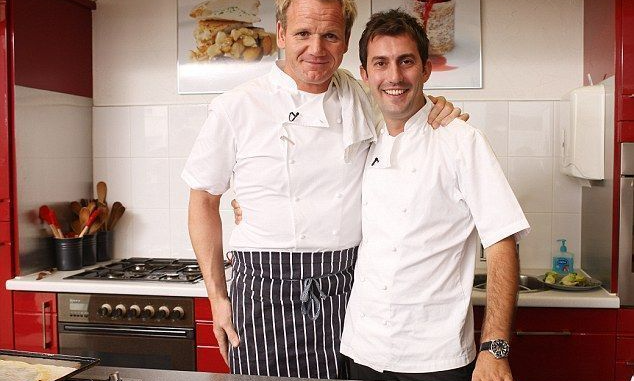
For decades, Gordon Ramsay built an empire on one simple promise: excellence or nothing. Cooking was the battlefield, skill was the weapon, and pressure was the test. But with his latest series, fans are starting to realize something unsettling—this time, food may no longer be the main point.
At first glance, the format looks familiar. Timed challenges. Sharp critiques. High-stakes eliminations. Yet beneath the surface, longtime viewers say the show feels fundamentally different, almost as if it quietly rewrote the rules without telling anyone.
And once that realization sets in, the entire series plays differently.
The biggest shift fans are talking about isn’t Ramsay’s temper or tone—it’s what actually determines success. Dishes that seem technically flawed survive. Contestants who make safer, less ambitious choices move forward. Meanwhile, bold risks are increasingly punished. To many viewers, it feels less like a competition of skill and more like a test of compliance.
That’s where the controversy begins.
In earlier Ramsay shows, taking risks was celebrated, even when it failed. Ambition mattered. Growth mattered. Now, fans argue that playing it safe appears to be the smarter strategy, and that runs directly against everything Ramsay once preached.
Social media reactions have been sharp and polarized. Some applaud the change, calling it a more realistic portrayal of professional kitchens, where consistency often beats creativity. Others feel betrayed, accusing the show of abandoning its soul in favor of manufactured drama and streamlined storytelling.
The phrase “producer-driven” keeps popping up in discussions.
Episodes increasingly lean on reaction shots, suspenseful pauses, and narrative arcs that feel pre-decided. Viewers notice when certain contestants receive more screen time, more confessionals, more context—while others are edited into near-invisibility before being abruptly eliminated.
When eliminations feel pre-written, the illusion of fairness cracks.
Another major talking point is Ramsay himself. He’s still commanding, still authoritative, but noticeably more distant. His critiques are shorter, less instructional. The fiery monologues about technique and discipline have been replaced with broad judgments that leave viewers guessing.
Fans aren’t questioning his expertise—they’re questioning his role.
Is Ramsay still the ultimate judge, or has he become the face of a machine that’s grown larger than him? Some viewers believe he’s intentionally stepping back, letting the format speak. Others think the format is limiting him, smoothing out the rough edges that once made his presence electric.
Either way, the shift is impossible to ignore.
What complicates things further is that the show is, by many metrics, successful. Ratings are solid. Engagement is high. Clips circulate widely online. From a business standpoint, the series works. That success makes the criticism easier to dismiss—but harder to silence.
Because the complaints aren’t about boredom. They’re about trust.
Fans say they no longer feel confident they understand what the show values. Is it leadership? Adaptability? Drama under pressure? Or simply fitting a storyline? Without clarity, every decision feels suspicious, even when it’s justified.
This ambiguity creates a strange viewing experience. Audiences lean in, not to learn or be inspired, but to decode. Every challenge becomes a puzzle. Every elimination sparks conspiracy theories. The show turns from competition to investigation.
Ironically, that tension keeps people watching.
Some viewers admit they’re more hooked now than ever—not because they love the changes, but because they want answers. They’re waiting for a moment that explains the shift, that justifies it, that reconnects the dots between Ramsay’s legacy and the show’s new direction.
Others aren’t so patient.
There’s growing concern that the series is prioritizing longevity over integrity. With so many Ramsay-led projects on air, each one has to stand out. The fear is that differentiation is coming at the cost of authenticity, turning what was once a test of mastery into a carefully balanced entertainment product.
And that’s a dangerous line.
Gordon Ramsay didn’t become a global icon by being safe. He became one by being uncompromising. By demanding more than anyone thought reasonable. By making viewers uncomfortable—and inspired—at the same time.
Fans don’t necessarily want the old version back. They want evolution with purpose, not change for the sake of novelty.
As the season progresses, the divide is widening. Some viewers embrace the new tone, seeing it as maturity. Others see it as dilution. What unites them is a shared sense that something important is at stake—not just for this show, but for the Ramsay brand itself.
Because once audiences stop believing in the rules, no amount of drama can replace what’s lost.
And if this series is truly redefining what a Gordon Ramsay show is meant to be, then one question remains unanswered: is this the future of his empire—or the moment fans look back on and say, “That’s when it changed”?
Either way, viewers are watching closely.
Not for the food.
But for the truth hiding behind it.