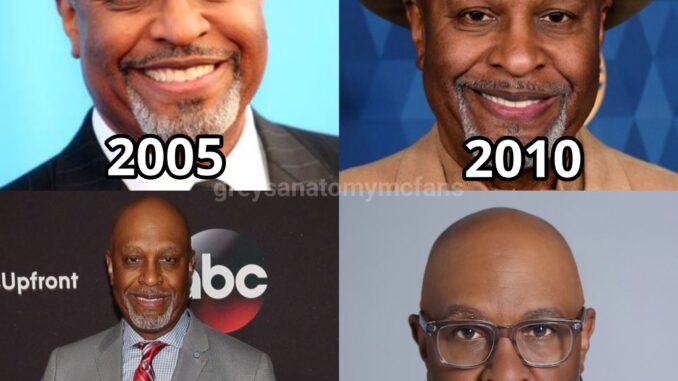
2005 vs 2025: Richard Webber and the Evolution of Leadership — From Authority and Control to Empathy and Legacy
When Grey’s Anatomy first aired in 2005, Richard Webber was introduced as the embodiment of authority. He was the Chief. His word was final. His presence commanded silence. Leadership, at that time, meant control, hierarchy, and emotional distance.
Fast forward to 2025, and Richard Webber is no longer just a title-holder — he is a symbol of endurance, reflection, and growth. His leadership has transformed in ways that mirror not only the evolution of the show, but also how we understand leadership in the real world.
This is not just a comparison of two versions of one character. It is a story about how leadership itself has changed.
2005: Leadership as Power and Structure
In the early seasons, Richard Webber led from the top down. Decisions were made behind closed doors. Emotions were weaknesses. Authority was something to be protected, even at the cost of personal relationships.
This version of Richard believed that:
-
Leaders must remain distant
-
Vulnerability undermines respect
-
Order matters more than individual voices
And in many ways, he was effective. The hospital functioned. Rules were enforced. But this leadership style came with consequences — unresolved guilt, broken relationships, and silence where honesty should have lived.
Richard in 2005 carried the weight of secrets, especially his past mistakes, believing that leadership meant carrying burdens alone.
2025: Leadership as Presence and Wisdom
By 2025, Richard Webber no longer needs authority to be respected. His leadership is quieter — and far more powerful.
He listens more than he commands.
He teaches more than he punishes.
He stays, even when stepping away would be easier.
Modern Richard understands that leadership is not about control, but about impact. He is a mentor, a stabilizer, and a living archive of the hospital’s history. His value no longer comes from his title, but from his willingness to guide others through mistakes he once made himself.
This version of Richard represents:
-
Emotional intelligence
-
Accountability and growth
-
Leadership through service
He doesn’t lead the hospital anymore — he leads people.
Old-School vs New-School Leadership: One Man, Two Eras
Richard Webber’s journey perfectly reflects the broader shift in leadership culture:
| 2005 | 2025 |
|---|---|
| Authority-driven | Relationship-driven |
| Fear-based respect | Trust-based respect |
| Leaders don’t show weakness | Leaders grow through vulnerability |
| Power defines leadership | Purpose defines leadership |
What makes Richard compelling is that he didn’t resist change — he learned from it. Many leaders fade when the world evolves. Richard adapted.
Why Richard Webber Still Matters
In a show filled with dramatic exits and constant reinvention, Richard Webber’s greatest strength is that he stayed — long enough to change, and long enough to teach others that change is possible.
He reminds us that leadership is not about being perfect from the start, but about being brave enough to grow over time.
And maybe that’s why, in 2025, Richard Webber feels more relevant than ever.
Not because he’s the strongest voice in the room —
but because he knows when to listen.