🚢 The Titanic Paradox: A Popular Legend vs. A Cinematic Masterpiece
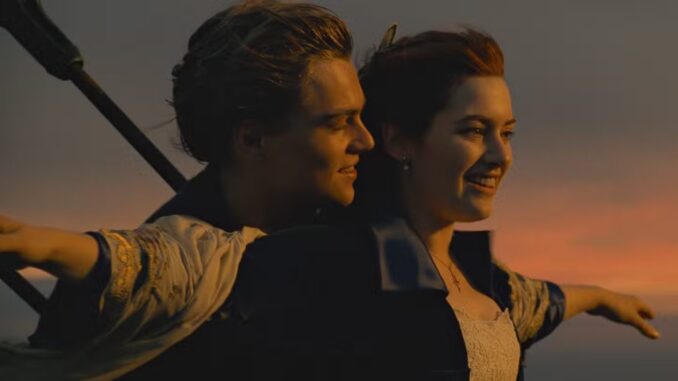
Let’s be real for a second. If you mention Titanic in a crowded room, everyone knows exactly what you’re talking about. They see the outstretched arms on the bow; they hear the haunting opening notes of Celine Dion’s tin whistle; they remember the “king of the world” shout. It is, by every objective metric of the 1990s, a cultural behemoth. It didn’t just break the box office; it shattered it into a million icy pieces.
But here’s the kicker: just because something is popular doesn’t mean it’s “great” in the way we talk about The Godfather or Citizen Kane. As the decades pass, a growing segment of cinephiles and critics have begun to admit the unthinkable—Titanic is a magnificent spectacle, but it’s actually a pretty average movie when you strip away the CGI and the historical tragedy. It’s like a massive, beautifully decorated cake that, once you bite into it, is mostly just air.
How can a movie win 11 Oscars and still be considered “not great” by modern standards? It’s a fascinating question of spectacle versus substance. We remember it because we were overwhelmed by it, not because the screenplay changed our lives. Let’s dive into why this ship, while unsinkable at the box office, hits quite a few narrative icebergs.
🌊 The Spectacle That Blinded a Generation
When Titanic hit theaters in 1997, it was an event. James Cameron didn’t just make a movie; he built a world. He reconstructed the ship with obsessive detail and pushed the limits of what digital effects could do. At the time, we had never seen anything like the final sinking sequence.
The “Wow” Factor Overpowering the “Why”
The sheer scale of the production acted as a smokescreen. When you’re watching a thousand people slide off a vertical deck into a churning ocean, you aren’t exactly thinking about character motivations or dialogue subtext. You’re just trying to breathe.
-
Engineering Marvels: Cameron’s use of miniatures, massive water tanks, and early CGI was revolutionary.
-
The Historical Hook: The film tapped into a real-life tragedy that already had a grip on the global imagination.
But spectacle has a shelf life. Once the “wow” factor fades and we get used to high-end CGI, we start looking at the bones of the story. And that’s where things get a bit shaky.
📝 The Script: A Masterclass in Cliches
If we’re going to be intellectually honest, we have to talk about the writing. James Cameron is an incredible director of action, but his dialogue often feels like it was pulled from a “My First Romance Novel” template.
H3: Archetypes Instead of Characters
Jack Dawson and Rose DeWitt Bukater aren’t so much people as they are archetypes. Jack is the “Magical Poor Person” who has no flaws, no past, and apparently no purpose other than to teach a rich girl how to spit and be “free.” Rose is the “Stifled Socialite” who is so miserable in her world of fine art and caviar that she’s ready to jump off a ship within twenty minutes of boarding.
-
The Villain Problem: Billy Zane’s Cal Hockley is practically twirling a mustache. He’s so cartoonishly evil that he has zero depth. He’s not a human being; he’s an obstacle.
-
On-the-Nose Dialogue: “To make it count,” “I’m the king of the world,” “I’ll never let go.” These lines worked in the heat of the moment, but read on paper today, they feel incredibly cheesy.
💔 The Romance: A Whirlwind of Implausibility
The heart of the movie is the love story, but does it actually hold water? (Pun intended). Jack and Rose know each other for about 48 hours. In that time, they fall in “undying love,” survive a sinking ship, and change the course of Rose’s entire life.
H3: The Lust for Adventure vs. Lasting Love
Is it love, or is it just the adrenaline of a 17-year-old girl rebelling against her mother? If the ship hadn’t sunk, would Jack and Rose have lasted a week in New York? Jack has no money, no home, and a lifestyle that consists of drifting from place to place. Rose is a high-society girl who likes Impressionist paintings.
Analogies are helpful here: their romance is like a summer fling on steroids. It’s intense because it’s doomed, but it lacks the intellectual or emotional complexity of great cinematic romances like those in Before Sunrise or Casablanca.
🎭 Performance Capture: Winslet and DiCaprio Carry the Weight
If Titanic has any claim to greatness, it lies in the sheer charisma of Kate Winslet and Leonardo DiCaprio. They took a script that was, frankly, beneath them and sold it with every ounce of their being.
The Chemistry Save
DiCaprio’s boyish charm made Jack Dawson tolerable, and Winslet’s fierce intelligence made Rose more than just a damsel in distress. Without their specific chemistry, the movie might have been a laughingstock. They gave the cliches a heartbeat.
However, great acting can only do so much for a screenplay that insists on hitting the audience over the head with its themes. We remember their faces, their tears, and that car in the cargo hold, but do we remember any profound insights they shared? Not really.
🎬 The “Cameron Effect”: Direction Over Screenwriting
James Cameron is a maximalist. He doesn’t do “small” or “subtle.” This works perfectly for Aliens or The Terminator, where the stakes are high-concept. But for a period-piece romance, that maximalism can feel a bit oppressive.
H3: The Pacing of a Behemoth
The movie is over three hours long. The first half is a slow-burn romance that feels like a standard costume drama. The second half is a high-octane survival thriller. The tonal shift is jarring, even if it is technically impressive.
-
The Technical Achievement: You can’t deny the craft. Every frame looks like a painting.
-
The Emotional Manipulation: Cameron knows exactly which buttons to push to make an audience cry. The “Nearer, My God, to Thee” sequence is designed for maximum tear-duct impact.
But manipulation isn’t the same as artistry. Great movies often let the audience find their own emotional way; Titanic grabs you by the collar and demands you weep.
🏆 The Oscar Sweep: A Product of Its Time
We can’t ignore the 11 Academy Awards. But looking back, was that sweep a reflection of the film’s “greatness” or a reflection of the industry’s awe at the sheer scale of the production?
H4: The 1997 Context
In 1997, the film industry was terrified of Titanic. It was over budget, behind schedule, and predicted to be a “Waterworld”-sized disaster. When it turned out to be a massive hit, the industry breathed a sigh of relief and showered it with gold. It was a “thank you” for saving the box office, more so than a recognition of profound storytelling.
🧊 Historical Accuracy vs. Narrative Freedom
Cameron bragged about the historical accuracy of the ship, but he took massive liberties with the people on it.
The Character Assassination of William Murdoch
The portrayal of First Officer William Murdoch as a man who took a bribe and then shot a passenger before himself was a gross distortion of the real man’s legacy. The studio eventually had to apologize to his family. When a movie sacrifices the integrity of real people for “drama,” can it truly be called great?
It shows a preference for melodrama over the much more interesting, complex reality of what happened that night. Great historical films usually try to find the truth in the tragedy; Titanic used the tragedy as a backdrop for a fictional soap opera.
🎨 The Soundtrack: Overexposure and Iconography
“My Heart Will Go On” is arguably the most famous movie song of all time. It’s also one of the most polarizing.
The Celine Dion Factor
The song perfectly encapsulates the movie: it’s grand, it’s sentimental, it’s technically perfect, and it’s completely inescapable. It hammered the film’s themes home so hard that it became a parody of itself.
-
The Score: James Horner’s actual orchestral score is beautiful and much better than the pop hit.
-
The Earworm: The song’s popularity helped the movie’s longevity, but it also cemented its reputation as a “pop” product rather than a “prestige” one.
⏳ Why It Hasn’t Aged Like Fine Wine
Great movies usually reveal new layers upon every viewing. Titanic is the opposite. The more you watch it, the more the flaws stand out. You start to notice the clunky ADR (automated dialogue replacement), the questionable physics of the “propeller guy,” and the sheer frustration of the “door” debate.
H3: The Door Debate: A Symptom of Bad Writing
The fact that the most enduring conversation about the movie for 25 years has been whether Jack could fit on the door is proof that the emotional logic was flawed. If the audience is doing math about buoyancy during your tragic climax, you haven’t fully swept them away.
🔍 Popularity vs. Greatness: The Final Verdict
So, is Titanic a bad movie? No. It’s a very competent, highly entertaining, technically brilliant piece of commercial cinema. But is it a great movie?
A great movie usually changes the language of cinema or provides a profound look at the human condition. Titanic didn’t change cinema; it just spent more money on it than anyone else had at the time. It didn’t provide a profound look at the human condition; it gave us a “star-crossed lovers” trope we’ve seen a thousand times before.
It is the ultimate “popular” movie—a shared experience that connected billions of people. And maybe that’s enough. But let’s not confuse a worldwide phenomenon with a masterpiece of the craft.
🚢 Conclusion: The Ship That Stayed on the Surface
Titanic will always have a place in the history books. It’s a testament to James Cameron’s sheer will and the undeniable power of a big-budget spectacle. It gave us two of our biggest movie stars and a soundtrack that will haunt weddings and karaoke bars until the end of time. But when we look back at the cinematic landscape of the 20th century, Titanic feels more like a towering monument than a living piece of art. It’s a movie we remember for how it made us feel in the theater—overwhelmed, small, and emotional—rather than for what it taught us about life, love, or history. It was a popular triumph, but its greatness remains, like the wreck itself, buried under the weight of its own ambition.
❓ 5 Unique FAQs After The Conclusion
Q1: Did James Cameron write the script for Titanic alone?
A1: Yes, James Cameron is the sole credited screenwriter for Titanic. While he consulted with historians for the technical aspects of the ship, the fictional love story and all the dialogue were his creation. Many critics argue that his strengths lie more in directing and technical innovation than in nuanced screenwriting.
Q2: Why did Titanic win so many Oscars if the script was criticized?
A2: The Oscars often reward “The Most” movie rather than “The Best” one. Titanic was an achievement in almost every technical category—editing, sound, visual effects, cinematography, and costume design. When a movie dominates the technical categories and becomes a global phenomenon, it often sweeps the “Big Two” (Best Director and Best Picture) as a recognition of the total achievement.
Q3: Is the “Rose on the door” ending considered a plot hole?
A3: It’s less of a plot hole and more of a staging issue. James Cameron has famously defended the ending, stating that Jack had to die for the story’s thematic arc. However, because the door looked large enough for two, it created a lingering sense of logical frustration for the audience that has lasted for decades.
Q4: How much of the movie is historically accurate?
A4: The “big” details are incredibly accurate—the ship’s interiors, the timeline of the sinking, and the presence of real figures like Molly Brown and Captain Smith. However, the central romance is entirely fictional, and several real-life figures (like First Officer Murdoch) were given fictionalized, controversial character traits for dramatic effect.
Q5: Would Titanic be as popular if it were released today?
A5: It’s unlikely. In 1997, Titanic benefited from a lack of social media and a “must-see” theatrical culture. Today, the high-budget spectacle is common in superhero movies, and the “melodramatic romance” genre has largely moved to streaming services. While it would still be a hit, it likely wouldn’t achieve the same 12-month cultural dominance it had in the late 90s.