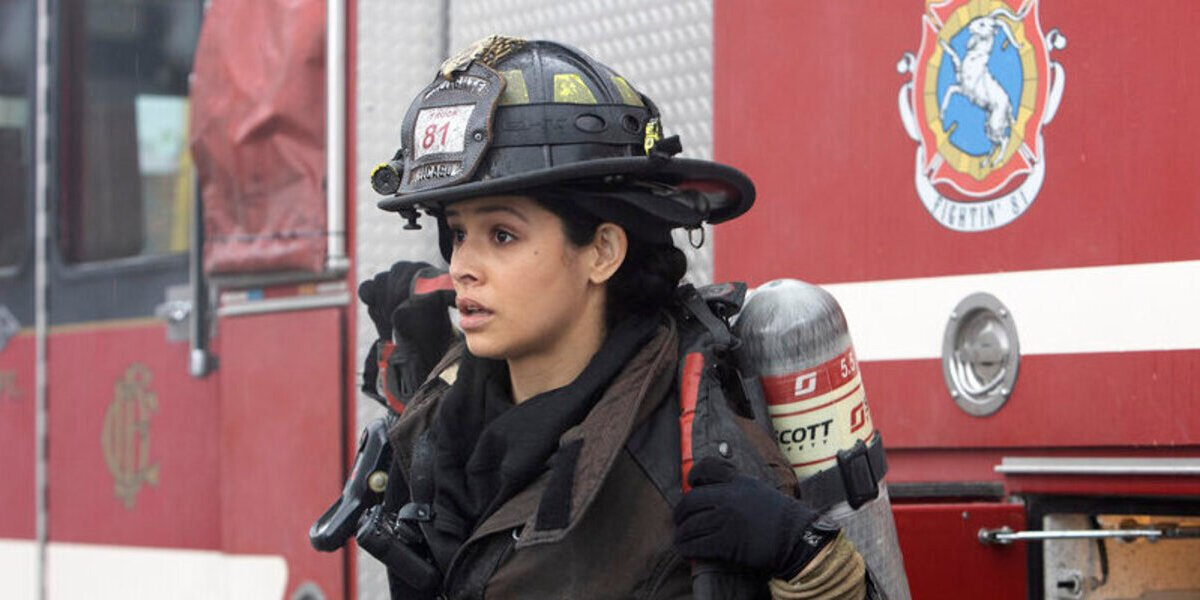
For years, Stella Kidd has been positioned as one of Chicago Fire’s most important characters—a trailblazer, a leader, and a symbol of growth within Firehouse 51. But as the series continues to evolve, a growing number of fans are asking a difficult question: has the show lost its way with Stella’s character? What once felt like a confident, inspiring arc now seems increasingly uneven, and it’s becoming harder to ignore.
Stella’s rise through the ranks was one of Chicago Fire’s strongest long-term storylines. Her determination, skill, and refusal to back down in a male-dominated space made her stand out. Viewers watched her earn respect the hard way, and her promotion felt deserved. The problem isn’t Stella’s strength—it’s how that strength has been written in recent seasons.
Lately, Stella’s leadership has often been framed through conflict rather than growth. Instead of showing her navigating challenges with nuance, the show leans heavily on tension—arguments, defensiveness, and repeated clashes with colleagues. What once felt like confident authority now sometimes comes across as rigidity, leaving little room for vulnerability or self-reflection. As a result, moments meant to showcase her power can feel isolating rather than inspiring.
This issue is compounded by how Stella’s personal relationships are handled. Her dynamic with Severide, once a balance of equals pushing each other to grow, has struggled under repetitive stress points. Instead of evolving their partnership, the show frequently circles the same disagreements, making both characters feel stuck. Fans aren’t frustrated because there’s conflict—they’re frustrated because it doesn’t seem to go anywhere.
Another concern is imbalance. Firehouse 51 thrives on ensemble storytelling, yet Stella’s recent arcs often dominate without offering the emotional payoff viewers expect. Other characters grow through mistakes, reflection, and change; Stella is rarely allowed the same depth. When a character is always “right,” they stop feeling real—and that’s where the disconnect begins.
None of this means Stella Kidd can’t be course-corrected. In fact, the solution is already built into the show’s history. Stella is at her best when she’s challenged in meaningful ways, when leadership is shown as learning—not just commanding—and when her compassion is allowed to stand alongside her strength. Letting her fail, question herself, and adapt wouldn’t weaken her character; it would restore her humanity.
As Chicago Fire moves forward, especially with familiar faces returning and leadership dynamics shifting, the writers face a critical choice. Ignore the growing frustration, or recalibrate Stella Kidd into the layered, evolving leader fans once rallied behind.
Because Stella isn’t the problem. The problem is a version of Stella that no longer feels allowed to grow. And if Chicago Fire wants Firehouse 51 to remain believable, that growth can’t wait much longer.