
In a candid and unexpectedly emotional interview, Boston Blue star Donnie Wahlberg opened up about how his experiences as a father — especially to his two sons who maintain a very private life outside Hollywood — have shaped the way he approaches his character in the new Blue Bloods spinoff. Wahlberg’s comments have already sparked intense reaction online, with fans praising his honesty and digging into what this means for his performance and Boston Blue’s emotional core.
Here’s a deep dive into what Wahlberg said, why it matters for his character Danny Reagan, and how this personal revelation could resonate across the entire series.
A Rare Glimpse Into Wahlberg’s Personal Life
Donnie Wahlberg has always been open about his career and his pride in Blue Bloods, but when it comes to his sons — Xavier and Elijah — he has traditionally kept their lives out of the spotlight. In his recent chat with TVLine, however, Wahlberg broke from that pattern with surprising context on how fatherhood influences him.
Instead of giving details about his sons’ lives, Wahlberg focused on what fatherhood has taught him: the weight of responsibility, the fear of making the wrong call, and that gut-level instinct every parent develops when their child’s safety is on the line.
“Being a dad changes you in ways you don’t even realize,” Wahlberg said. “Those instincts — you bring them to work, whether you intend to or not.”
This isn’t the kind of statement actors make lightly. Wahlberg connected his paternal instincts to how he embodies Danny Reagan — a law enforcement leader who constantly juggles duty, danger, and protecting the people he cares about.
Danny Reagan: A Role Steeped in Conflict
One of the core tensions of Boston Blue is Danny’s internal struggle between his professional obligations and his emotional compass. He’s a leader who needs decisions to be fast and decisive — yet compassionate enough to understand the human cost of those decisions.
Wahlberg explained that fatherhood gave him a deeper emotional vocabulary for that conflict:
“When I’m playing Danny making a hard call, I find myself thinking not just as an agent, but as a parent — would I make this call in my personal life? The answer isn’t always easy, and that ambiguity makes the role richer.”
Wahlberg’s off-screen experiences aren’t being shoehorned into the script; they provide emotional texture. The choice to draw from real paternal instincts — worry, protection, frustration, hope — adds nuance to a character who could otherwise lean toward a typical procedural tough guy.
Why Wahlberg’s Revelation Resonates With Fans
When Wahlberg made this comment public, social feeds lit up instantly.
Some of the reactions included:
-
“That explains the depth Danny has this season — you can feel the emotional weight.”
-
“Donnie’s vulnerability gives what could be cliched procedural moments real impact.”
-
“A dad playing a dad with real dad instincts? No wonder Danny Reagan hits different.”
Unlike typical celebrity interviews about upcoming plot twists or stunts, Wahlberg’s take reveals why Boston Blue feels emotionally grounded. It’s a procedural with stakes that don’t just involve bad guys and bureaucracy — they involve the kind of decisions that keep real people up at night.
A Look at How That Translates On-Screen
Early episodes of Boston Blue have already shown Wahlberg’s Danny making choices framed around human collateral, not just legal outcomes. One pivotal moment from the fall finale (widely discussed by fans) involved Danny hesitating before ordering a risky tactical maneuver that would protect civilians but potentially endanger agents.
Wahlberg’s comments make it clear that this choice wasn’t just a plot device — it’s informed by how he interprets the character through the lens of someone who has, in real life, considered what it means to protect family at any cost.
Producers and co-stars have also noticed the difference:
-
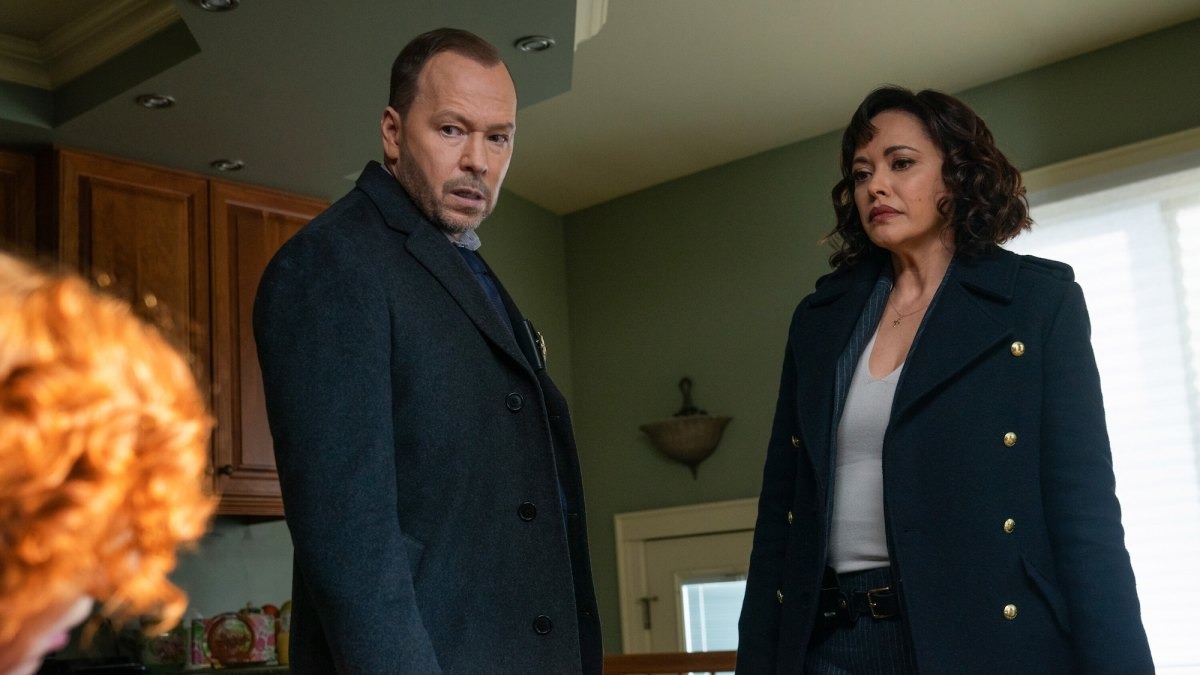
Sonequa Martin-Green, who plays a lead alongside Wahlberg, mentioned in a separate interview that Wahlberg brings “a father’s emotional truth” to scenes involving stakes and relationships.
-
Directors have noted that Wahlberg sometimes adjusts the timing of reactions, not for technical reasons, but for emotional realism — something he attributes to reading his own children’s emotional cues in real life.
Will This Shift the Direction of the Show?
Wahlberg’s insight has sparked a larger conversation about Boston Blue’s narrative direction. Some fans and critics are now wondering whether the series — typically procedural with serialized elements — may lean into family and emotional drama more heavily as the season progresses.
After all, the Blue Bloods legacy is rooted in family dynamics, with the Reagan family’s internal debates often driving episodes as much as crime cases. Boston Blue, while its own entity, is showing signs it might follow suit, exploring how relationships and personal decision-making — not just criminal investigations — define leadership.
Wahlberg’s personal revelation enriches this possibility. It suggests that Boston Blue isn’t just about enforcing the law — it’s about understanding what it means to protect people as people, not just as plot points.
Fan Interpretation and Speculation
Online fandom has been dissecting Wahlberg’s comments across platforms:
Theory 1: Danny’s Past Will Get Personal
Several fans believe that Wahlberg’s comments foreshadow a mid-season plotline in which Danny must confront a threat that hits close to home, forcing him to balance instinct versus protocol.
Theory 2: More Emotional Arcs for Baez
Given how parenthood influenced Wahlberg’s view of Danny, some think Baez’s role might grow deeper emotionally — not just as a partner in the field, but as someone whose own personal life intersects significantly with Danny’s choices.
Theory 3: Legacy Storytelling
Viewers are also speculating that Boston Blue will explore legacy themes — how personal values get passed down, and whether decisions made under emotional stress define a leader’s legacy more than their career milestones.
Industry Reaction
Entertainment analysts have also weighed in on Wahlberg’s comments, noting that actors drawing from real personal experiences often elevate procedural storytelling into something with broader appeal.
One TV critic wrote:
“In series where characters face moral ambiguity every week, the infusion of real lived experience can be the difference between good TV and great TV. Wahlberg seems to be treading that line thoughtfully.”
Wahlberg’s comments also position Boston Blue in a unique place among procedurals — not just another crime show, but one that blends emotional intelligence with investigative grit.
Why This Matters Going Forward
By acknowledging how his fatherhood influences his performance, Wahlberg has inadvertently set audience expectations for how Boston Blue Season 8’s emotional landscape might unfold. Fans know now that:
-
Danny Reagan’s choices are likely to carry layered emotional weight
-
Key decisions may be more character-driven than plot-driven
-
Viewers should expect more nuance in family, loyalty, and leadership arcs
This depth could be what sets Boston Blue apart from other procedurals, particularly in a television landscape crowded with crime dramas.
Final Thoughts
Donnie Wahlberg’s willingness to tie his Boston Blue performance to his personal experience as a father is not just a headline-worthy interview moment — it’s a clue to how the series is positioning itself emotionally and narratively.
For fans who crave characters with depth, conflict, and real-world grounding, Wahlberg’s perspective promises that Danny Reagan won’t be just another lawman on TV. He’ll be a leader shaped by life, love, fear, and the instinct to protect — both on and off the screen.
As Boston Blue continues its run, Wahlberg’s comments give fans something deeper to watch for: the gestures, choices, and nuances that reveal not just what Danny Reagan does — but why he does it.
And now that audiences know where Wahlberg’s emotional compass points, they’ll be watching every decision with new context, new curiosity, and renewed investment.