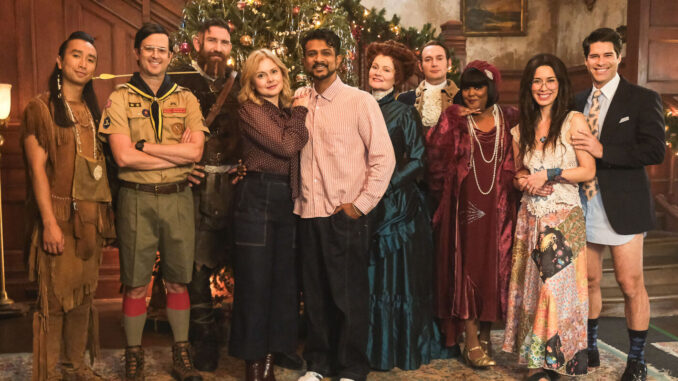
🎄 The Ultimate Holiday Hangout: Ghosts Goes Festive
If you’re anything like me, you consider the arrival of holiday-themed TV episodes the official start of the festive season. And when it comes to injecting the perfect blend of warmth, chaos, and unexpected emotional depth into a holiday special, no show does it quite like CBS’s beloved sitcom, Ghosts. The series, which centers on the perpetually hilarious dynamic between living homeowner Sam, her husband Jay, and their houseful of deceased residents, always manages to turn traditional holidays on their head.
The show’s holiday episodes, affectionately dubbed ‘Ghostmas’, have become a much-anticipated tradition. They succeed because they don’t just put ghosts in Christmas sweaters; they use the nostalgia and inherent emotionality of the holidays to explore the lives (and deaths) of the spectral residents. And who better to help us break down the secret sauce of ‘Ghostmas’ than the man who plays the most charismatic, and least-clothed, ghost in the mansion: Asher Grodman, who brilliantly portrays the ‘pants-less’ finance bro, Trevor.
Grodman recently opened up about the creative process behind the show’s holiday specials, revealing that the writing room doesn’t just aim for holiday cheer—they root their ‘Ghostmas’ stories in the emotional architecture of classic Christmas movies. This strategic inspiration is what elevates the episodes from funny one-offs to perennial favorites.
🎬 The Classic Christmas Movie Inspiration: The Core Blueprint
According to Asher Grodman, the key to the ‘Ghostmas’ episodes’ success lies in the writers’ ability to tap into themes universally recognized from cinematic holiday masterpieces. They don’t just throw snow at the screen; they borrow the emotional framework of beloved classics.
The Emotional Architecture of Holiday Cinema
Think about your favorite Christmas movies—they aren’t just about Santa. They are about regret, family, second chances, and finding joy in unexpected places. The Ghosts writers consciously use these emotional touchstones.
-
Themes of Regret and Redemption: Many classic films, like It’s a Wonderful Life, center on a character realizing their worth or redeeming past mistakes. A show about ghosts, who are literally stuck dealing with their past lives and regrets, is perfectly poised to explore this theme.
-
The Power of Memory: Holidays are intrinsically linked to memory and nostalgia. Since every ghost is a walking memory of a different era, Christmas provides the perfect opportunity to revisit their pasts, creating both comic and tragic storylines.
H3: The Ultimate Ghostly Muse: It’s a Wonderful Life
While Grodman didn’t name a single, exclusive movie inspiration, the clearest shadow cast over any ‘Ghostmas’ episode is undoubtedly Frank Capra’s 1946 masterpiece, It’s a Wonderful Life.
Why? Because the entire premise of the film—a character (George Bailey) being shown the profound impact his life has had, often by a celestial guide—is essentially the ghost experience. Grodman notes that the ‘Ghostmas’ episodes strive to explore the depth of the ghosts’ emotional connections, particularly the profound sense of loss for the world they left behind. When the ghosts interact with Jay and Sam’s decorations or traditions, they are momentarily transported back to their lives, often mirroring George Bailey’s realization of what he truly lost.
🎁 Trevor’s Festive Angst: The Irony of the Pants-less Ghost
Asher Grodman’s character, Trevor, is arguably the most culturally jarring ghost in the manor. A materialistic, pre-9/11 Wall Street bro, he views every holiday through the lens of privilege and extravagant consumption.
H3: The Materialistic Challenge: Trevor vs. The True Spirit
Trevor’s existence as a ghost is a cruel irony: he can no longer enjoy the material wealth he chased so ruthlessly. ‘Ghostmas’ naturally exaggerates this conflict:
-
Missing the Consumerism: Trevor misses the stock market Christmas party, the expensive gifts, and the excessive displays of wealth. His frustration serves as a hilarious, yet pointed, critique of modern holiday consumerism, a theme often present in films like National Lampoon’s Christmas Vacation (the pursuit of the perfect, expensive holiday).
-
The Search for Connection: Beneath the designer suits (or lack thereof), Trevor is seeking genuine connection. His realization that the true joy of the season is the relationships, not the rewards, is a direct emotional thread drawn from countless holiday movie transformations (think A Christmas Carol).
H4: The Gift of Gifting (Ghost Style)
One of the funniest running jokes in ‘Ghostmas’ episodes is the ghosts’ inability to interact with the physical world, making the act of gifting an impossible task. Trevor, a man who defined himself by his extravagant gifts, has to rely entirely on Sam and Jay to execute his holiday plans. Grodman emphasizes the comedy that comes from Trevor’s over-the-top, modern ideas clashing with the simple, earnest desires of the older ghosts.
👻 Ghostly Traditions: Creating New Holiday Magic
The ‘Ghostmas’ episodes are special because they invent new holiday traditions specific to the ghostly residents, blending the familiar warmth of holiday films with the show’s unique lore.
The Power of Shared Storytelling
Since the ghosts can’t decorate or cook, their traditions revolve around shared experiences and memories.
-
Story Time: The ghosts gather to share their favorite holiday memories from their respective eras—the Puritan’s strict traditions, the Viking’s feasts, the Revolutionary War soldier’s quiet hardships. This acts as the show’s version of a classic holiday movie montage, bringing diverse perspectives into one room.
-
The Ghost-Decorating Challenge: Sam often attempts to execute the ghosts’ complex, contradictory decorating ideas, which always results in hilarious chaos. This mirrors the classic Christmas movie trope of the failed, disastrous attempt at the “perfect holiday.”
💖 The Heart of the Haunting: Unlocking Emotional Depth
Grodman confirms that the ultimate goal of ‘Ghostmas’ is to leverage the seasonal emotional vulnerability to crack the tough exterior of the ghosts, revealing a deeper, human layer.
H4: Hetty’s Hidden Vulnerability
Hetty Woodstone, the stuffy 1890s matron, is the perfect example. While she initially bristles at any modern holiday tradition, the warmth and simplicity of Sam and Jay’s celebration often unlocks a fleeting memory of her own complicated relationship with Christmas, usually revolving around her domineering husband. The holidays force her to confront the emotional poverty of her past life, a key theme in many powerful, non-traditional holiday films.
The Sam and Jay Connection
The living homeowners, Sam and Jay, function as the emotional bridge to the physical world for the ghosts. They are the key to fulfilling the ghosts’ small, festive wishes. Their efforts to bring joy to the spectral residents mirror the efforts of a protagonist in a Christmas film who must unite a disparate or broken group (e.g., trying to bring a family together for the holidays). This dynamic is crucial for maximizing the feel-good element of the episode.
🎁 The Christmas Gift: A Unique Blend of Humor and Heart
By drawing inspiration from the deep, moralistic roots of classic holiday cinema, Ghosts ensures that its ‘Ghostmas’ episodes are more than just seasonal filler. They are essential character studies that use the built-in emotional weight of the holiday to create profound moments of comedy and catharsis. Asher Grodman’s insights confirm that the show’s genius lies in its ability to take a ludicrous premise—dead people celebrating a holiday they can’t physically participate in—and ground it in the universal, cinematic themes of regret, love, and redemption.
Final Conclusion
Ghosts star Asher Grodman reveals that the perennial success of the show’s ‘Ghostmas’ episodes stems from the writers’ intentional reliance on the emotional structure of classic Christmas movies, particularly films dealing with themes of regret, redemption, and the search for connection, like It’s a Wonderful Life. Grodman highlights how this cinematic inspiration helps characters like his own, the materialistic Trevor, confront the meaninglessness of his former life and find joy in the non-material connections of the manor. By providing the ghosts with a shared, emotional, and often chaotic festive experience, Ghosts transforms its holiday specials into deeply resonant, hilarious, and ultimately heartwarming television events.
❓ 5 Unique FAQs After The Conclusion
Q1: Who plays Trevor in Ghosts, and what is his character’s backstory?
A1: Trevor is played by Asher Grodman. Trevor was a wealthy, materialistic Wall Street finance executive who died in 2000 at the manor after a heart attack during an illicit party, which is why he remains without pants (a running joke).
Q2: Does Ghosts usually air one or multiple ‘Ghostmas’ episodes per season?
A2: Ghosts has generally aired one dedicated ‘Ghostmas’ episode per season, often positioned near the winter break, though holiday themes or references might be scattered throughout adjacent episodes.
Q3: What unique challenges do the ‘Ghostmas’ episodes present to the actor playing Sam?
A3: The actress playing Sam faces the unique challenge of having to physically execute the ghosts’ festive ideas (like intricate decorating or gift planning) while simultaneously having to react to their invisible, intangible presence, requiring intense focus and one-sided dialogue.
Q4: Did any of the ghosts celebrate a different holiday, like Hanukkah, in a ‘Ghostmas’ episode?
A4: Yes. The show often uses its holiday episodes to explore the diverse backgrounds of the ghosts. For instance, Flower (the hippie) often celebrates the counter-cultural side of the season, and the show has explored other winter holidays, offering broader representation than just Christmas.
Q5: Which classic Christmas movie did Asher Grodman specifically cite as having the most influence on the emotional core of ‘Ghostmas’?
A5: While Grodman referenced general cinematic themes, the emotional framework focusing on realizing one’s impact and confronting regret most closely aligns with the themes of It’s a Wonderful Life.